Translated from the gallery’s own Chinese text. Where the two differ, the Chinese is the record.

01Principal Arisaka Issei's Reforms and Formal Accreditation

In January 1937, two months after Tachikawa Yoshio had served as acting principal, Arisaka Issei (有坂一世), who had taught at Tainan First Middle School and served there as kyoto (dean of academic affairs), was invited by Imagawa Fuchi (今川淵) to come to Tamsui as principal of both Tamsui Middle School and the Tamsui Girls' Institute.

Arisaka was an enlightened scholar, rich in ideals and ability. Having himself come from a mission school, he had considerable respect for the two schools' former church background. After taking office he set to work with vigour, sweeping away the enfeebled state left by the period of Japanese suppression. The two schools revived, and, drawing together their former foundations and traditions, entered another period of distinction.
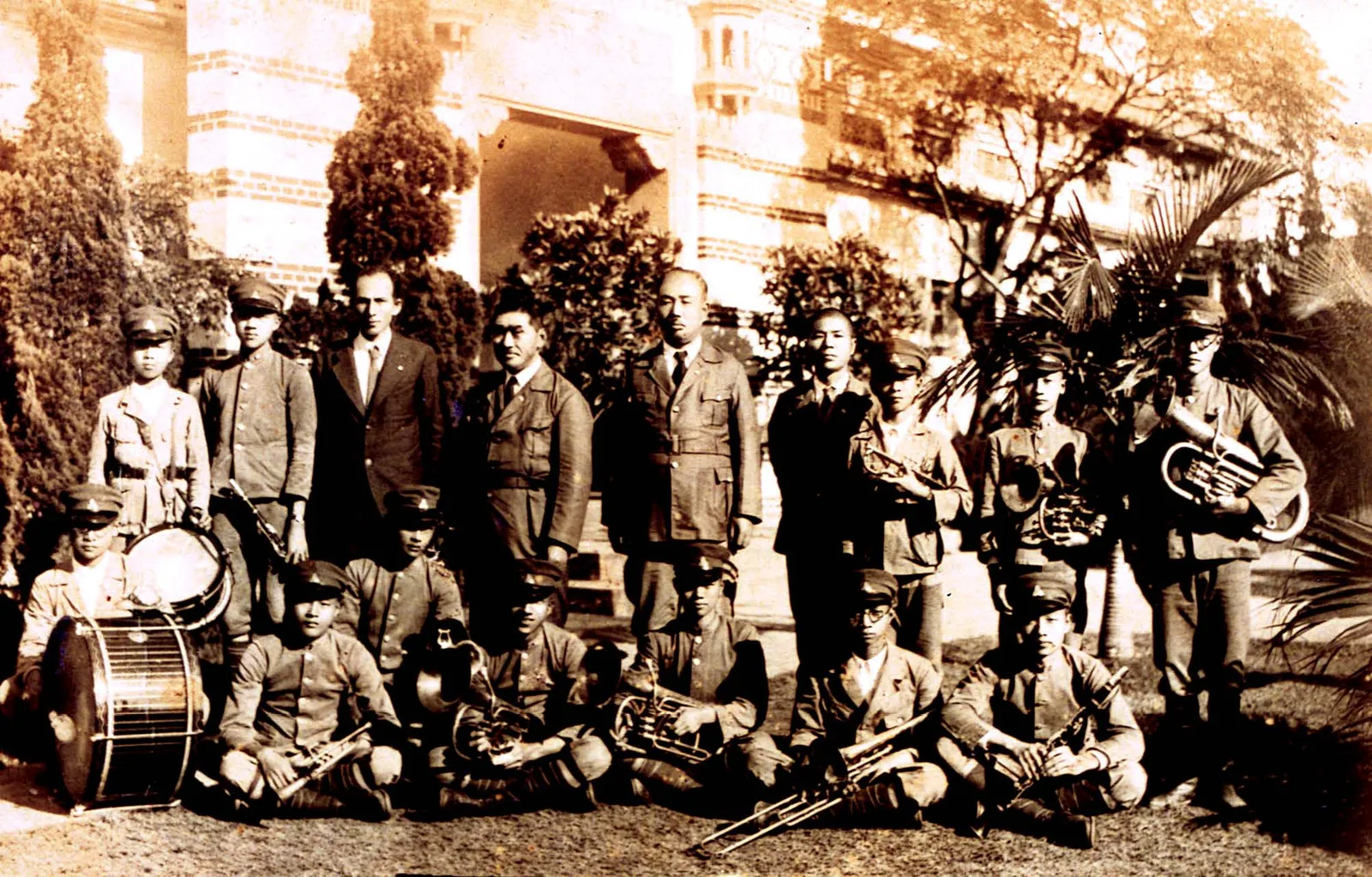
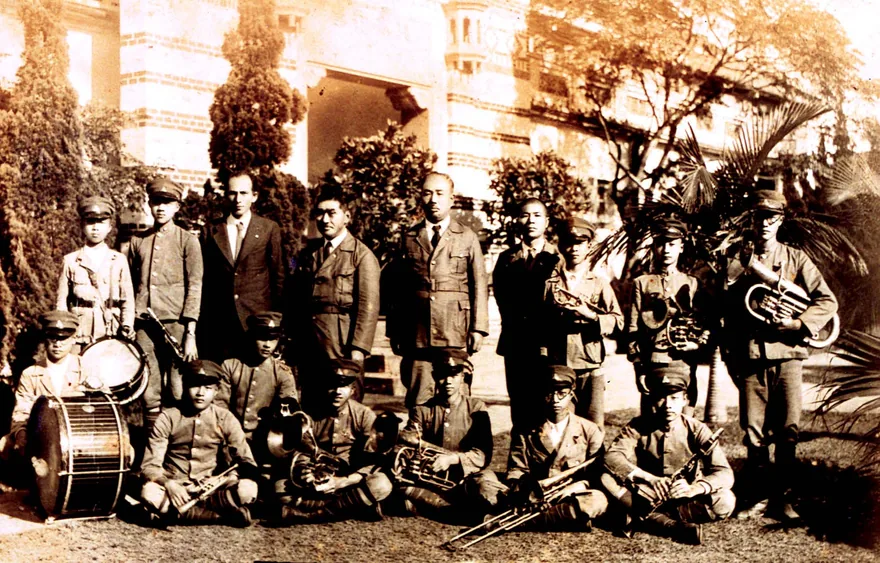
The 'music band' formed after Principal Arisaka took office. In the picture, first to Principal Arisaka's left is kyoto (dean of academic affairs) Takahashi, and second to his left is the teacher Ke She-hsieh (柯設偕), one of the few original Tamsui Middle School teachers who remained after the Japanese takeover.

As soon as he took office he undertook a sweeping reorganisation, using his own connections and every possible channel to secure resources. Besides obtaining funds from the Taihoku Prefecture Education Section and the Governor-General's Bureau of Education to improve classrooms and enrich teaching equipment, he recruited outstanding teachers from Japan proper to strengthen the teaching staff, in place of the two schools' original teachers who had left one after another under Japanese management. Aono Osuke (青野翁助), Mr. Lee Teng-hui's homeroom teacher in his fourth year, was one such scholar, who had studied in Europe and America.

At that time the schools not only completely renewed their sports facilities and replaced their science laboratory equipment, but also added teaching and activity buildings one after another: a martial arts hall, a gymnasium, dormitories, a pavilion, a farm, a greenhouse, a sumo ring and an archery range.
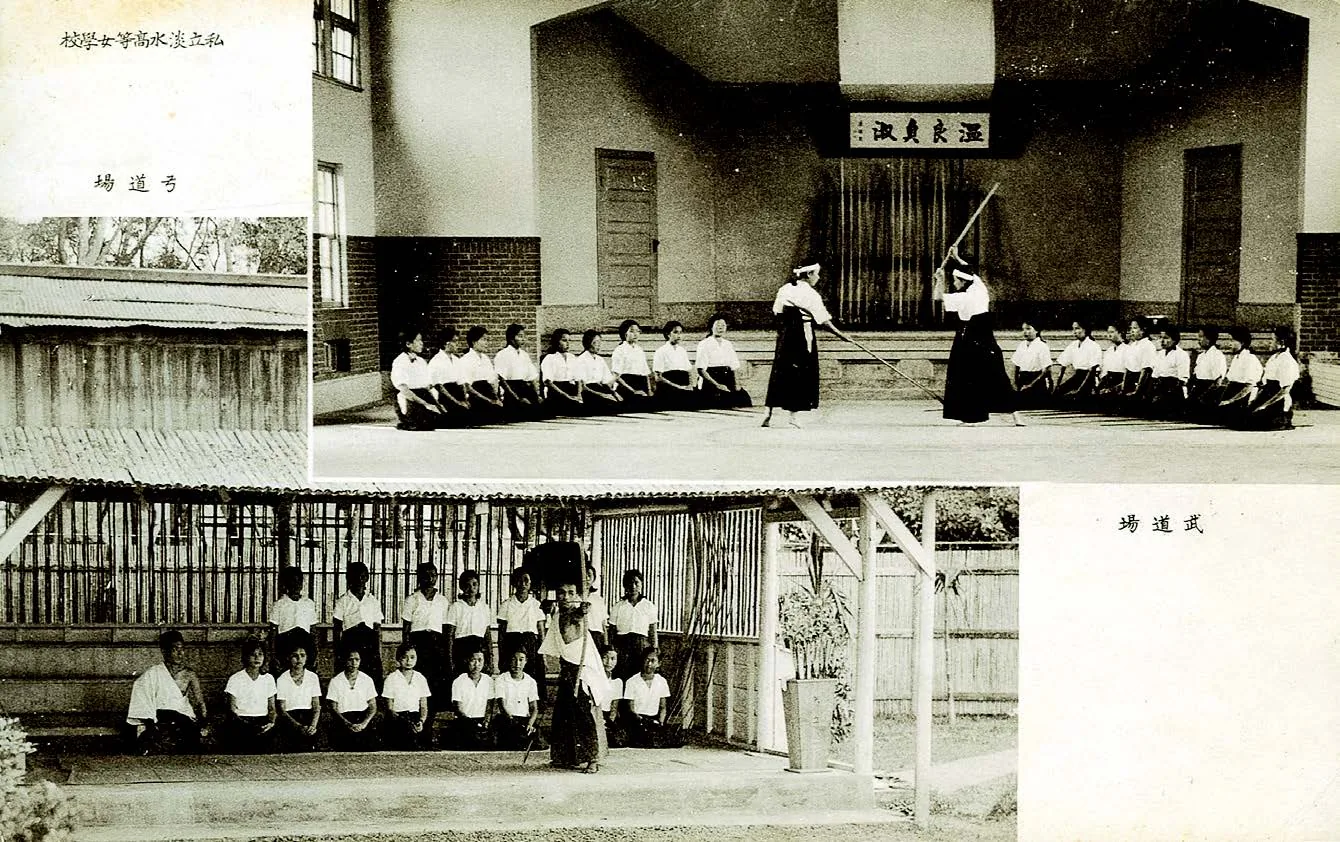
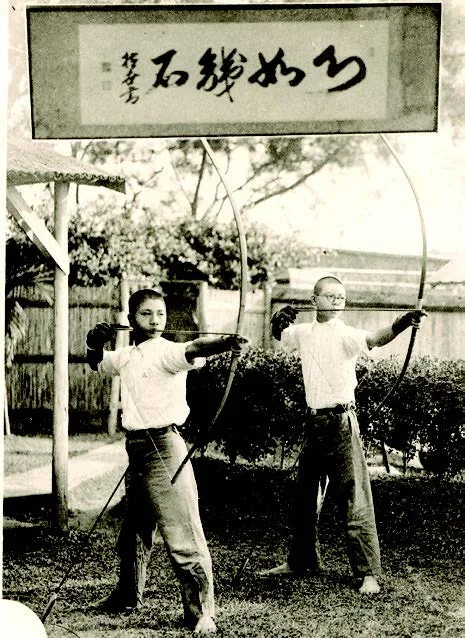
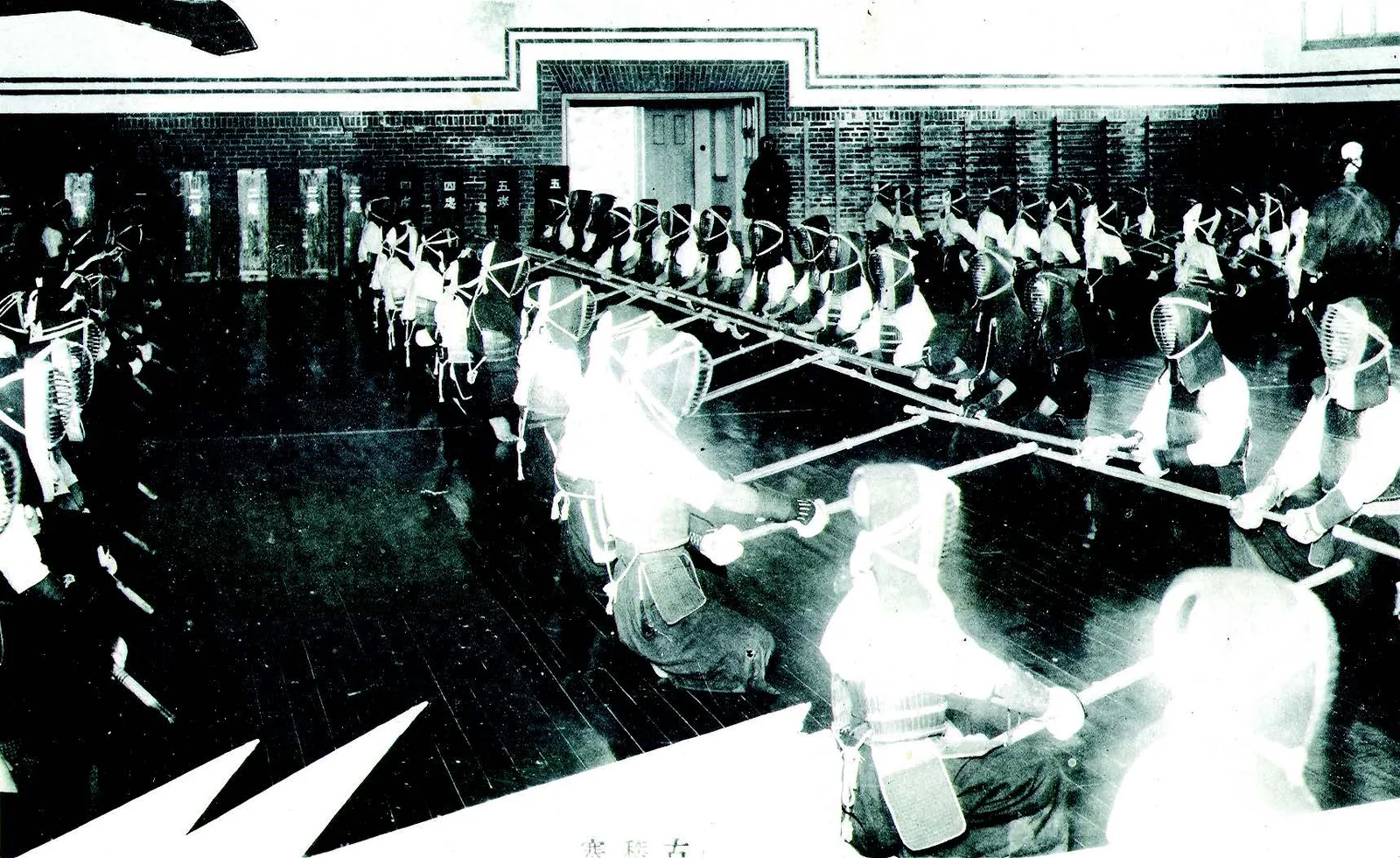
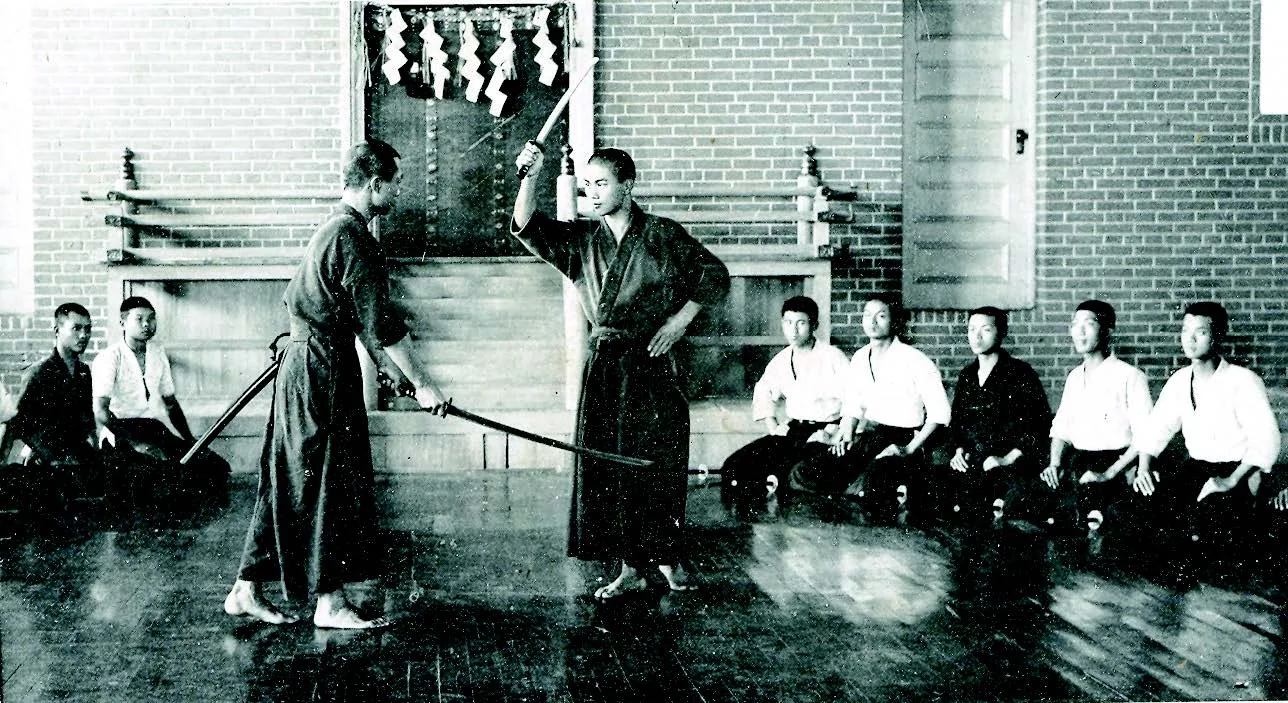
The former gymnasiums of Tamsui Middle School and the Girls' Institute were both converted into martial arts halls to cultivate a martial spirit. The pictures show girls in a kendo class (naginata) in the martial arts hall and an archery class at the archery range.
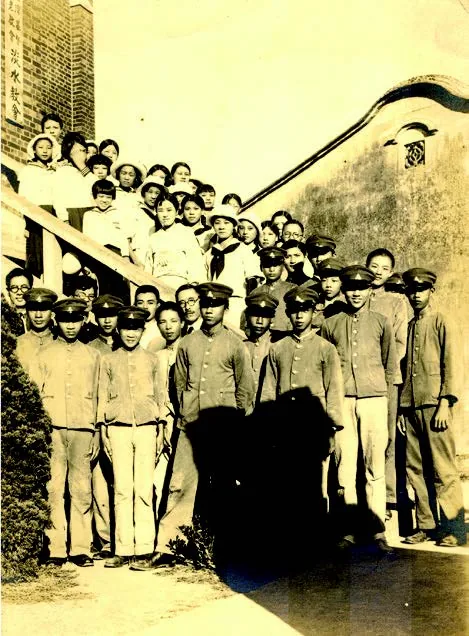
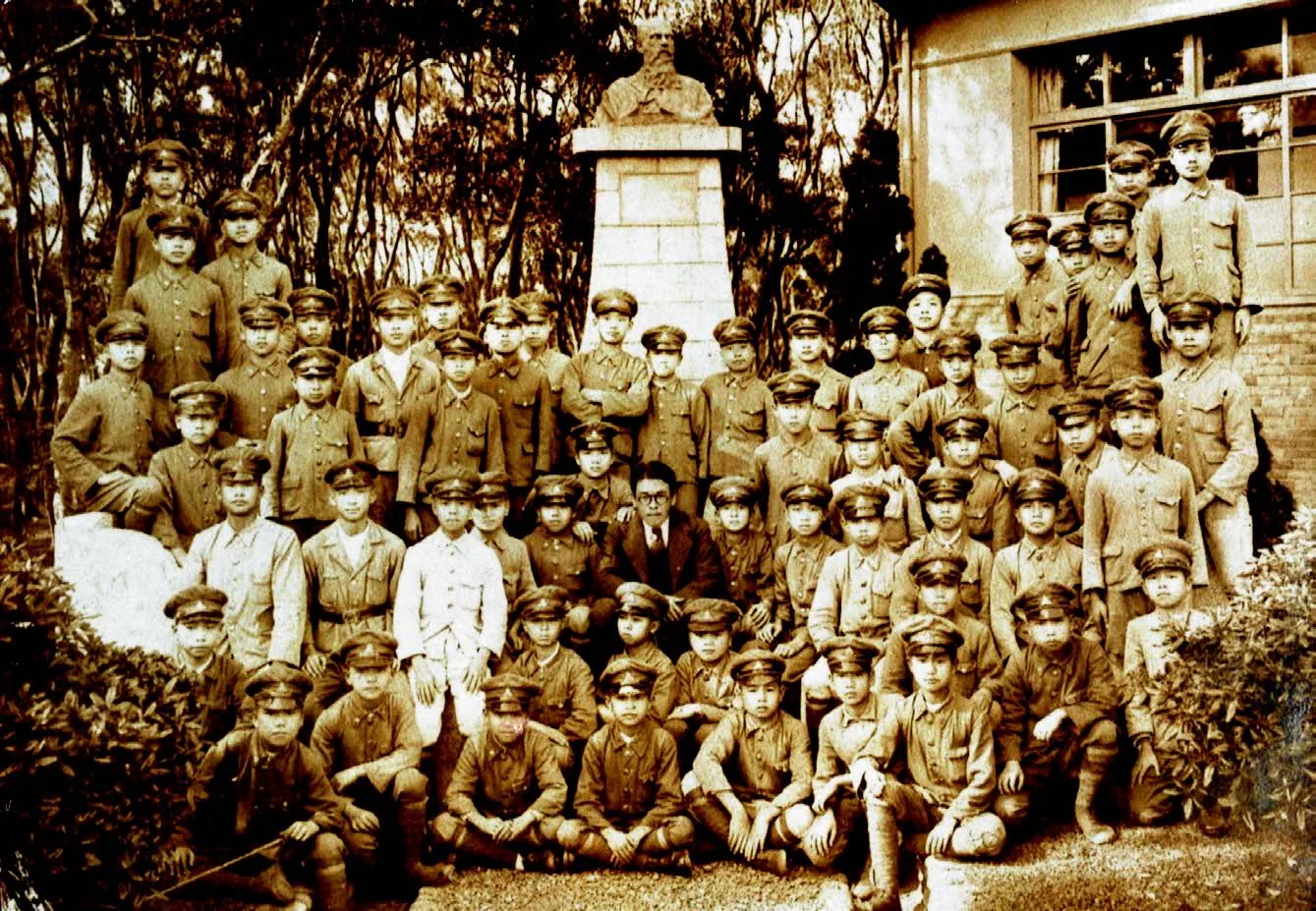
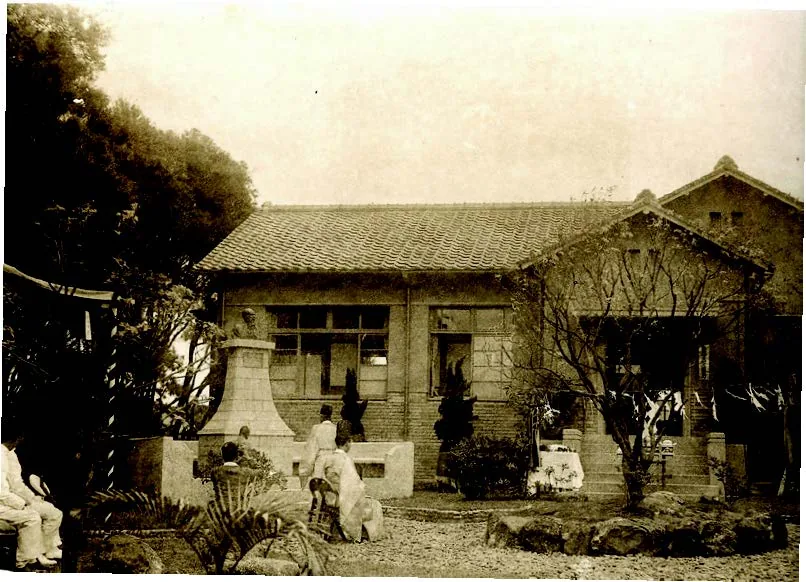
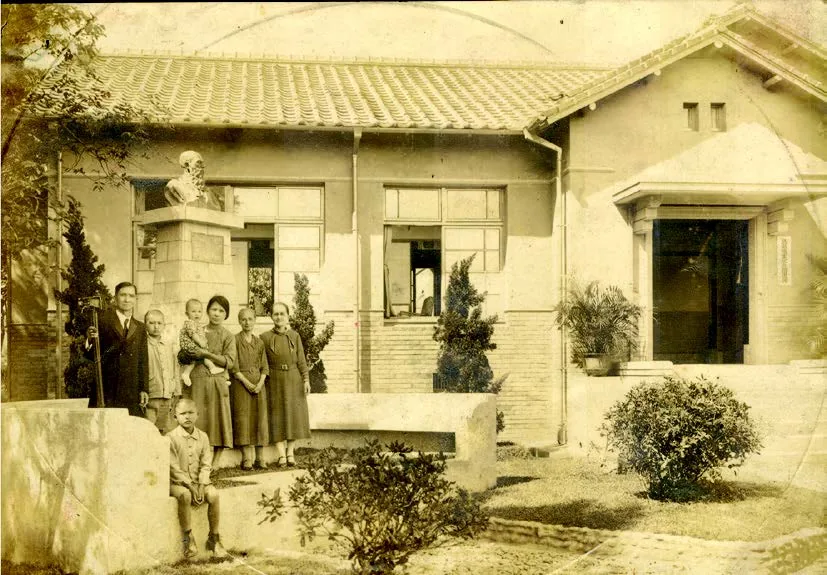
The funds for the 'Dr. Mackay Memorial Library' had been raised in the Tamsui Middle School era. The picture shows students who entered in 1940 with their homeroom teacher Mr. Matsunaga in front of the bronze statue of Dr. Mackay.

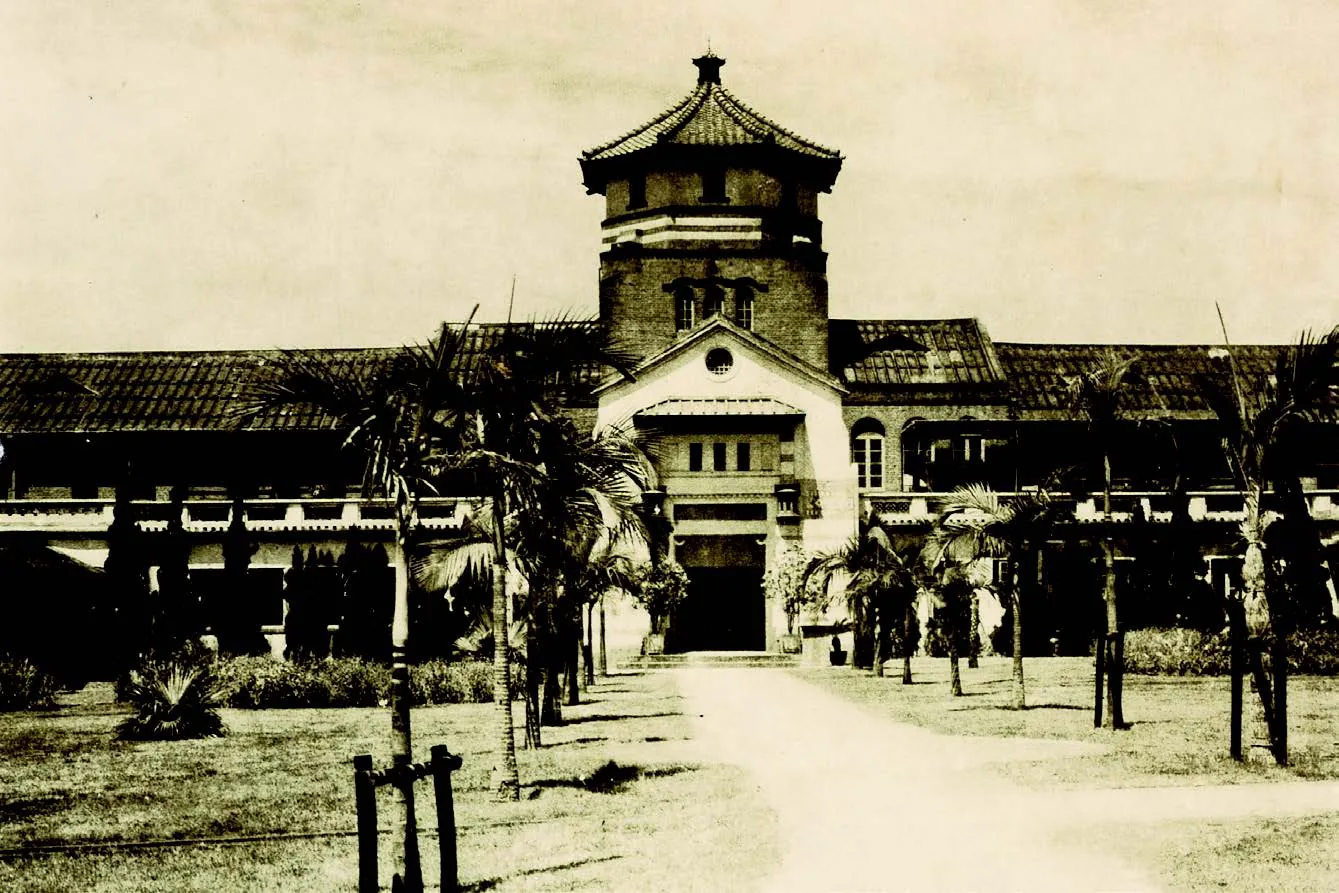
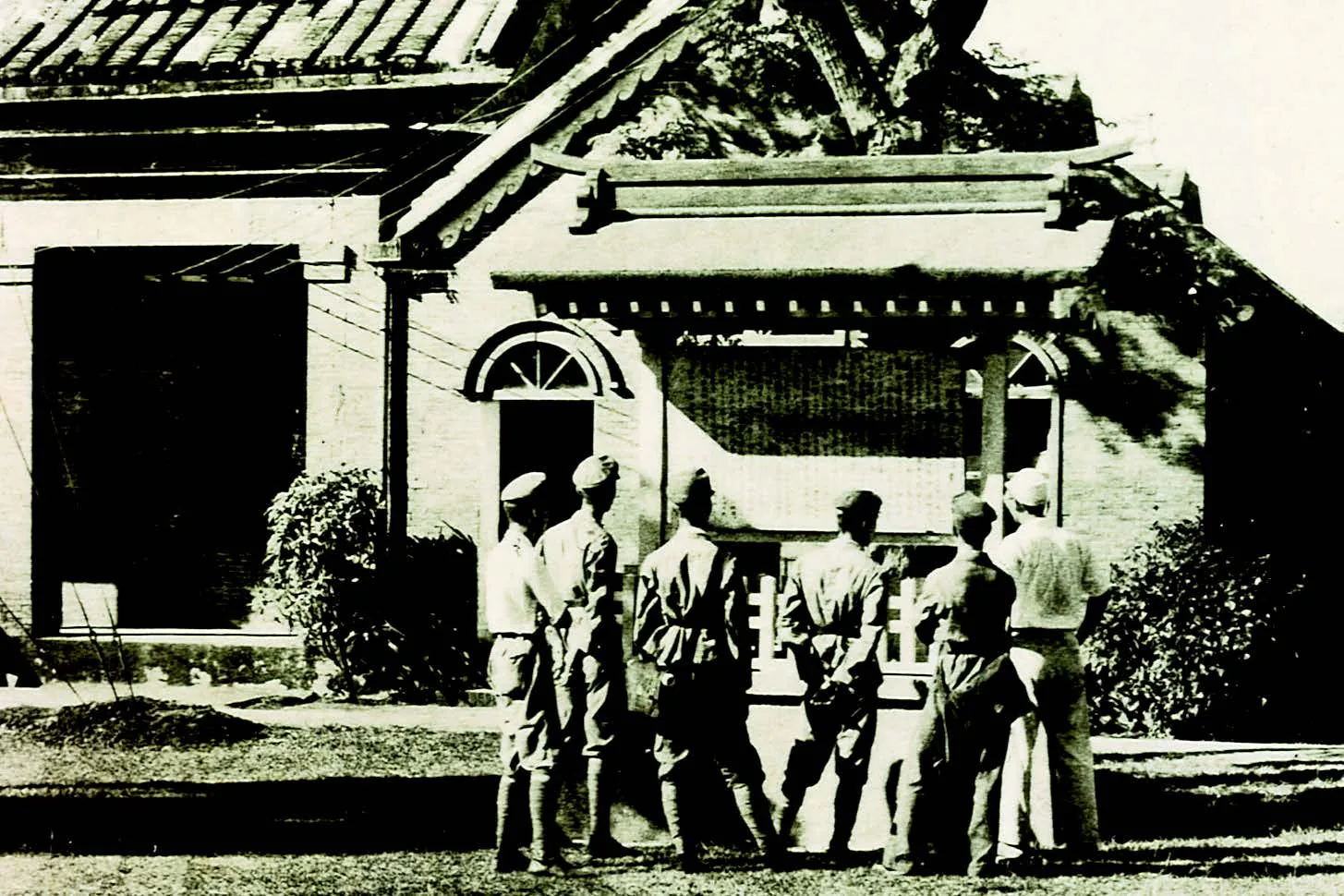
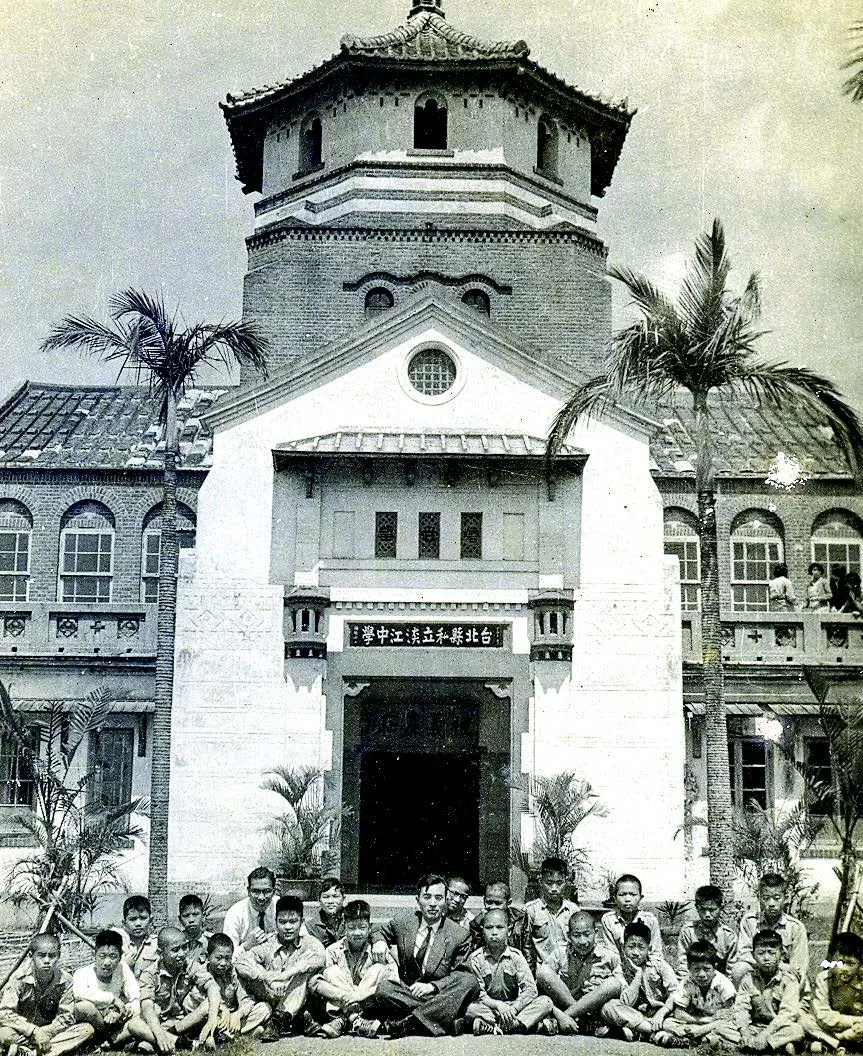
In 1938 (Showa 13) the Governor-General's Office of Taiwan revised the education ordinances to permit the founding of private middle schools. The Tamsui boys' and girls' schools were at last granted accreditation, and were renamed 'Private Tamsui Middle School' and 'Private Tamsui Girls' High School'. To mark this long-awaited event, the name 'Private Tamsui Middle School' was recarved above the main entrance of the Octagonal Tower, and Alexander palms were planted along both sides of the road to that entrance.

That same year, in accordance with the agreement made by both parties at the transfer two years earlier, Principal Arisaka began building the 'Dr. Mackay Memorial Library'. The funds for it came from a resolution of the Northern Presbytery of the Presbyterian Church in Taiwan in 1931, under which 30,000 Japanese yen had been raised throughout Taiwan. The Canadian Mission made this stipulation with the Japanese so that students in later years would understand that the school had been founded by Dr. George Leslie Mackay.

Another thing that deeply moved the teachers and students of the day was Principal Arisaka's refusal to discriminate against Taiwanese students. Under the long-standing inequality of Japanese segregated education, the public schools in Taiwan were almost monopolised by the Japanese, while the private Tamsui Middle School and Tamsui Girls' High School were almost entirely Taiwanese. To encourage his students to learn and to raise the schools' competitiveness, Principal Arisaka not only recruited teachers from public schools to teach at Tamsui Middle School, but also transferred his own three sons from public schools to Tamsui Middle School to study alongside Taiwanese students, as a demonstration of fairness.

This did indeed foster a vigorous school spirit, with outstanding results in both academic work and sport. Not only did students compete to enrol, but the rate of advancement to higher schools rose sharply, and the Japanese of the day took notice. Principal Arisaka's earnest devotion to running the school, and his influence, have been deeply admired by later generations.
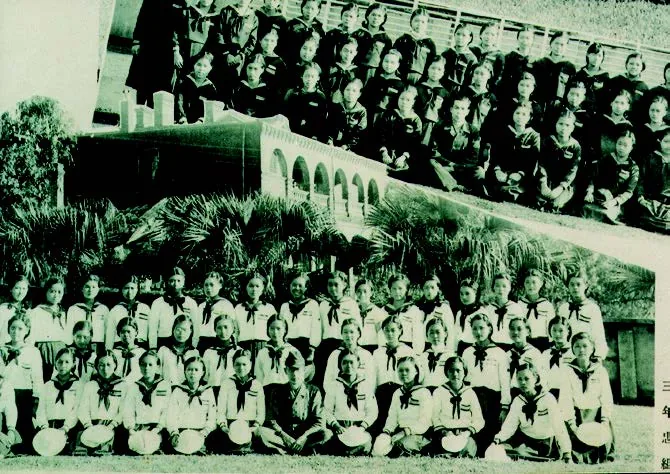
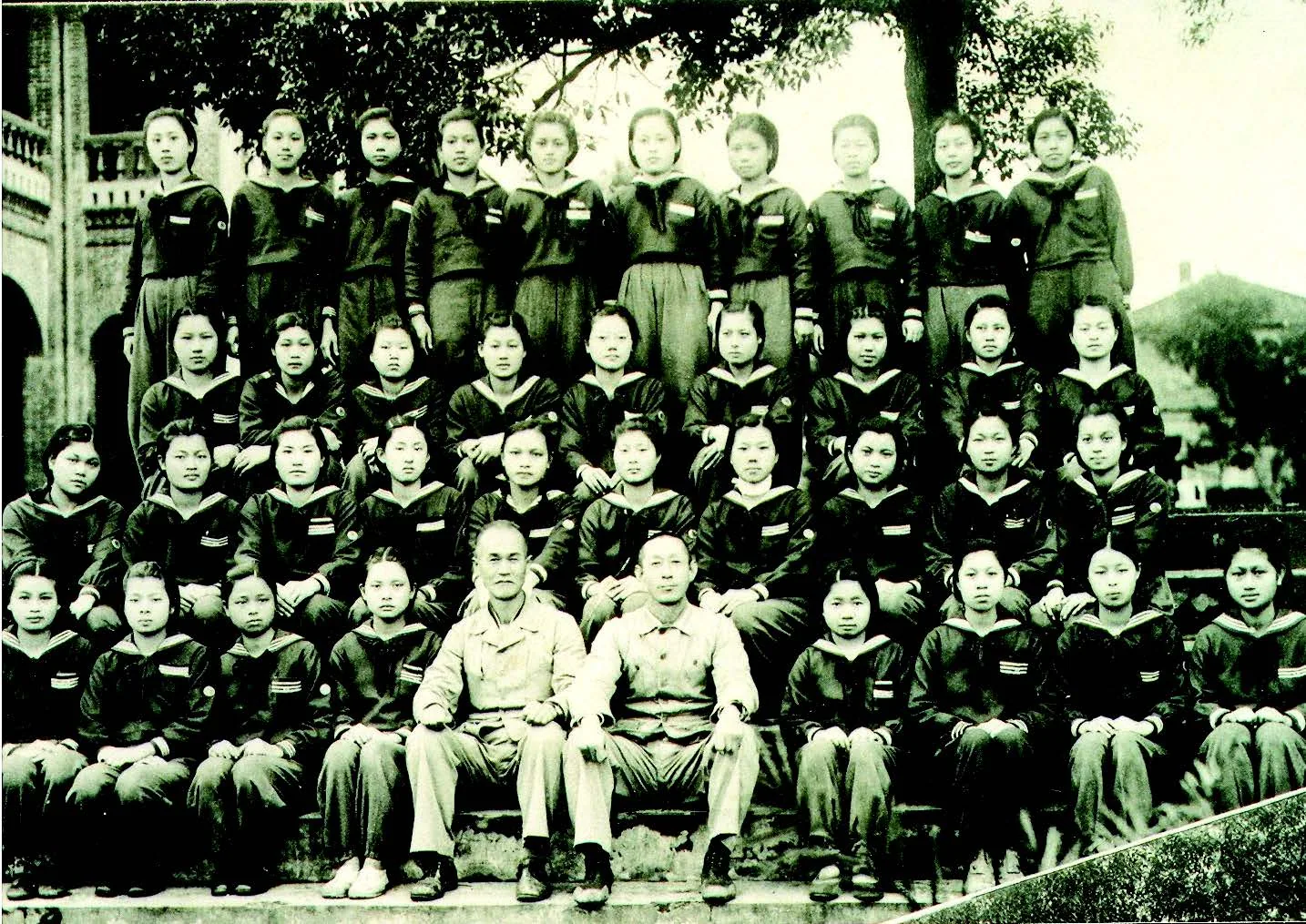
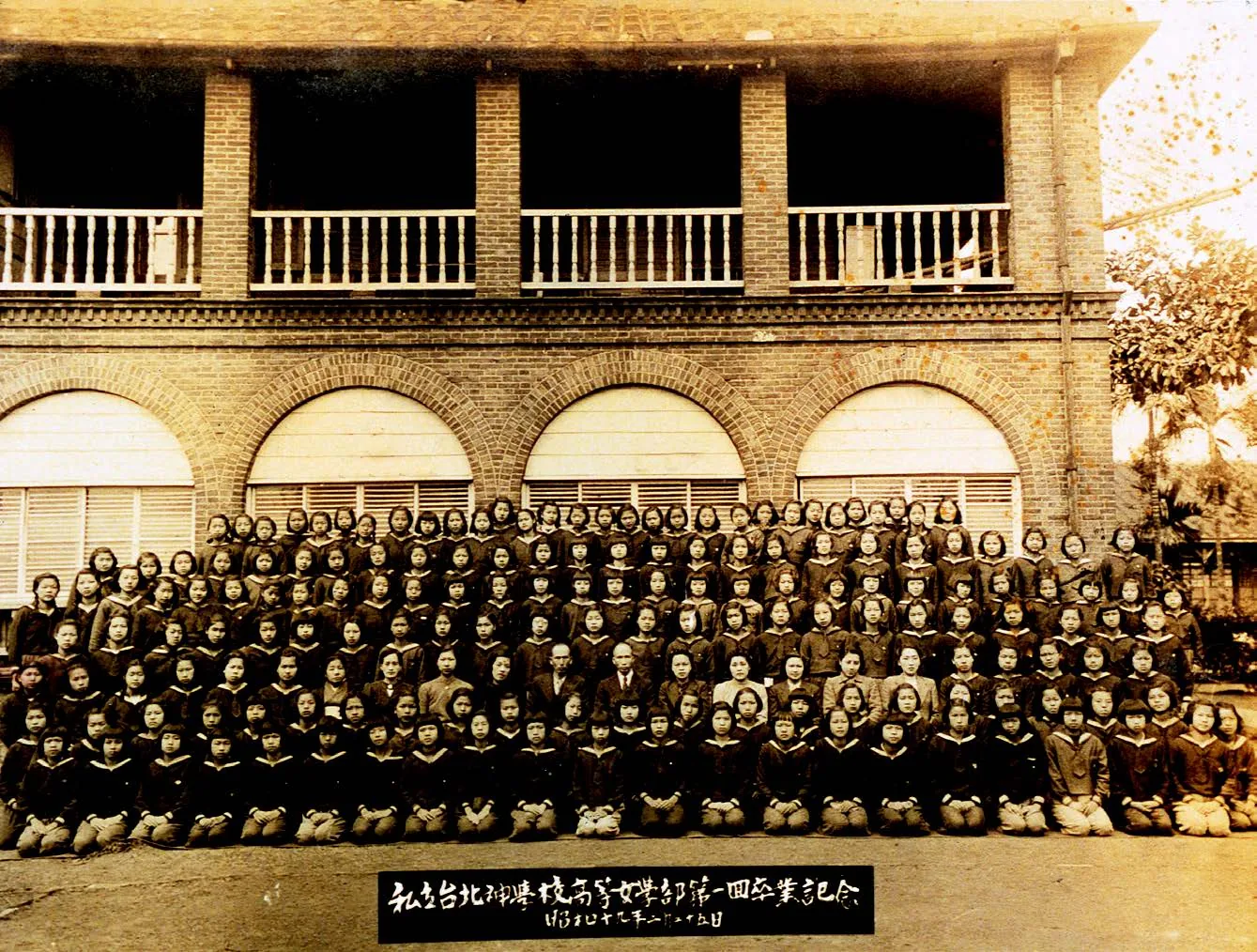
In 1938 the Tamsui boys' and girls' schools were granted accreditation and renamed 'Private Tamsui Middle School' and 'Private Tamsui Girls' High School'. The picture shows students of Tamsui Girls' High School. Under Japanese management the teaching facilities and equipment were extensively renewed
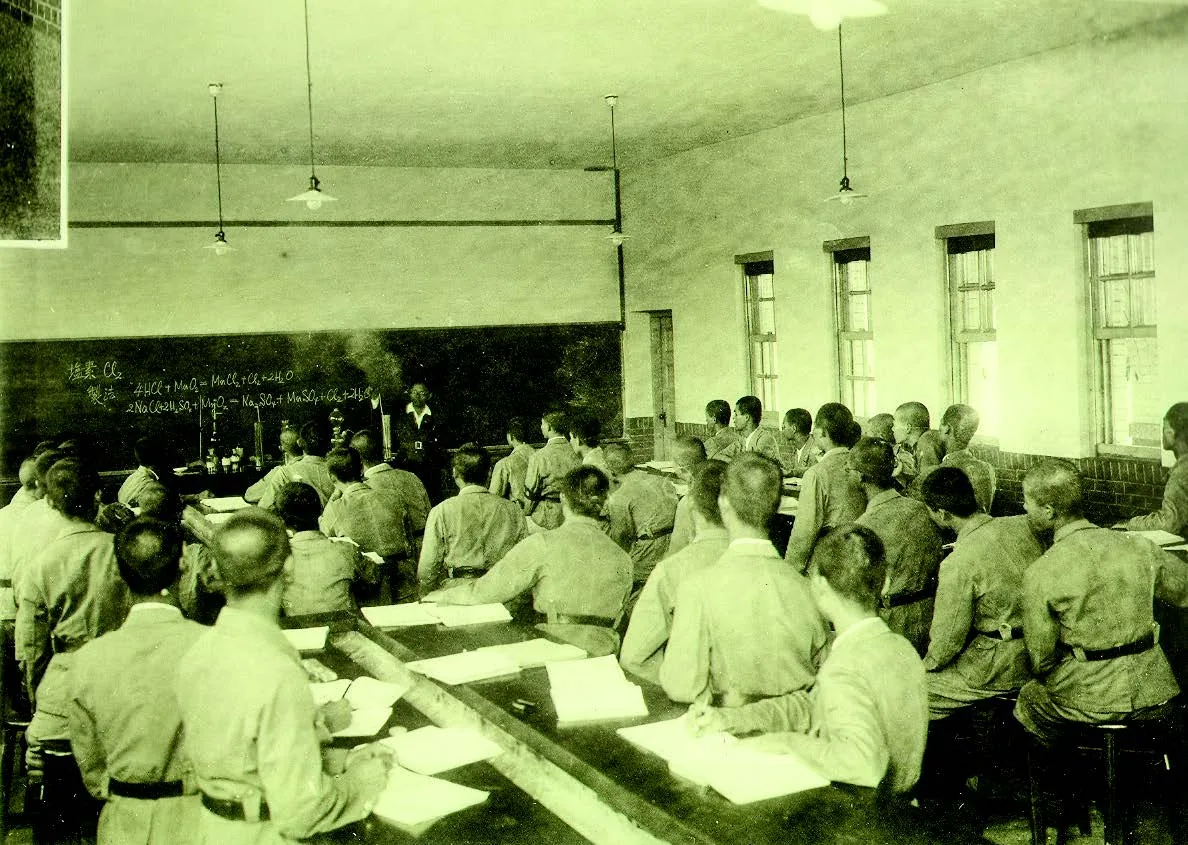
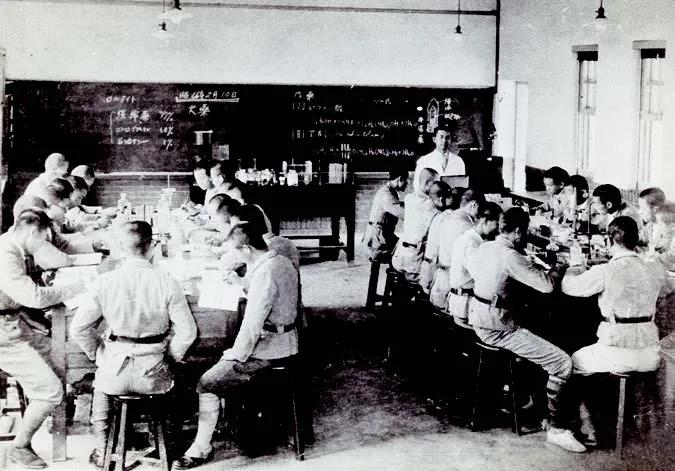
The chemistry classroom of the time.
The Alexander palms that line the road in the forecourt of the Octagonal Tower today were planted in 1941 to mark the third anniversary of accreditation.

02A School Where Taiwan's Own Elite Gathered

After Japan took control of Taiwan, it sought to consolidate its superior position not only politically and economically but also culturally and educationally. To keep the Taiwanese from becoming an obstacle to Japanese interests of rule, a policy of segregated education was applied to Taiwanese students, and their opportunities to go on to middle school were further restricted, still less higher and university education, which was almost entirely monopolised by the Japanese. Very few Taiwanese broke through these many barriers to receive higher education.
In April 1932 students of the Taipei Theological College in Tamsui performed the sacred drama 'The Pilgrim's Progress'; this may be called the height of the mission schools. During the war the college moved to Shuanglian and became the school that consolidated all the Presbyterian educational institutions in Taiwan.

In April 1932 students of the Taipei Theological College in Tamsui performed the sacred drama 'The Pilgrim's Progress'; this may be called the height of the mission schools. During the war the college moved to Shuanglian and became the school that consolidated all the Presbyterian educational institutions in Taiwan.

In an education system centred on the Japanese, Taiwanese students were already at a disadvantage in language ability and background; at primary school they were already subject to planned discriminatory limits in curriculum, system, facilities and opportunity to attend; and the middle school entrance examination further included an unfair 'oral questioning' and an investigation of family background (naishinsho), so that they could hardly compete with Japanese candidates.

Former President Lee Teng-hui has spoken of how strongly he felt this unfair treatment at the time, and of how hard he worked, making Tamsui Middle School the place where he broke through the barriers and was able to go on to higher education. From their founding the two Tamsui schools were unable to obtain accreditation, because the Japanese conditions for establishing a school were harsh, yet they were a rare avenue of schooling for Taiwanese students; after accreditation, and after Principal Arisaka's several effective reforms, they became schools that Taiwanese students competed to enter. As boarding schools in particular, they recruited from all over Taiwan, and so gathered the elite and produced talent in abundance.
In April 1932 students of the Taipei Theological College in Tamsui performed the sacred drama 'The Pilgrim's Progress'; this may be called the height of the mission schools. During the war the college moved to Shuanglian and became the school that consolidated all the Presbyterian educational institutions in Taiwan.

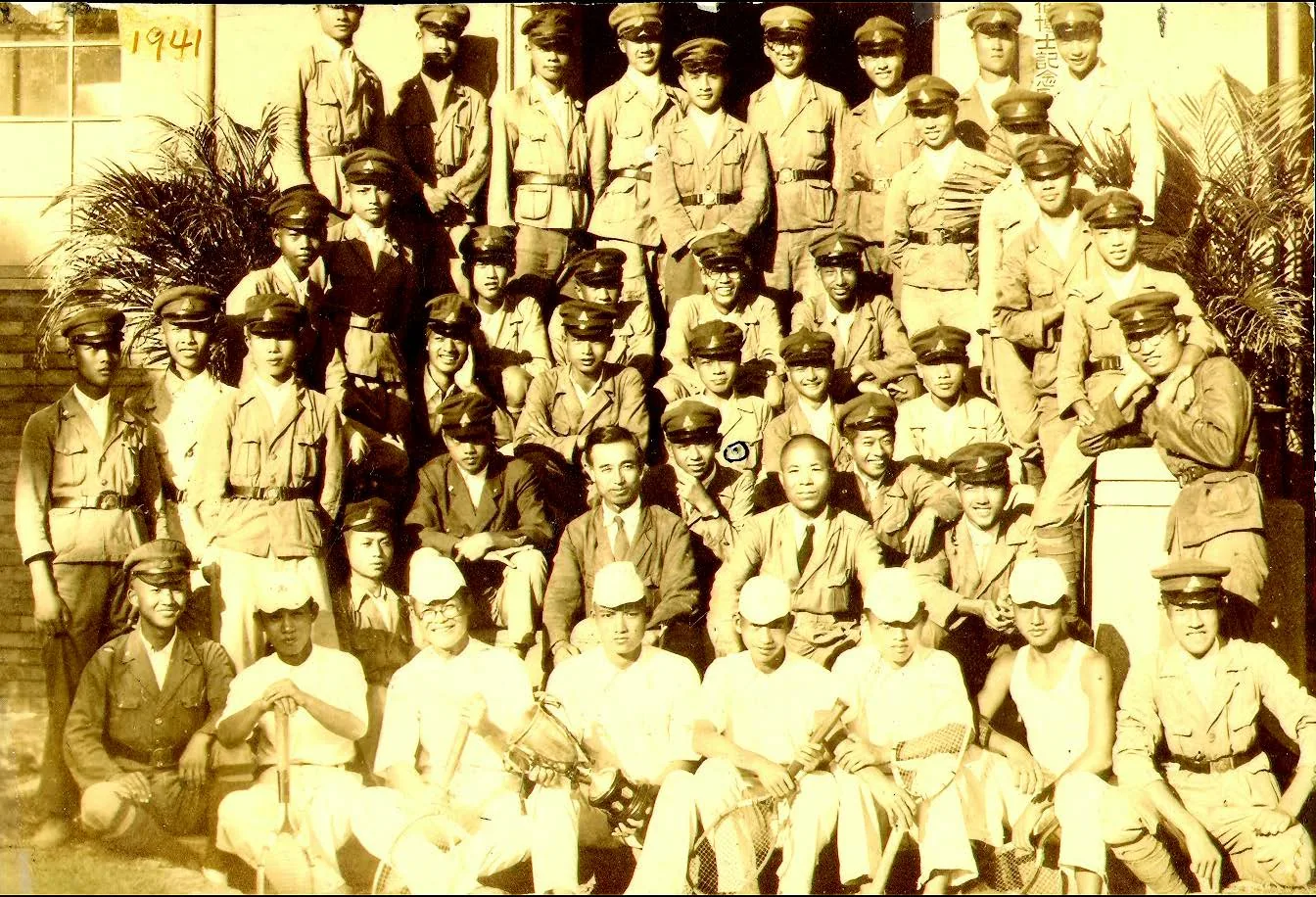
The fourth-year Chung (忠) class, winners of the 1941 inter-class tennis tournament, photographed in front of the Dr. Mackay Memorial Library. Lee Teng-hui was the class monitor (front row, first from the right), and seated in the middle (second row, third from the right) is their homeroom teacher Mr. Aono Osuke.

Take the student Lee Teng-hui as an example. Although he graduated with excellent results from the well-known Tamsui Public School (today's Tamsui Elementary School), he studied for two years in the higher course at Tamsui before passing into Taipei Kokumin Middle School. That school was a second-grade school made up mainly of Taiwanese students, from which one could not sit the examinations for the higher schools. In April 1938, on the welcome news that Tamsui Middle School had been formally accredited, he transferred there, and in its good environment he studied diligently; in 1940 he served as class monitor, and he was also keen on tennis, kendo and gardening.

In 1941, while still only in his fourth year, he skipped a year and passed into 'Taipei Higher School' (the forerunner of today's National Taiwan Normal University). The school was extremely hard to enter and was the regular route into Taipei Imperial University (National Taiwan University). This was a great encouragement to the teachers and students of Tamsui Middle School, since no student from a private school had ever passed. Besides Lee Teng-hui, the graduates of that time who entered prestigious colleges and universities or went to study in Japan proper were the largest in number and the finest in quality since the founding of the school.
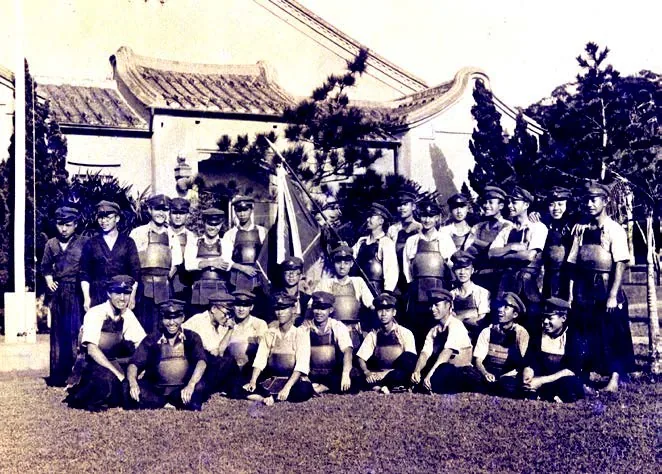
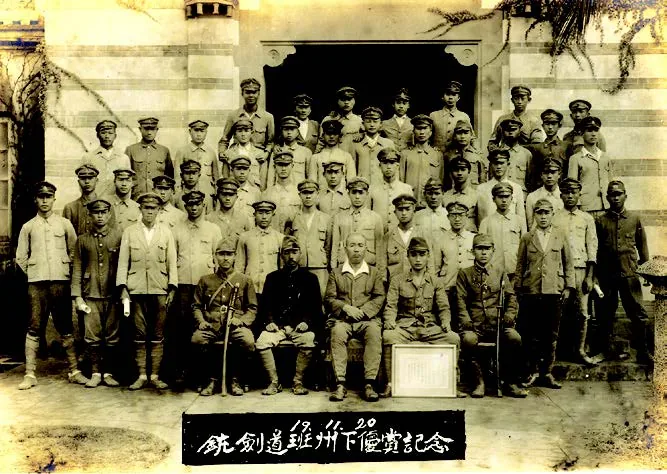
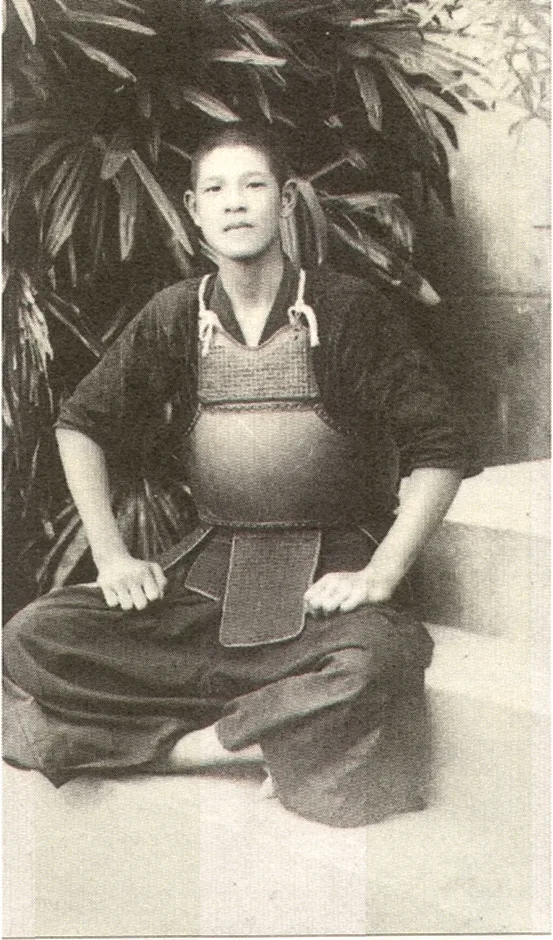
Kendo was a Japanese speciality, yet Tamsui Middle School, made up mainly of Taiwanese students, repeatedly achieved fine results in the island-wide middle school competitions under the two Japanese coaches Yaguchi and Ohira, and won people's respect.
Group photograph of the kendo class
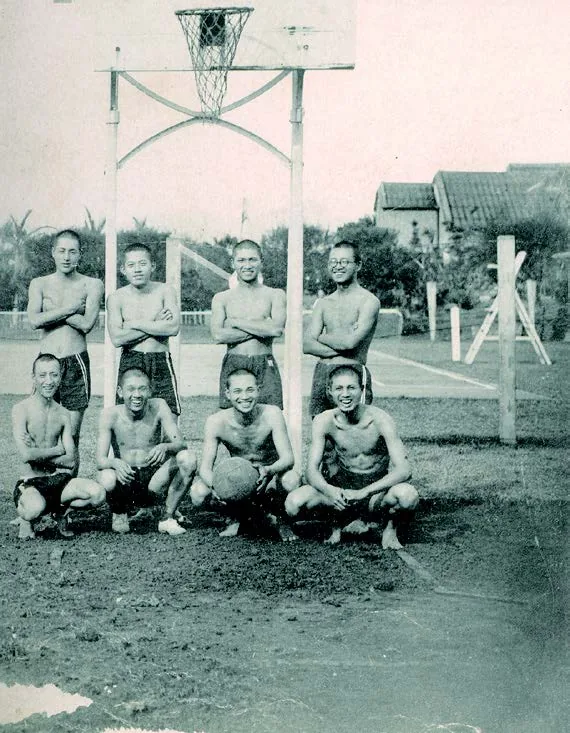
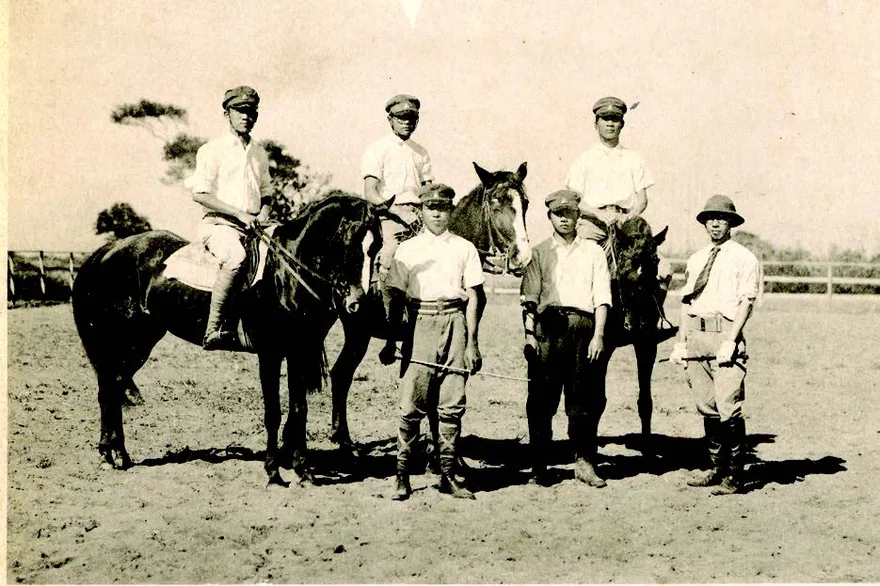
Besides its brilliant academic record, Tamsui Middle School was not behind the Japanese middle schools in sport either. In track and field, ball games, archery and horsemanship it performed excellently.
Archery at Tamsui Middle School
Besides its brilliant academic record, Tamsui Middle School was not behind the Japanese middle schools in sport either. In track and field, ball games, archery and horsemanship it performed excellently.
Horsemanship at Tamsui Middle School
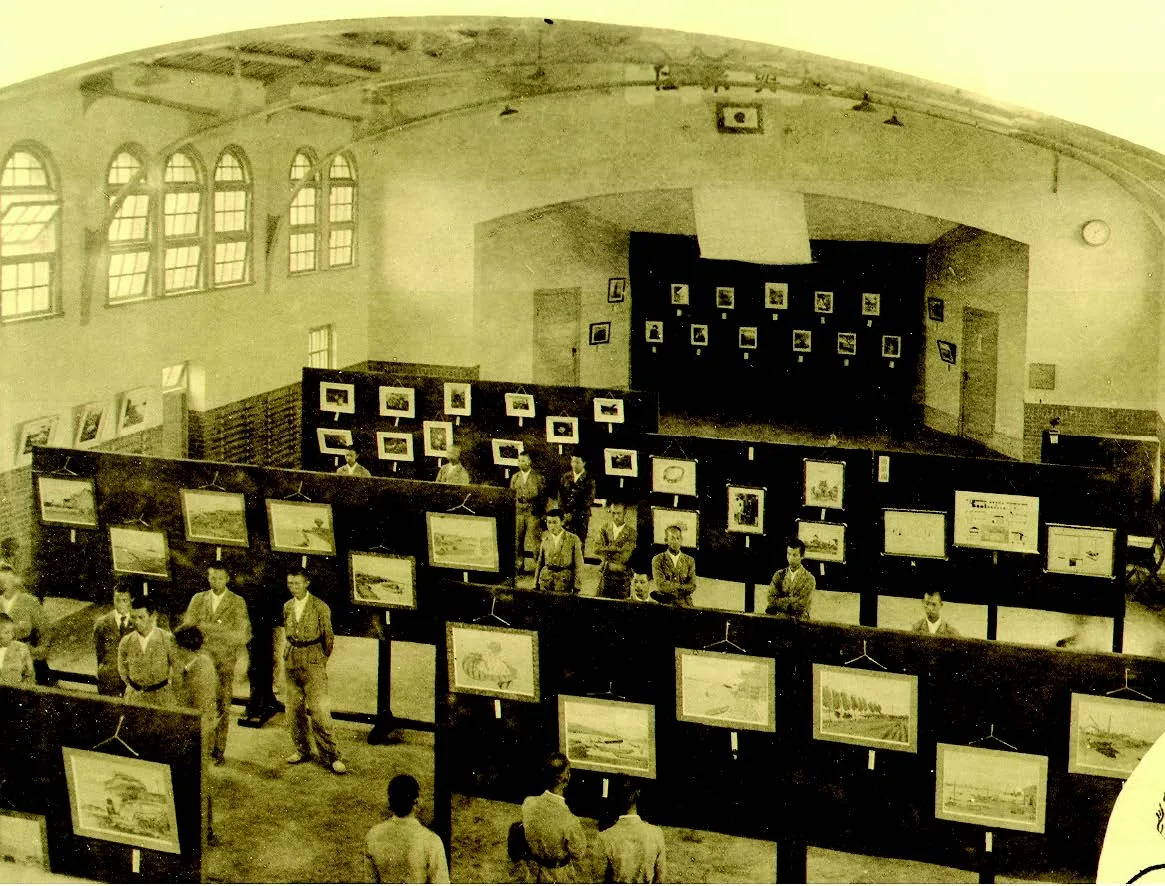
An exhibition of artwork in the girls' gymnasium. Chen Ching-hui (陳敬輝), who taught art and crafts at the time, was a well-known Taiwanese painter and art educator, and at Tamsui Girls' High School he trained a number of women painters of the Taiwanese art world.
A 1942 photograph of the girls' school kyoto (dean of academic affairs) Tsutsumi Jutaro (left) and Jinbo Kunio (right), homeroom teacher of the fourth-year Hsiao (孝) class, with the students of that class. In the Japanese period very few Taiwanese were able to receive a middle school education, and girls were rarer still. These 'favoured daughters of heaven' of Tamsui Girls' High School made an indelible contribution to the later rise in the status of women in Taiwan.

Besides excelling academically, the students were not behind others in sport. In kendo, archery, horsemanship, track and field and other events they repeatedly achieved fine results in the island-wide middle school competitions. Several Tamsui Middle School athletes represented Taiwan's middle schools in competitions in Japan. This period is therefore often called the golden age of Tamsui Middle School, and the achievement is owed to Principal Arisaka's careful management of the school and to the educational spirit of equality, universal love and teaching without distinction with which he brought on long-suppressed Taiwanese students.

03From the Girls' High School Department of Taipei Theological College to Taipei Miyanomae Girls' School

After Tamsui Middle School and the Tamsui Girls' Institute were taken over by the Japanese, the Women's School and the Taipei Theological College, formerly run by the Canadian Mission and already handed over to the northern Presbyterian church, developed separately.

After its premises were requisitioned, the Women's School moved its classes to the missionary residences opposite; from 1937 it was gradually wound up, and in 1940 it was converted into the 'House of Peace' (安樂家), a rest home taking in destitute women, elderly women and those from broken families. The 'House of Peace' continued until it was disbanded in 1942.
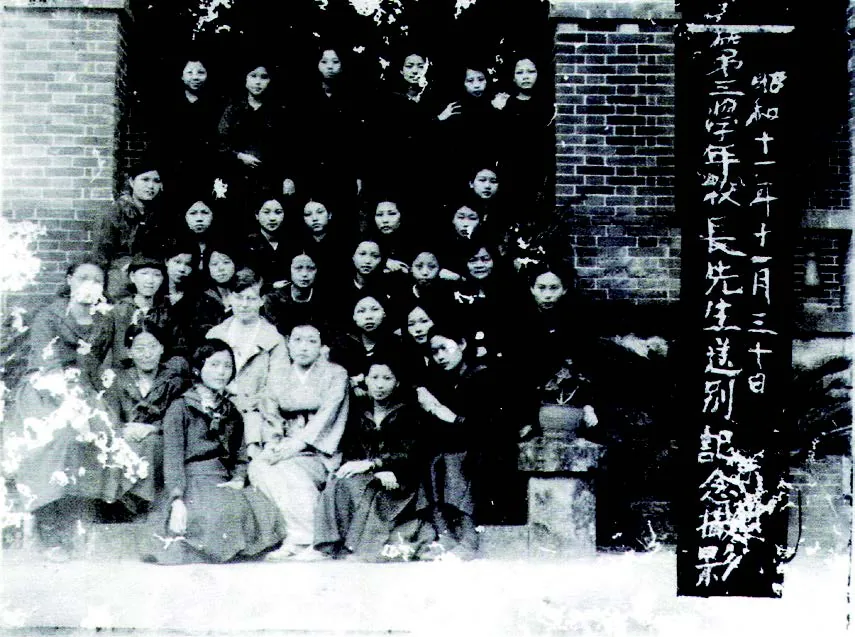
After the church's women's educational institutions in Tamsui were closed one after another, the 'Girls' High School Department of Taipei Theological College' moved to the missionary residences at Shuanglian in Taipei to continue its classes, and grew into 'Taipei Miyanomae Girls' School'.
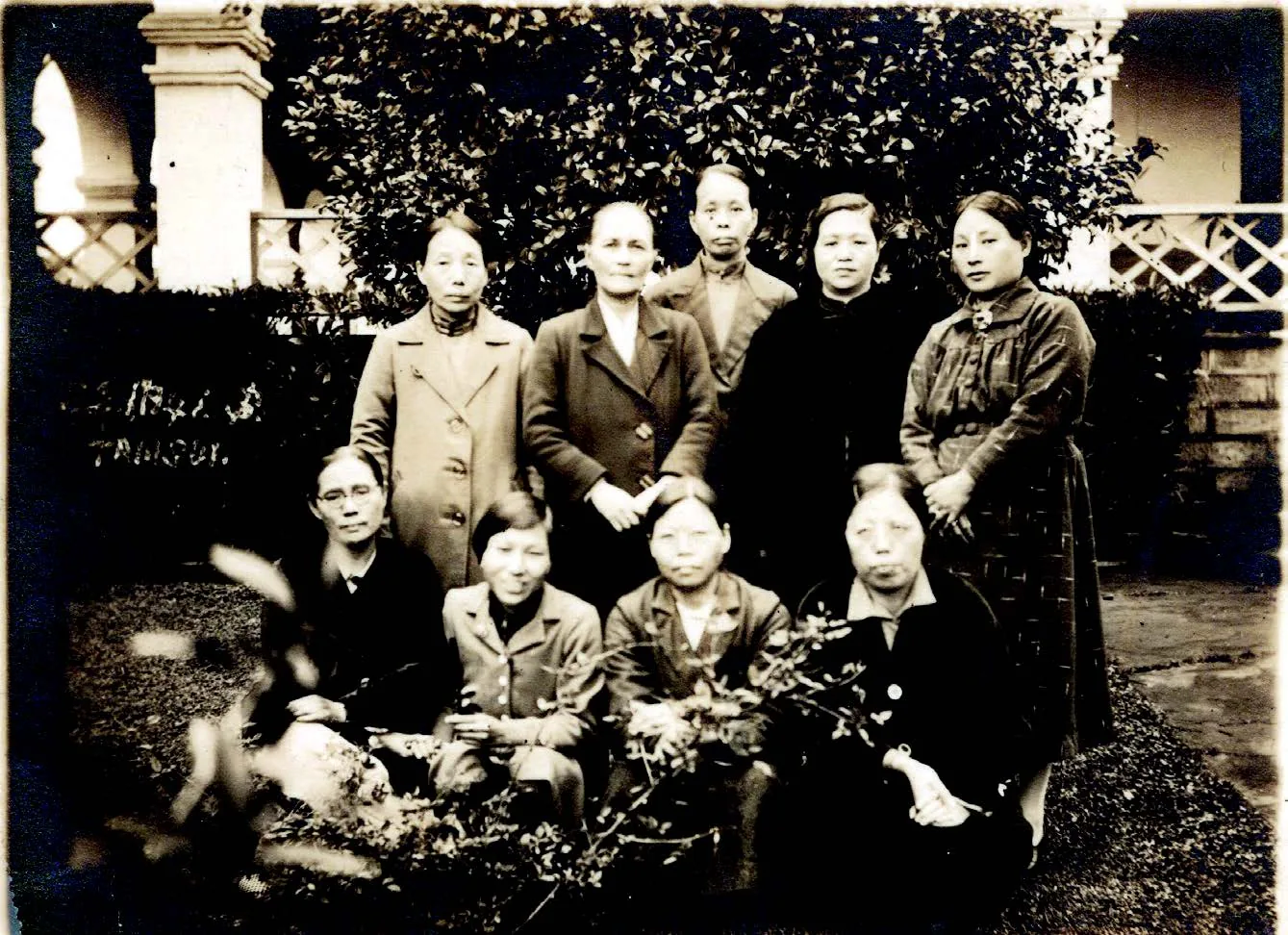
Left: in 1936, after the Tamsui Girls' Institute was taken over, the students held a farewell gathering for the principal of the day, Miss Ya-e-erh (亞額爾姑娘).
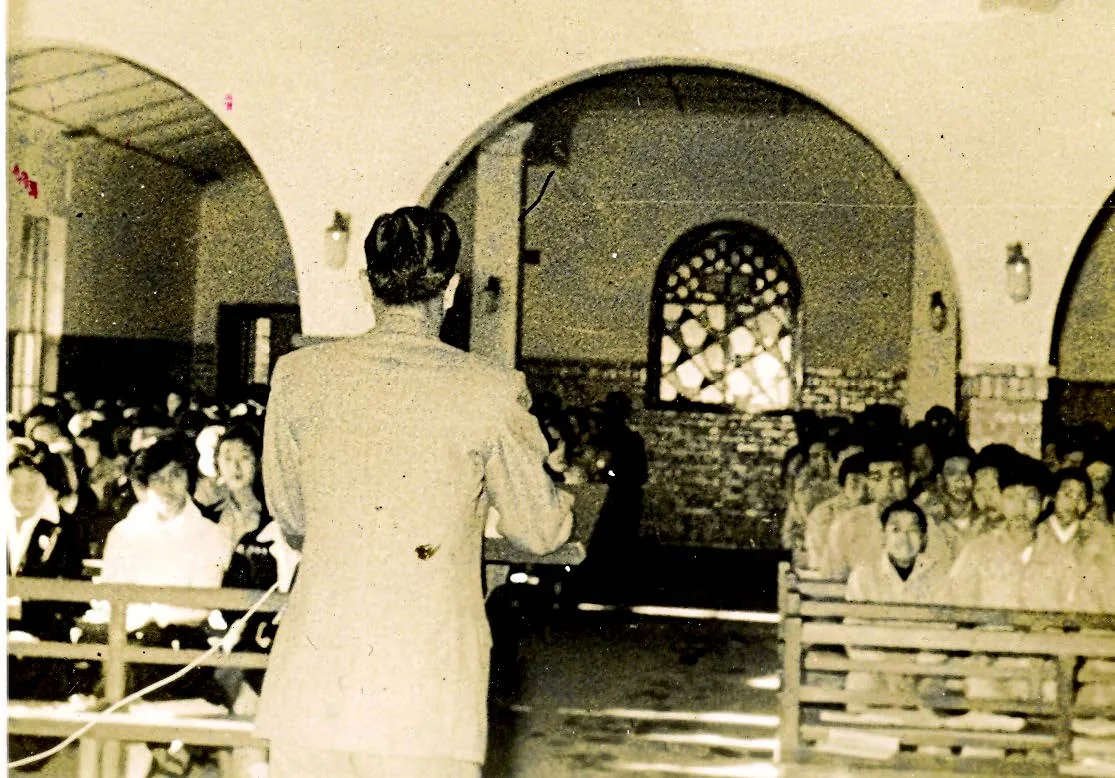
After the mission schools were taken over, religious activities could no longer be held on campus. Christian students therefore went to the chapel of Tamsui Church on Sunday afternoons to hold a students' service. The service was led by Chen Su-ti (陳泗治), then an evangelist at Shilin (lower left of the photograph); Chen Su-ti later became principal of Tamkang Senior High School.
In 1940 the Women's School was converted into the 'House of Peace', using the missionary residences as its premises to house women left without support, until it was disbanded in 1942; the buildings were then rented out as a dormitory for Tamsui Middle School students. The 'House of Peace' was the last of the church institutions to withdraw from Tamsui.
After the Taipei Theological College moved to Shuanglian in Taipei, Oxford College, built by Dr. George Leslie Mackay, was converted by Tamsui Girls' High School into a student dormitory named 'Mei-liao'. Principal Arisaka erected an archway in front of it setting out the school's history.

The Taipei Theological College, which held its classes in Oxford College, also moved at the end of 1937 back to its former college premises at Shuanglian in Taipei. With the loss of the Tamsui Girls' Institute, the Women's School had also been forced to close. Wishing to revive this educational work, to raise the level of women believers and to train women evangelists, the church authorities in 1940 used the former missionary residences and Oxford College in Tamsui to add a 'Girls' High School Department of Taipei Theological College', with the Japanese Okawa Tadashi as principal.

The following year, in order to unify it with the women's school and the theological college in southern Taiwan, which were in the same situation, it was moved in May to the missionary residences at Shuanglian in Taipei, with Chen Neng-tung (陳能通), who had taught at Tamsui Middle School and Chang Jung Middle School, as head of the girls' department. During the war this Taipei Theological College at Shuanglian may be called the school that consolidated all the Presbyterian Church's educational institutions in Taiwan.

With its educational centre moved to Shuanglian in Taipei, the northern church rented the four missionary residences and Oxford College in Tamsui to Tamsui Middle School and Tamsui Girls' High School. Principal Arisaka converted Oxford College into a girls' dormitory named 'Mei-liao' (Hall of Beauty); together with the girls' school building named 'Shan-liao' (Hall of Goodness) and the Women's School named 'Chen-liao' (Hall of Truth), these formed the three girls' high school dormitories of Truth, Goodness and Beauty. At the same time the four missionary residences were converted into boys' dormitories, named from east to west 'Xuanwu', 'Baihu', 'Zhuque' and 'Qinglong', the four dormitories of Tamsui Middle School.

In June 1944, following the instructions of the Taihoku Prefecture Education Section, the Girls' High School Department of Taipei Theological College was separated from the college and became the three-year 'Taipei Miyanomae Girls' School' (Shuanglian was called 'Miyanomae-cho' in the Japanese period). The principal and the directors were, of course, all Japanese.
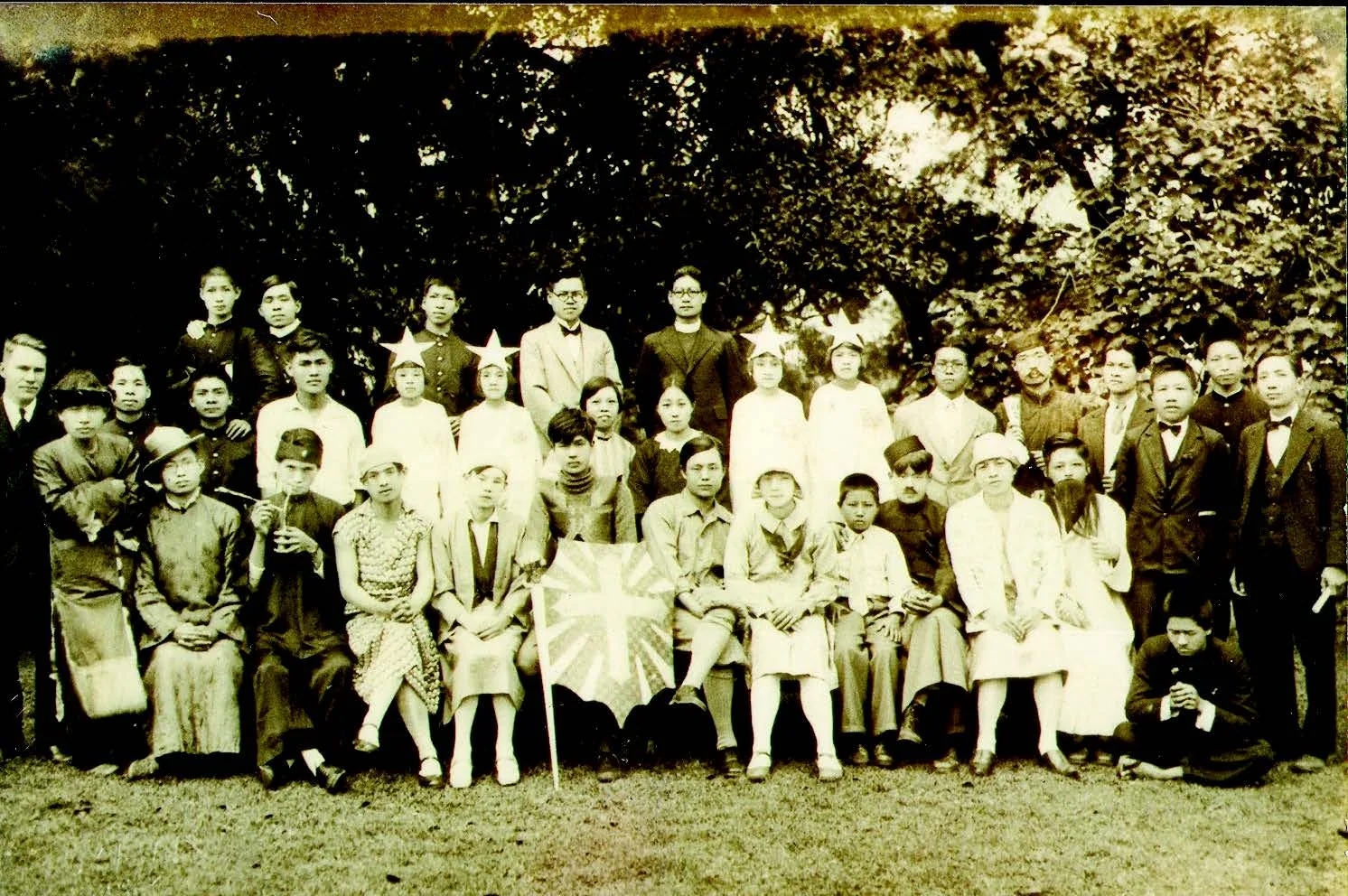
In April 1932 students of the Taipei Theological College in Tamsui performed the sacred drama 'The Pilgrim's Progress'; this may be called the height of the mission schools. During the war the college moved to Shuanglian and became the school that consolidated all the Presbyterian educational institutions in Taiwan.

In 1945, after the war, Taipei Miyanomae Girls' School was renamed 'Chungshan Girls' Middle School' (after the war 'Miyanomae-cho' was renamed Chungshan North Road), and only in 1947 was it merged into the girls' department of Tamkang Senior High School.

This very short-lived girls' middle school was a transitional school set up by the church in response to the takeover of the two Tamsui schools and the Tainan Girls' School by the Japanese; in scale and results it naturally could not compare with the two Tamsui schools under Japanese management. But it carried the significance of the church continuing Dr. Mackay's work of founding schools, and it is of course a part of Tamkang's school history.

04The Two Schools under Kominka Education

Although the Japanese ran the two Tamsui schools with notable success, it cannot be denied that their main purpose in taking such pains to seize the two middle schools was to make them bases for Japanese militarism's kominka movement. Kominka meant instilling the 'Japanese spirit' through education, seeking to 'Japanise' the minds of the Taiwanese and, driven by a doctrine of aggression, to make the Taiwanese contribute as much as possible to the expansion of Japanese militarism. After the outbreak of the Sino-Japanese War in 1937 Japan grew still more radical, launching the so-called 'General Mobilisation of the National Spirit' and 'Industry Serving the Nation' movements, and Tamsui Middle School and Tamsui Girls' High School were naturally swept into the storm.

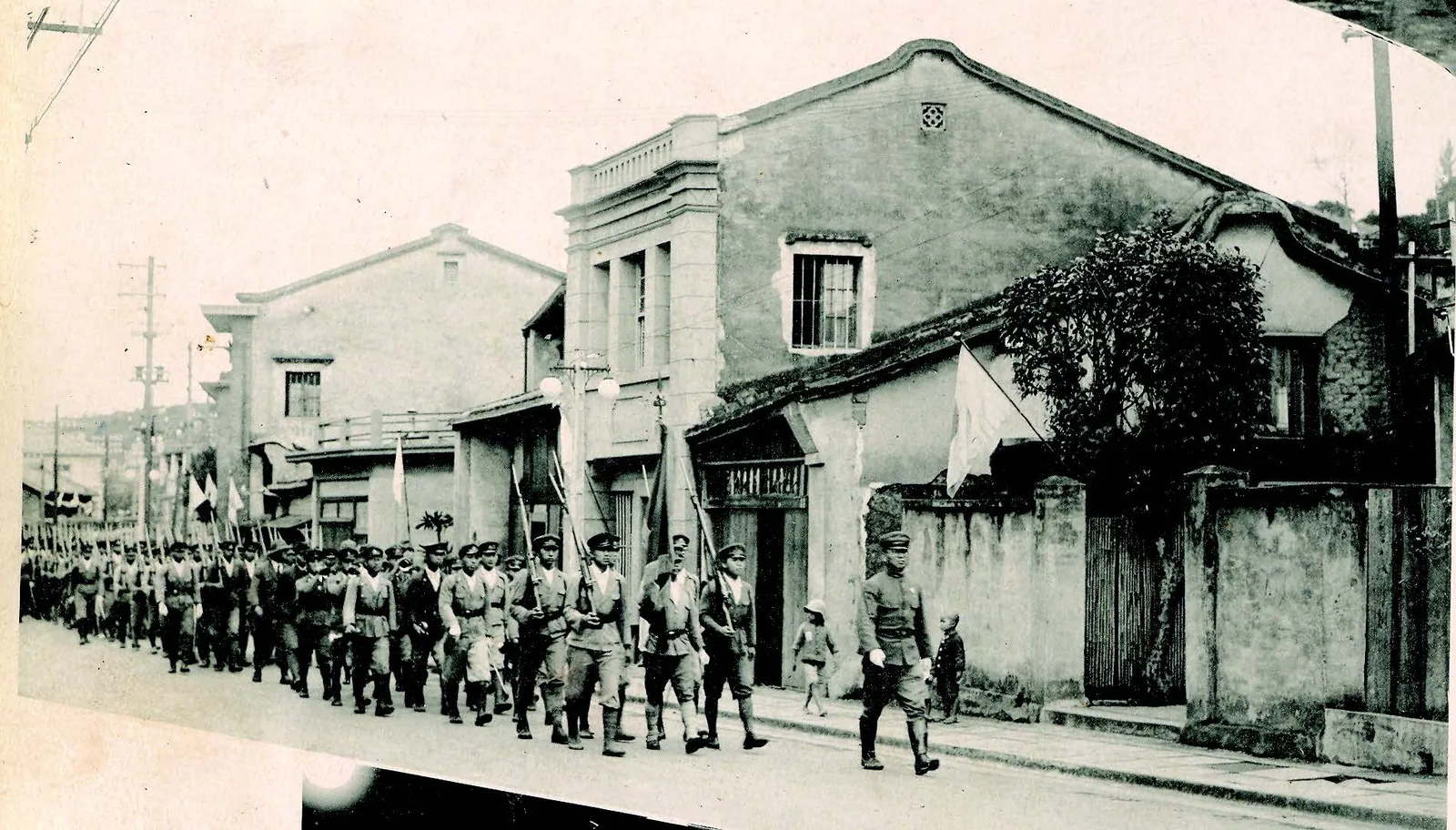
After taking over Tamsui Middle School and the Tamsui Girls' Institute, the Japanese immediately changed the teaching content and replaced the existing teachers. Students were placed under Spartan management, with dress, bearing and daily routine all militarised, and were required to cultivate the spirit of bushido through kendo (naginata for the girls) and archery. Military training was also strictly enforced: besides regular rifle drill and target practice there were bayonet examinations and long armed marches, to build fighting strength.

On 13 October 1941 Lieutenant General Honma Masaharu, commander of the Taiwan Army, came to Tamsui to inspect the results of Tamsui Middle School's military training and to assess the quality of the students, in order to judge the possibility of conscripting Taiwanese youths into the Japanese imperial army.
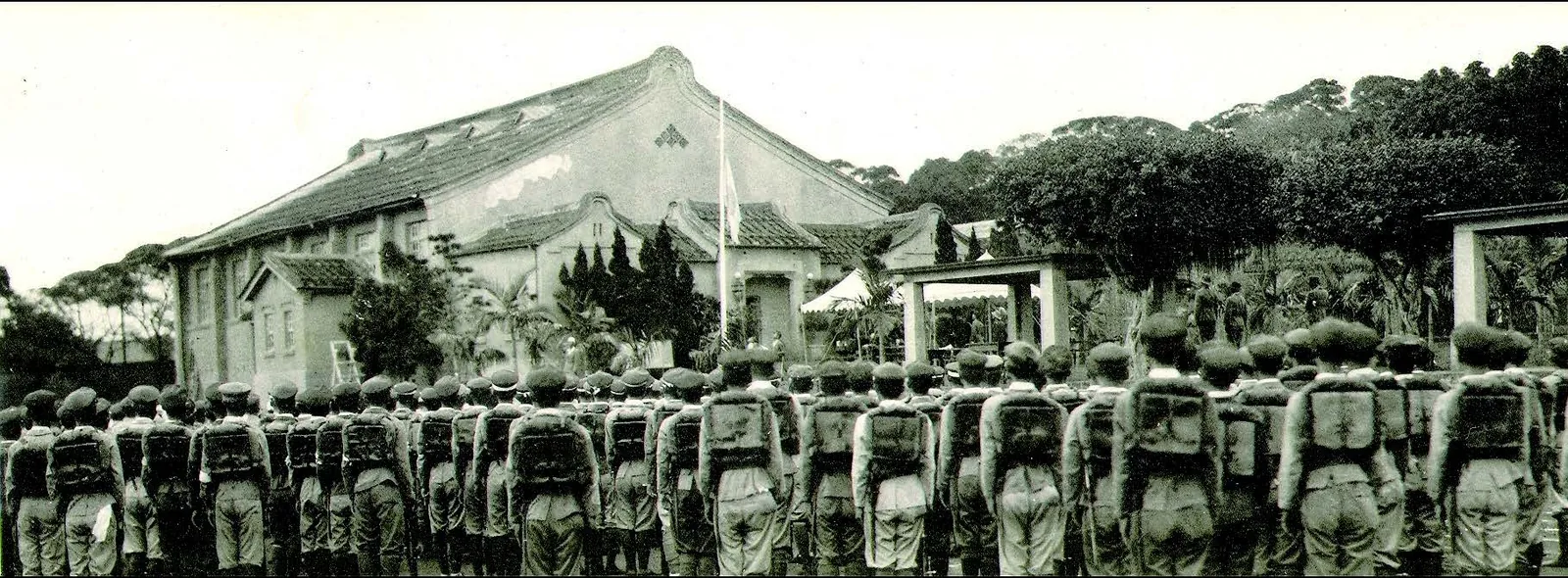
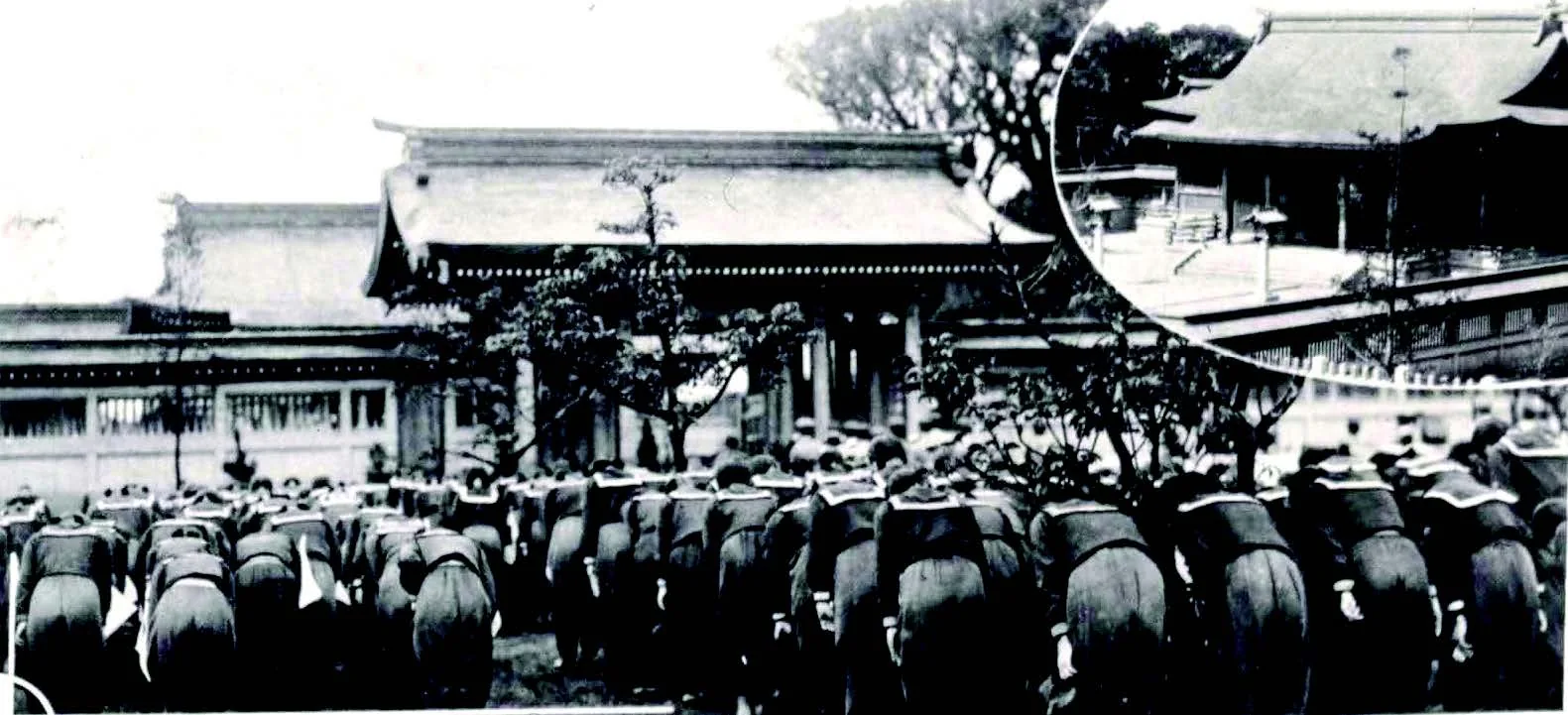
Japanese militarism regarded schools as bases for carrying out kominka. Like other middle schools, Tamsui Middle School rigorously enforced military training, to raise soldiers of the imperial army loyal to the nation.
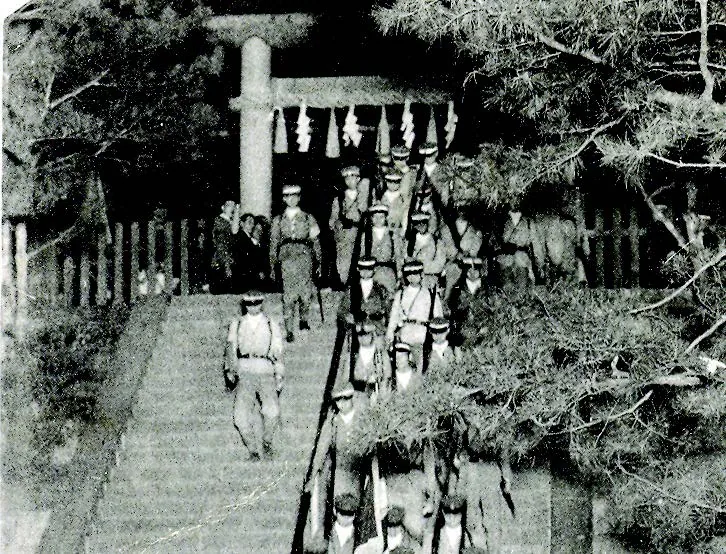
Like the boys of Tamsui Middle School, the students of Tamsui Girls' High School had to go to the Tamsui Shinto Shrine to worship, so as to strengthen patriotic thinking.

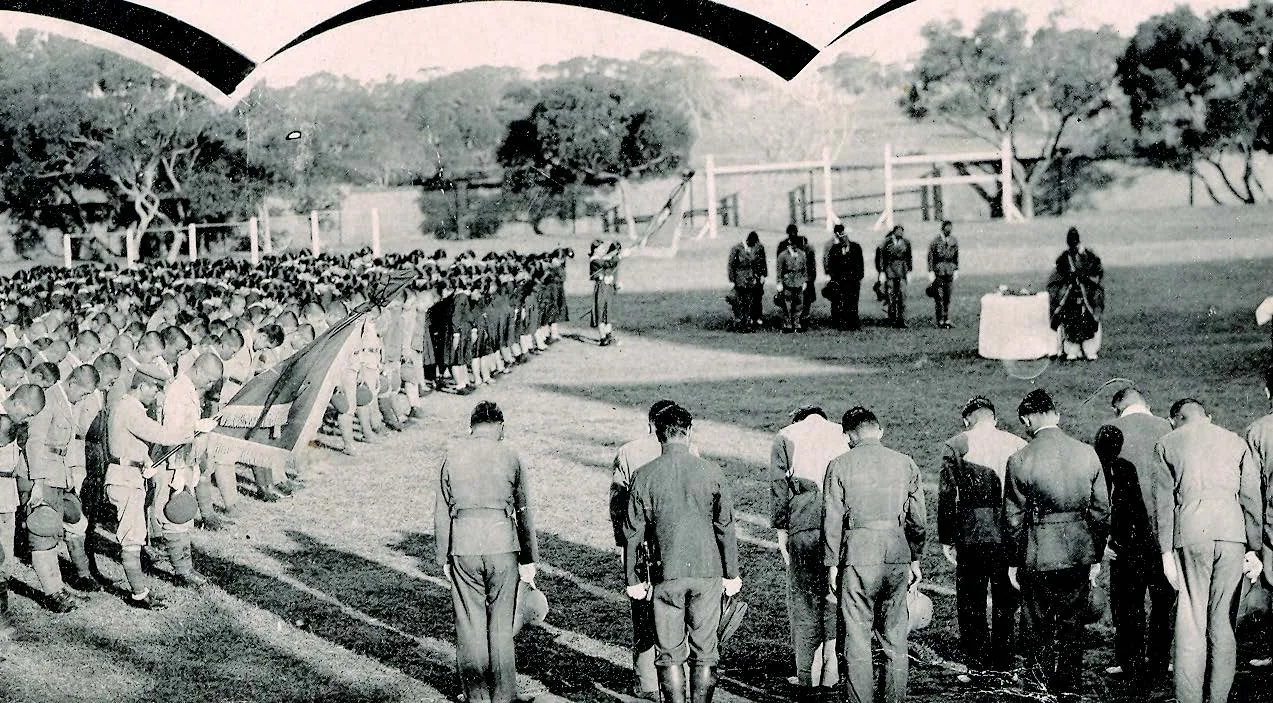
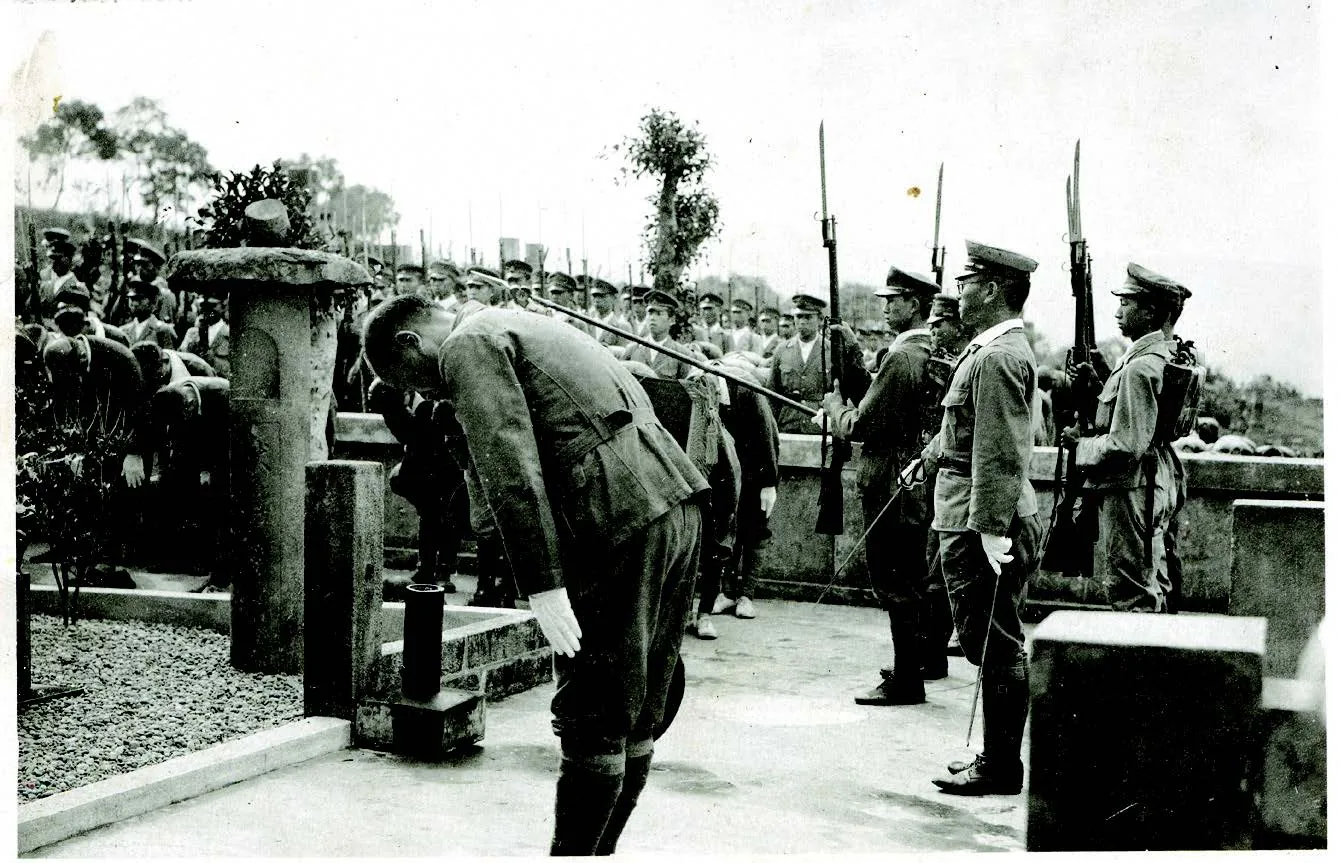
Besides military training on campus, the Japanese used Shinto worship to change the spiritual content of the two schools and to strengthen patriotic thinking. Every year Principal Arisaka and the military instructors led the teachers and students of both schools to worship at the Tamsui Shinto Shrine and the naval cemetery. The new Tamsui Shrine, at Yuchekou, was completed in 1939 and enshrined Amaterasu Omikami, the Meiji Emperor, and Prince Yoshihisa (能久親王), the war deity of the conquest of Taiwan. The naval cemetery lies above today's sports park (the former Tamsui First Cemetery) and commemorates eight Japanese sailors who died for their country at Tamsui harbour in 1895, whose deeds were regarded as a symbol of the Japanese martial spirit. Besides the solemn regular ceremonies, students were encouraged to go voluntarily at other times to clean the grounds. On the countless occasions when they went to worship at the naval cemetery, the column of teachers and students passing through the streets of Tamsui, imposing, well drilled and full of spirit, left a deep impression on the people along the way.
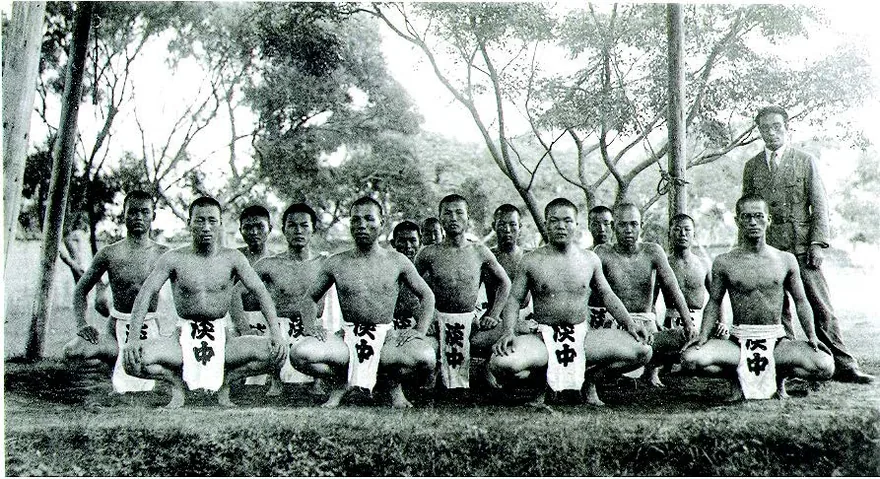
Besides instruction in Japanese 'yokyoku' chanting, Tamsui Middle School also gave training in the national sport of sumo, shown above; the aim was to Japanise the minds of Taiwanese youths.
Like the boys of Tamsui Middle School, the students of Tamsui Girls' High School had to go to the Tamsui Shinto Shrine to worship, so as to strengthen patriotic thinking.
Tamsui Middle School students holding a kendo shiai (match) in the Butokuden, to make swordsmen of them.
During the war the two Tamsui schools held a morning assembly on every national holiday.
A shrine priest invited to the school to conduct a memorial rite for the dead
Besides instruction in Japanese 'yokyoku' chanting, Tamsui Middle School also gave training in the national sport of sumo, shown above; the aim was to Japanise the minds of Taiwanese youths.
Naginata fencers of Tamsui Girls' High School who came to the Butokuden to spar with the boys' school, showing a spirit of women yielding nothing to men that is rarely seen today.
Like the boys of Tamsui Middle School, the students of Tamsui Girls' High School had to go to the Tamsui Shinto Shrine to worship, so as to strengthen patriotic thinking.
Every July the students of Tamsui Girls' High School went to tend the graves at the Tamsui naval cemetery, while Tamsui Middle School, led by the principal and the military instructors, went to the naval cemetery to pay homage to the loyal souls who had died for their country, so as to strengthen patriotic conviction.
Besides instruction in Japanese 'yokyoku' chanting, Tamsui Middle School also gave training in the national sport of sumo, shown above; the aim was to Japanise the minds of Taiwanese youths.
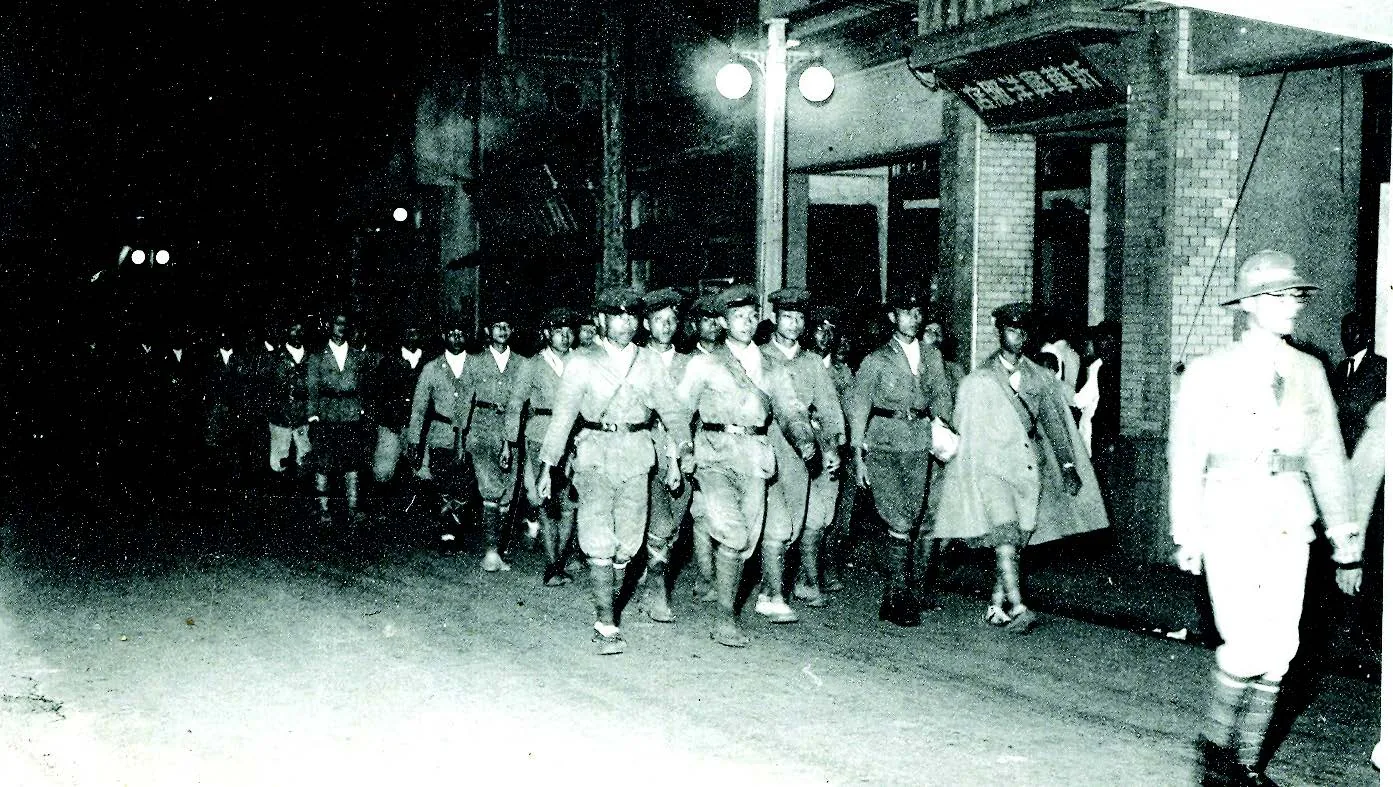
The armed march was a very important part of military training at Tamsui Middle School. Besides marching from Tamsui to the hills of Shimen to pay homage to the spirits of fallen officers and men, there were also night marches from Tamsui to Hukou.
Like the boys of Tamsui Middle School, the students of Tamsui Girls' High School had to go to the Tamsui Shinto Shrine to worship, so as to strengthen patriotic thinking.
A night march from Tamsui to Yuanshan in Taipei in August 1941, with a night service at the Taiwan Shrine (the former Yuanshan Martyrs' Shrine).

After the outbreak of the Pacific War, as the fighting developed, the schools further intensified the instilling in students of the belief and resolve to be imperial subjects. Every week Principal Arisaka personally presided over a 'Certain Victory Training Meeting', and the students formed a 'Service Corps' that went outside the school to assist with civil defence and disaster drills. In the winter and summer holidays students also had to go to the countryside for 'labour service'; most middle school students of the time went to Yilan to build an airfield, while some worked on roads and in coal mines near Taipei. Tamsui Middle School was unusual in being assigned to build a 'dentan' (radar) station at Shuijiantou, working by day and sleeping at night at Shuijiantou Public School (today's Shuiyuan Elementary School), which was extremely hard. In the last stage of the war the Japanese authorities further shortened the middle school course from five years to four, so that students could be sent to the front sooner. On 15 August 1945 Principal Arisaka and the students heard the Showa Emperor's 'Jewel Voice Broadcast' at Tamsui Middle School and learned that Japan had been defeated and had surrendered unconditionally; this also announced the end of the era of Japanese management of the school.
Besides instruction in Japanese 'yokyoku' chanting, Tamsui Middle School also gave training in the national sport of sumo, shown above; the aim was to Japanise the minds of Taiwanese youths.
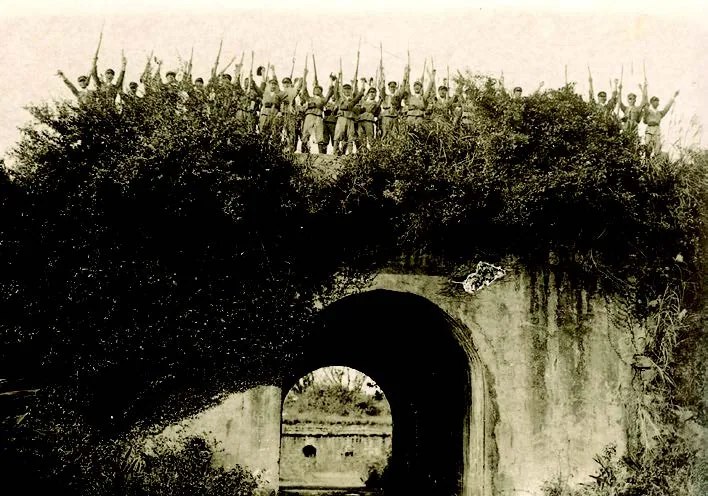
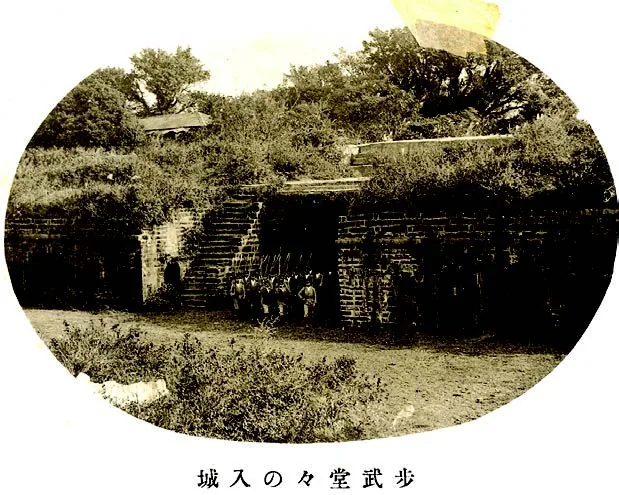
Military training at Tamsui Middle School was extremely rigorous; today's Hobe Fort was then the drill ground of its students.
Like the boys of Tamsui Middle School, the students of Tamsui Girls' High School had to go to the Tamsui Shinto Shrine to worship, so as to strengthen patriotic thinking.
Students marching in file through the fort's main gate for drill, and climbing to the top of the fort to shout banzai.
Like the boys of Tamsui Middle School, the students of Tamsui Girls' High School had to go to the Tamsui Shinto Shrine to worship, so as to strengthen patriotic thinking.
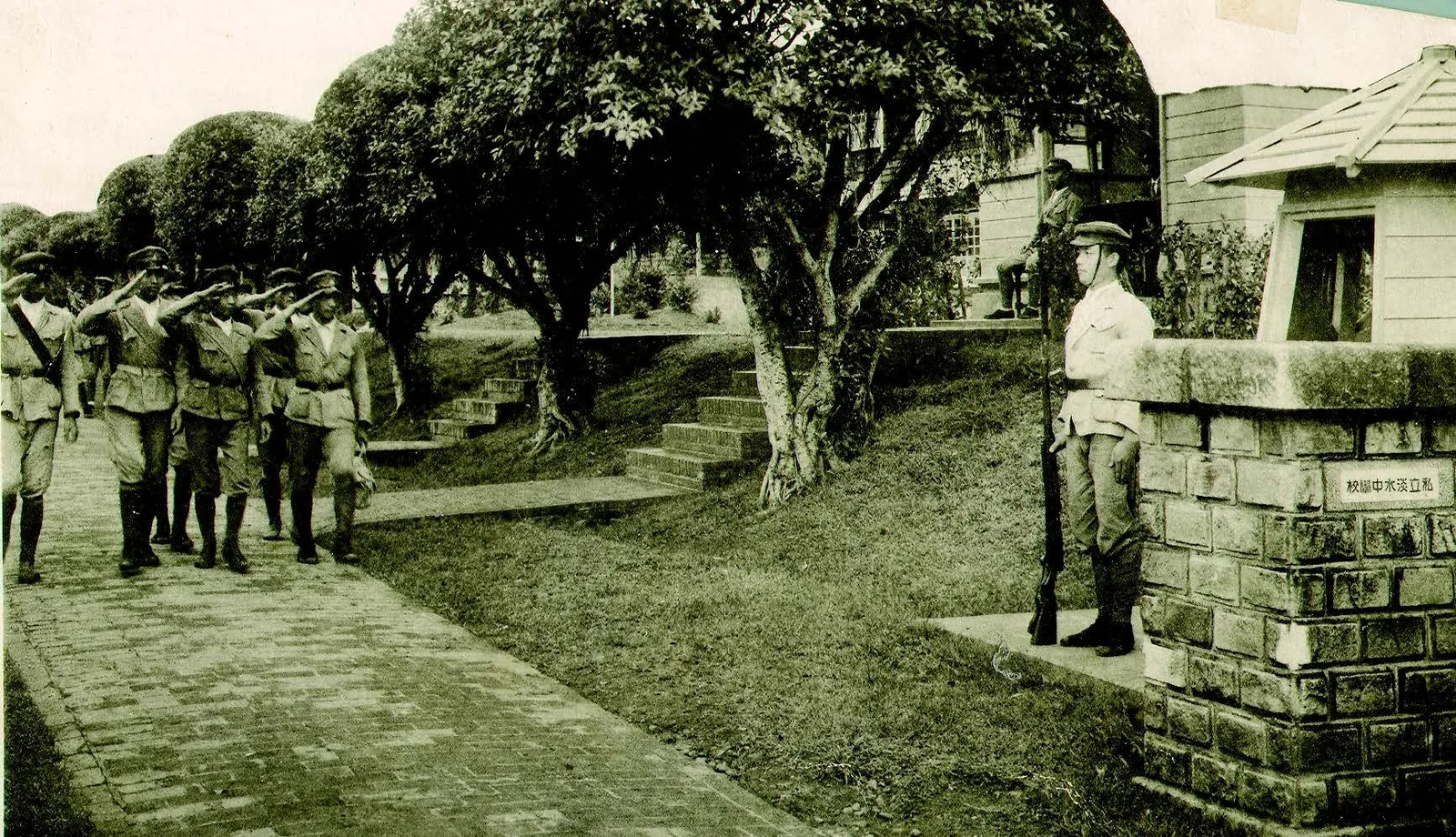
The changing of the guard at the sentry post at the Tamsui Middle School gate.
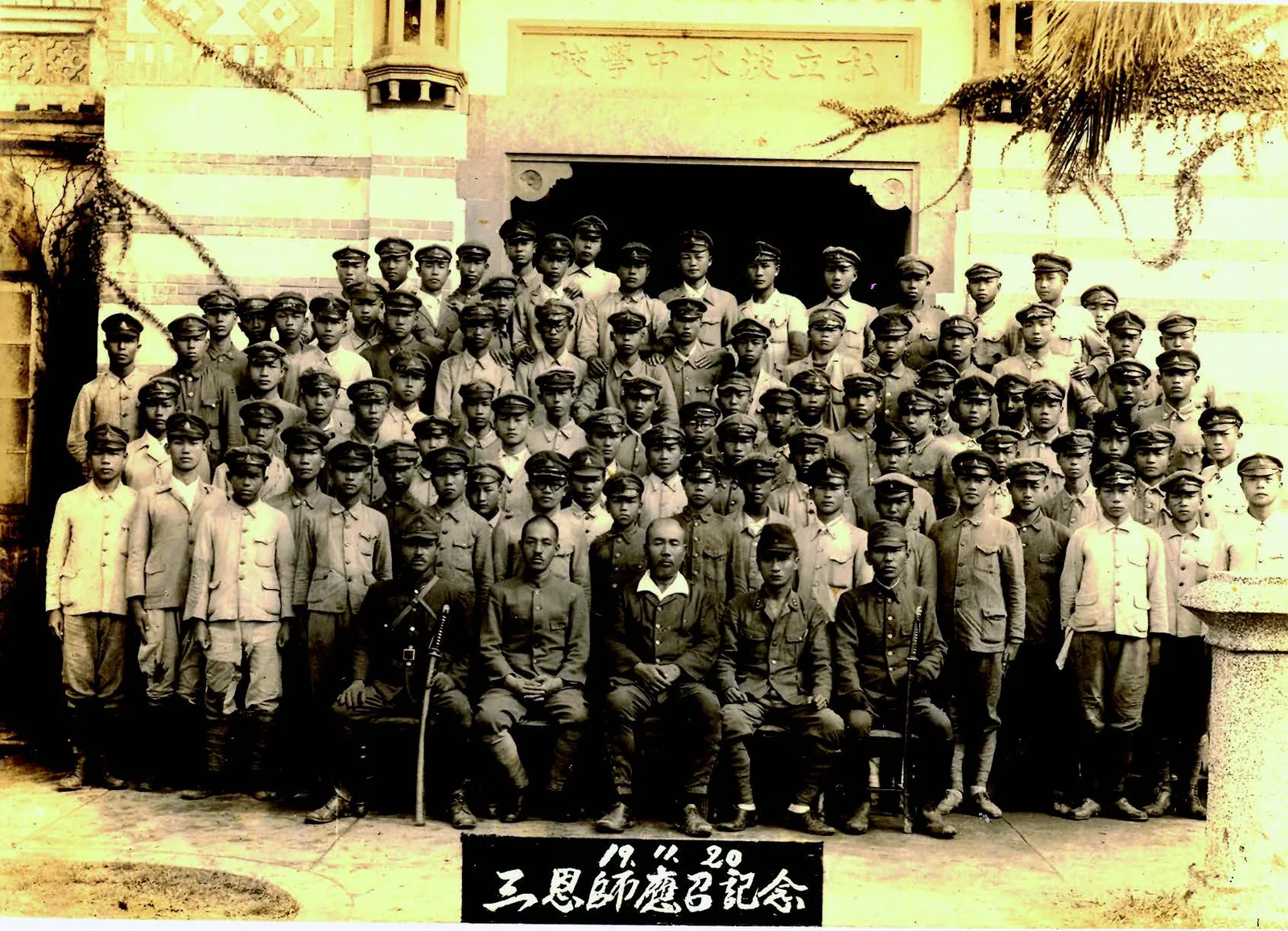
In 1944 the Japanese forces were retreating steadily and the front had drawn close to Taiwan. With troops in short supply, the five-year middle school course was changed to four years so that middle school students could enlist sooner. The picture shows the only four-year graduating class of Tamsui Middle School, with Principal Arisaka in front of the Octagonal Tower, seeing off three teachers called up for service; eight months later Japan was defeated and surrendered. From the right: Captain Yokoyama, the attached officer; Sergeant Sakurai; Principal Arisaka; kyoto Hattori; and Second Lieutenant Umetani Ikuo.

05The Bronze Statue of Dr. Mackay, Toyed with by History

After Tamsui Middle School completed the Octagonal Tower building, its next building project was a library that would also serve as a memorial hall to Dr. Mackay. From 1931 funds were raised from all quarters towards a target of 30,000 yen, but when the Japanese government forcibly took over Tamsui Middle School in 1936 the library had not yet been built. For the sake of teaching needs, and so that later generations would not forget the school's founding history, the Mission left the money it had raised for the Japanese to build the library and the bronze statue of Dr. Mackay after taking over the school, and made this a condition of the transfer.

Another condition of the transfer of Tamsui Middle School was that the Japanese should appoint a Japanese Christian as principal; as a compromise the Japanese sent Arisaka Issei, who had come from a mission school, as principal. Principal Arisaka completed the 'Dr. Mackay Memorial Library' and the memorial bronze statue of Mackay as agreed, and an unveiling ceremony was held on their completion in April 1939.

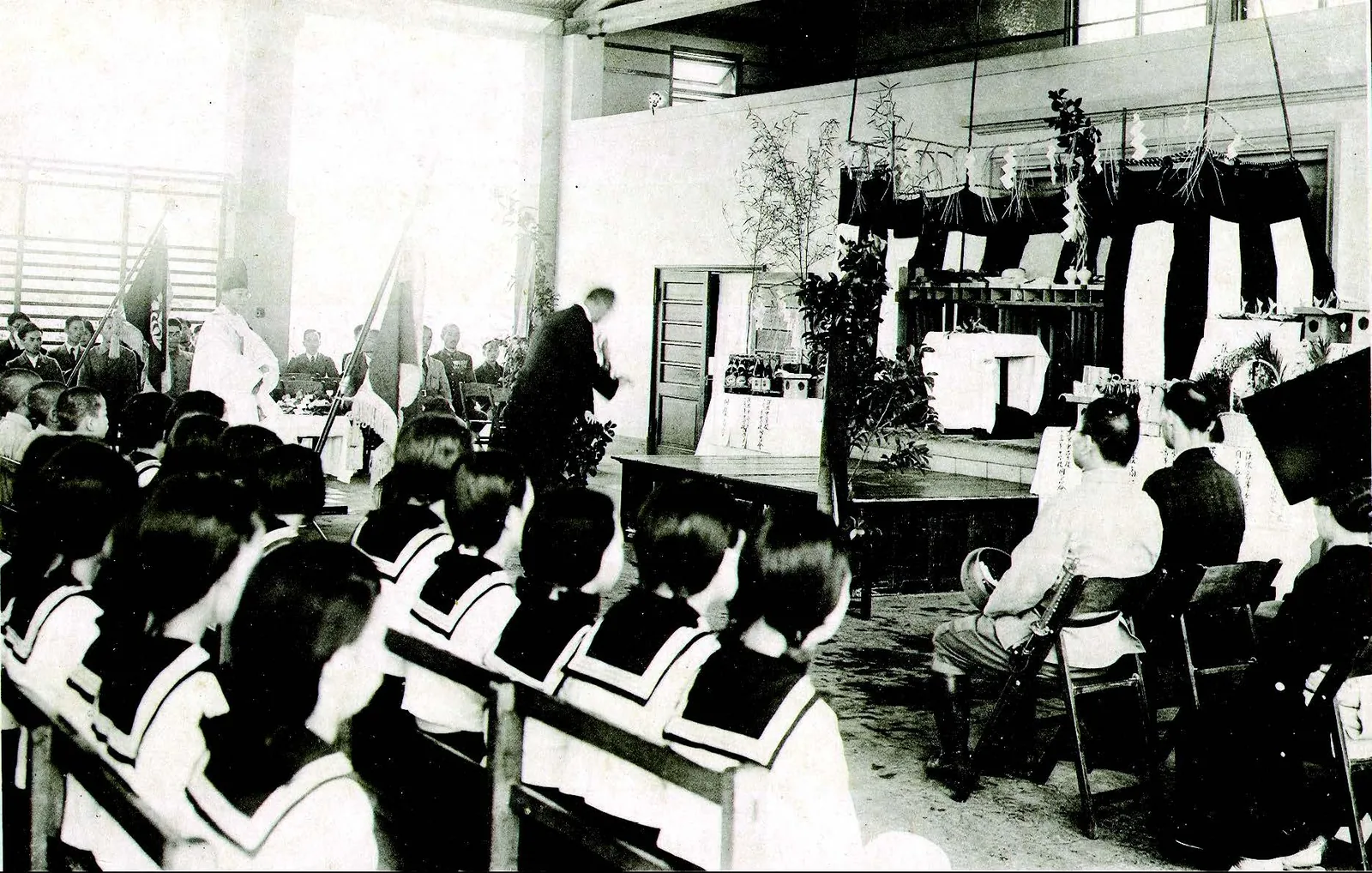
Tamsui Middle School had been a mission school, but after the Japanese takeover it became a place of kominka education. The library's opening ceremony was no longer a worship service but a Japanese Shinto rite. It was conducted that day by two Japanese priests, with zigzag-patterned decorative paper and an offering table at the library's main door (on the table were sake and mochi; each student received one red and one white mochi that day as a celebratory gift). It happened that George William Mackay and his wife were away on furlough at the time; otherwise, how could they have borne to see this missionary hero commemorated in so incongruous a manner!

The bronze statue of Dr. Mackay met with no end of vicissitudes either. Less than two years after its unveiling the Pacific War broke out, Britain and America became enemy countries, and a statue of a British Canadian naturally became a highly sensitive object. But Principal Arisaka was a scholar of English, and far from rejecting it he made it a symbol of the spirit of Tamsui Middle School. Only in the last stage of the war did he realise that keeping the statue, even if it brought no trouble on the school, could hardly escape the fate of being taken away as raw material for weapons; he therefore had it taken down and hidden in a storeroom. After the war, when George William Mackay returned to Taiwan to look for the Mackay statue, he found that it had been stolen and had disappeared.
Besides instruction in Japanese 'yokyoku' chanting, Tamsui Middle School also gave training in the national sport of sumo, shown above; the aim was to Japanise the minds of Taiwanese youths.
The 'Dr. Mackay Memorial Library' was completed in April 1939; the opening ceremony was not a worship service but a Japanese Shinto rite.
Like the boys of Tamsui Middle School, the students of Tamsui Girls' High School had to go to the Tamsui Shinto Shrine to worship, so as to strengthen patriotic thinking.
On 29 May members of the Mackay family quietly returned to the school once more and were photographed in front of the Mackay statue. (The Mackay family had been invited to the library's opening, but must have found it hard to bear.)

But history turns. In 1957 all the graduates of that year gave donations and commissioned the sculptor Chang Fu-lin (張福霖) to make a new bronze statue of Dr. Mackay, modelled on the earlier one. On 9 March, the school's anniversary day, the re-erection of the statue of Dr. Mackay and a commemorative service were held in front of the Mackay Library, and George William Mackay and his wife and other members of the Mackay family were invited as guests of honour.

Because the 'Dr. Mackay Memorial Library' stood apart from the classroom area of the Octagonal Tower, a music room was placed on its north side; the teaching of Japanese 'yokyoku' chanting there was an important part of kominka education. After the war the 'Dr. Mackay Memorial Library' remained in use until 1983, after which a second storey was added with the legacy donated by Miss Tu Tao-li (杜道理姑娘). After the library moved to a new building in 2000, the interior of this building was renovated into classrooms, giving it its present appearance.

This building is the only Japanese-style building still standing on the Tamkang campus. The marble plaque carved at its completion, reading 'Dr. Mackay Memorial Library', still stands at the door (the character 記 is simply the Japanese usage, not a mistake), for later generations to remember.

06The Spiritual Stronghold of Tamkang

The Octagonal Tower of Tamkang Senior High School, the most representative building in the history of education in Taiwan, is not only the focus of the spirit of generations of Tamkang people but also the emblem of Tamkang's century of history and tradition and of its campus culture.
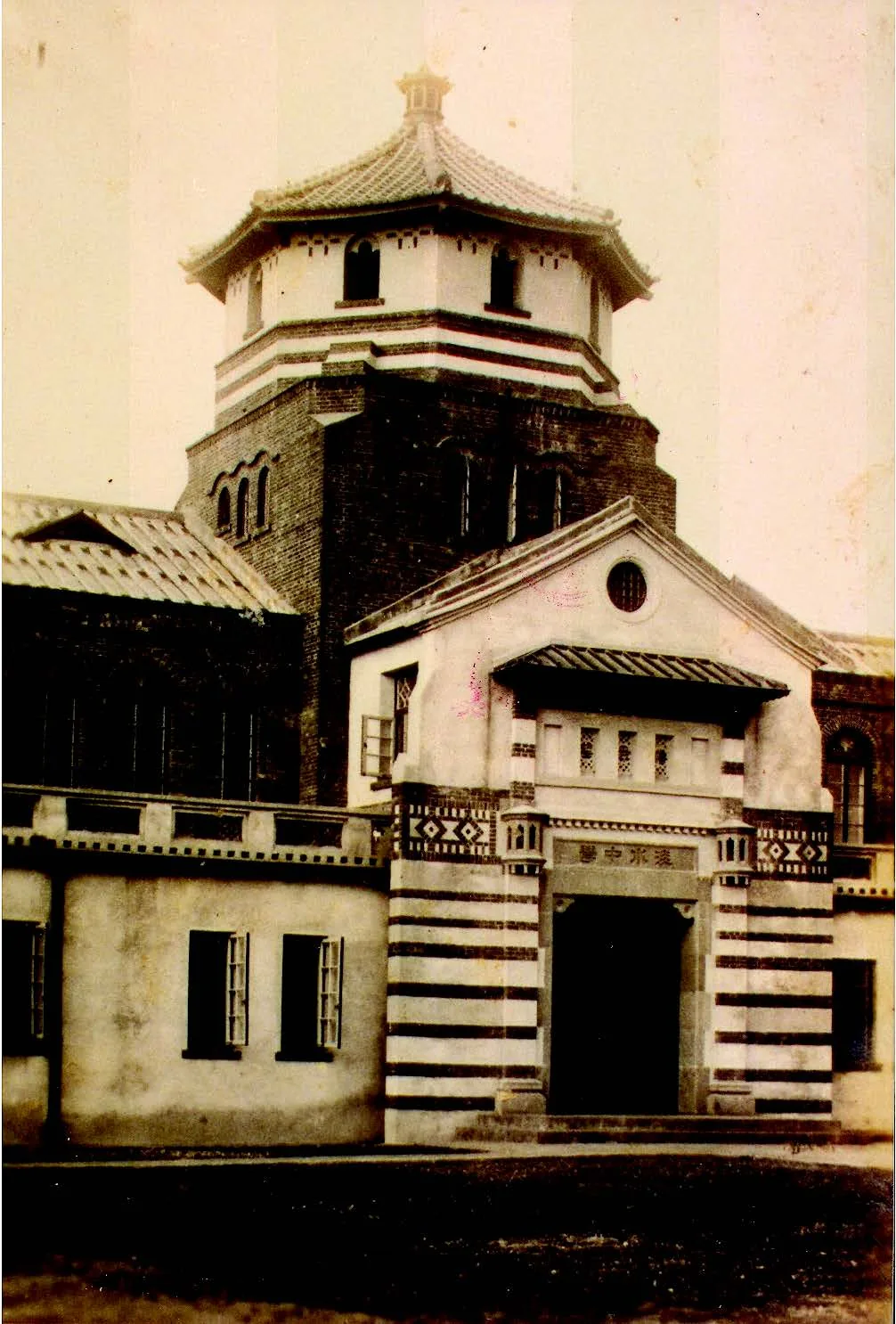
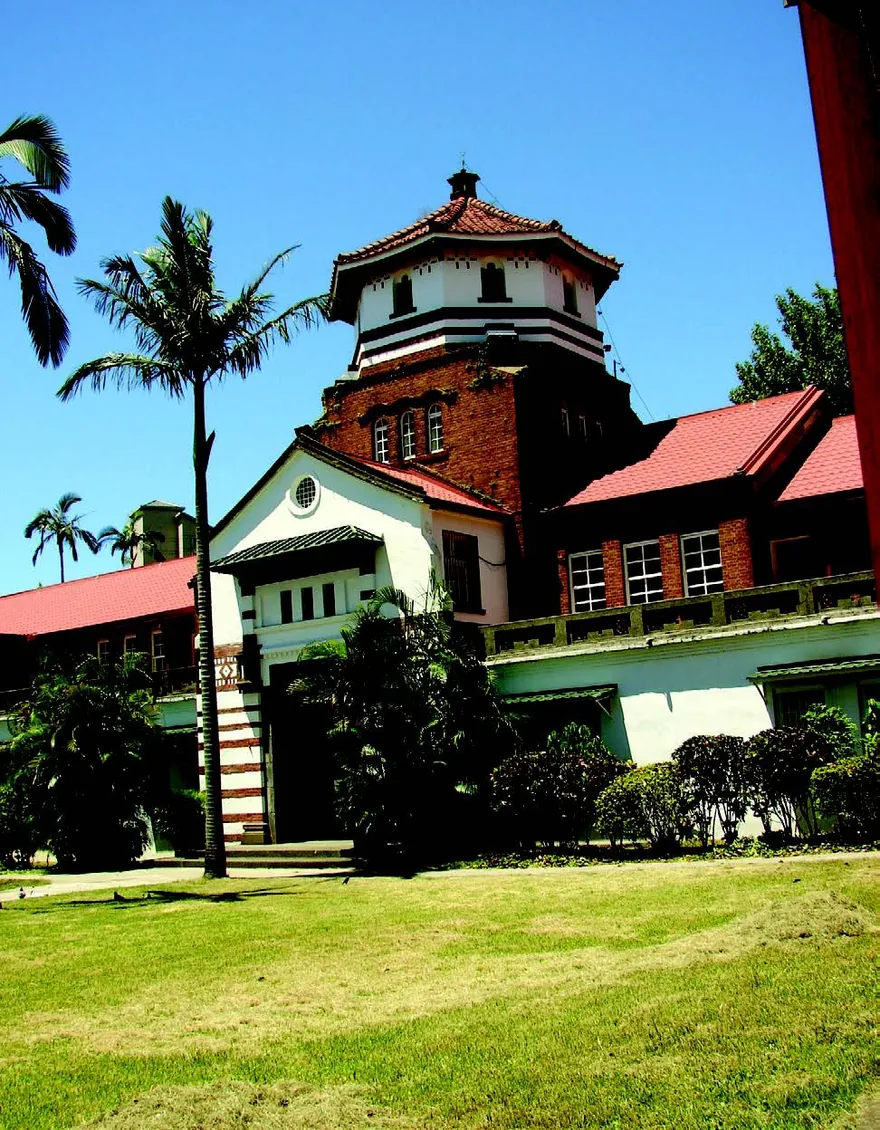
In 1938 the Tamsui boys' and girls' schools were granted accreditation and renamed 'Private Tamsui Middle School' and 'Private Tamsui Girls' High School'. The picture shows students of Tamsui Girls' High School. Under Japanese management the teaching facilities and equipment were extensively renewed
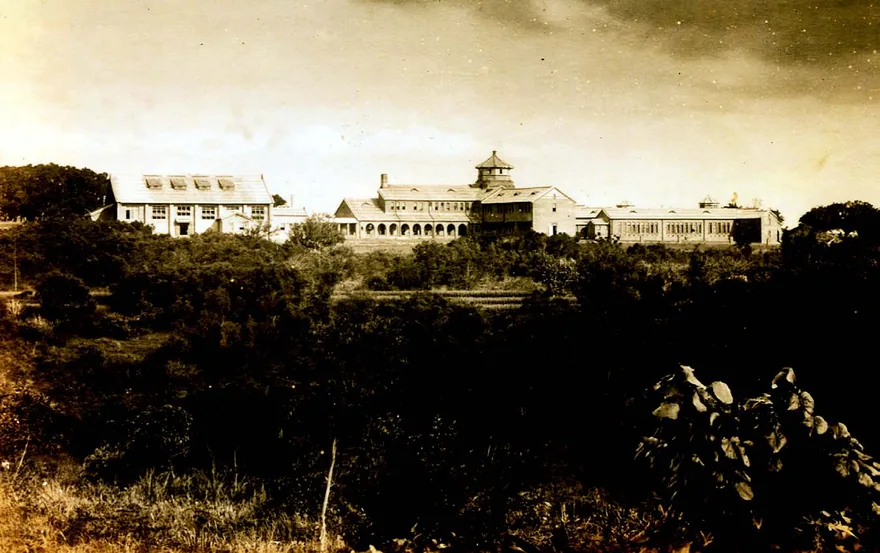
The Octagonal Tower in 1925
The chemistry classroom of the time.
The Octagonal Tower in 2000

From the time when Dr. Mackay's son George William Mackay returned to Tamsui to found Tamsui Middle School, how to plan an ideal campus was a question of great concern. In 1913 the Canadian home church sent the missionary Kenneth Dowie (Mr. Kenneth Dowie, B.Sc.) to Taiwan to engage in educational and youth religious work. A graduate of the faculty of engineering of McGill University in Canada, he had a background in architecture, and later took charge of the design and construction of the middle school's new premises.

Part of the land on which the school was built at Tamsui had been Dr. Mackay's own property; he bought 5,000 ping of land in 1896, and the Mission later bought neighbouring land piece by piece. After submitting its plan for the school, it obtained the Japanese Governor-General's permission to raise funds for building it.

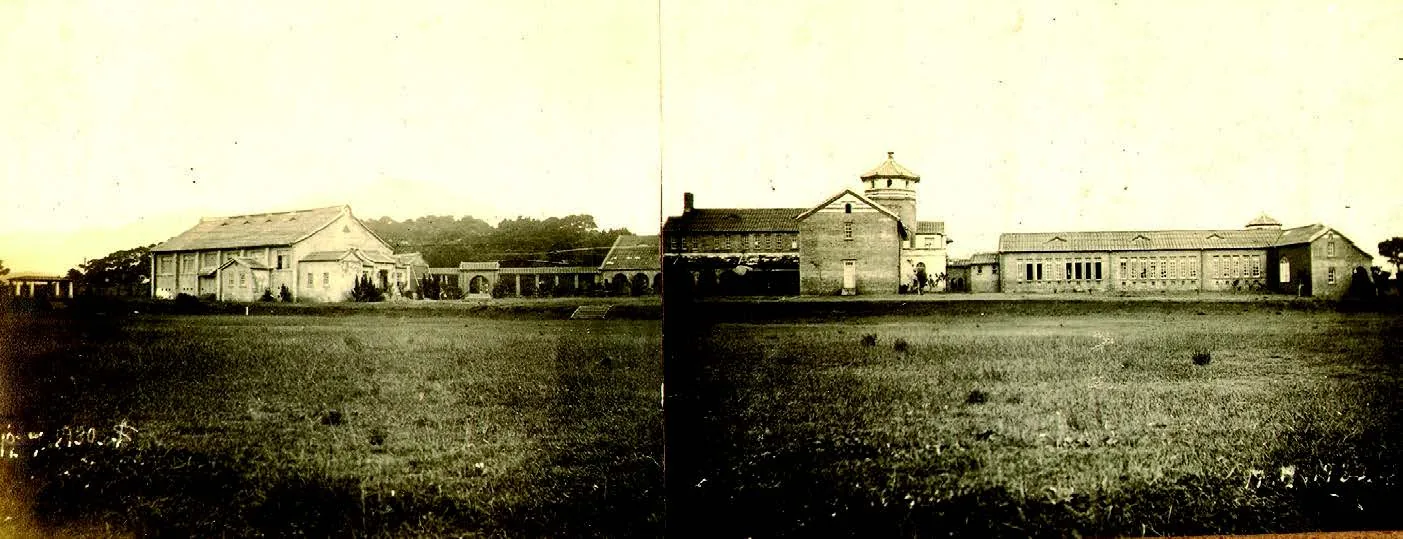
In May 1923 the gymnasium, the first building of Tamkang Senior High School, was completed first of all; work on the Octagonal Tower, the campus's main building, then began in November 1923 and was finished on 9 March 1925 (the school anniversary), with the dedication and opening ceremony held on 1 July that year.

07A Classic Building Blending Chinese and Western Styles

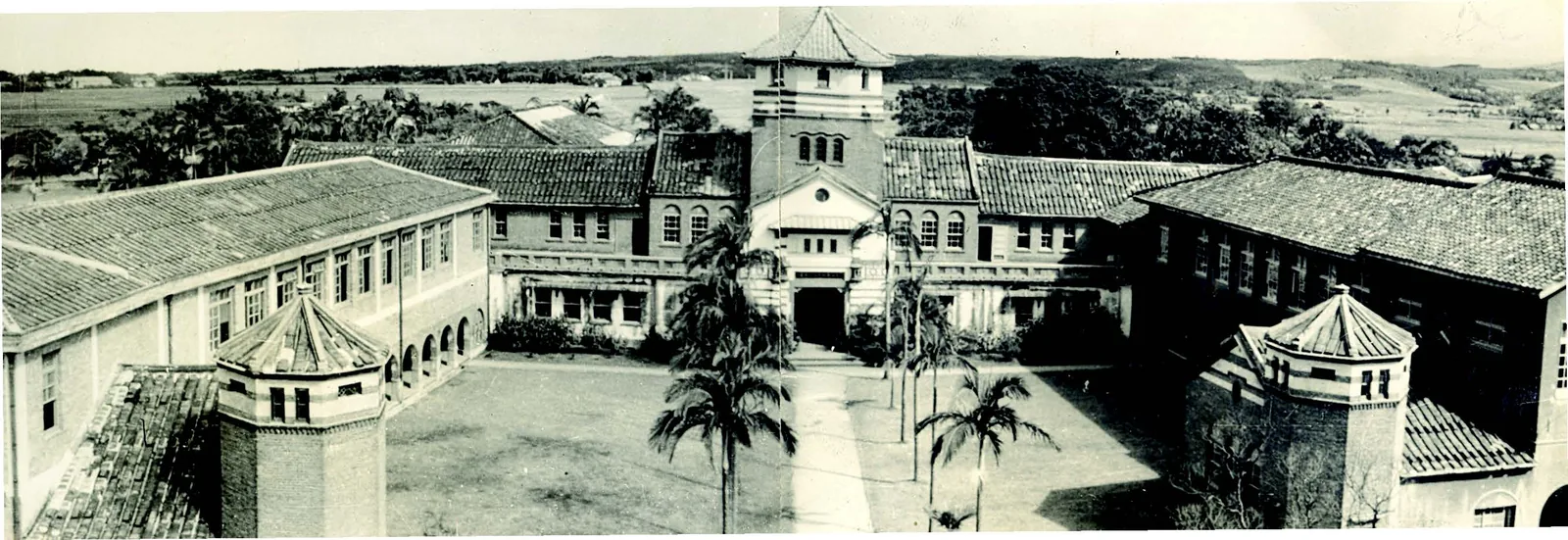
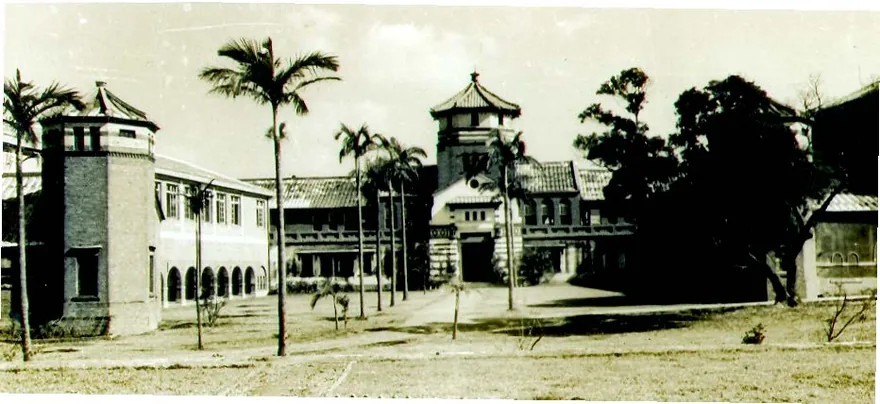
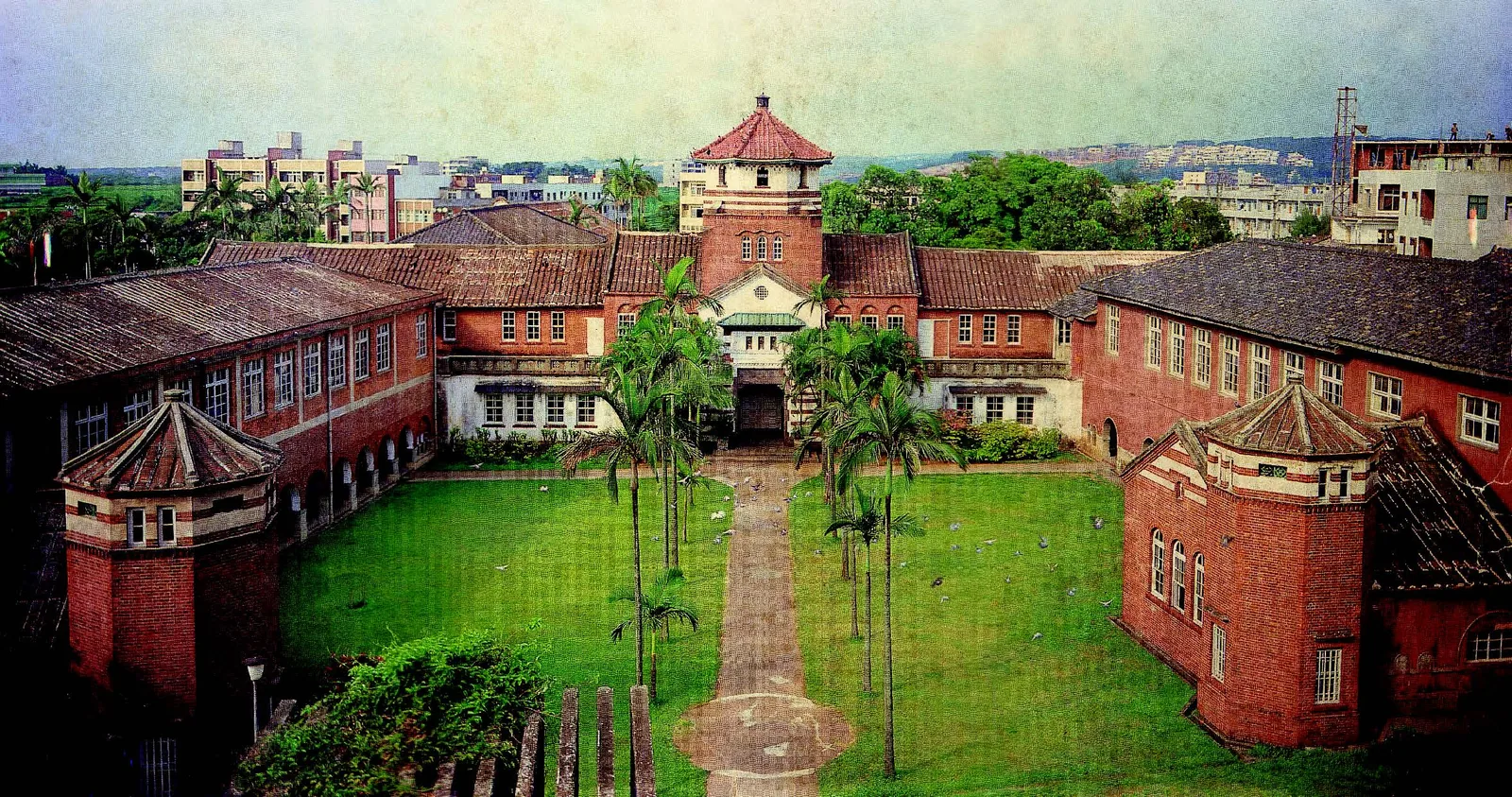
The Octagonal Tower is acclaimed as a classic Taiwanese building blending Chinese and Western styles (in Japanese, kanyo setchu). Its architectural form derives from Santa Monica High School in California and the California Institute of Technology. Dowie successfully fused the features of the two schools' architecture and used local Taiwanese building materials. Laid out as a three-sided courtyard, the classroom wings step down in turn (a second storey has since been added), ending at the front in octagonal flanking towers (also called wing towers); the three towers enclose a green forecourt, with a red-brick path running up the middle to the main entrance. The front of the main tower and the upper parts of the flanking towers alternate red brick and white render, and the balconies and classroom ventilation openings all have graceful green-glazed tile windows, most elegant. The main doorway has a Guanyin-stone lintel carved with brackets and palace lanterns, showing local colour, and above the door are the three characters 'Faith, Love, Hope' in seal-clerical script by Wu Ting-fang (吳廷芳), plain and dignified.

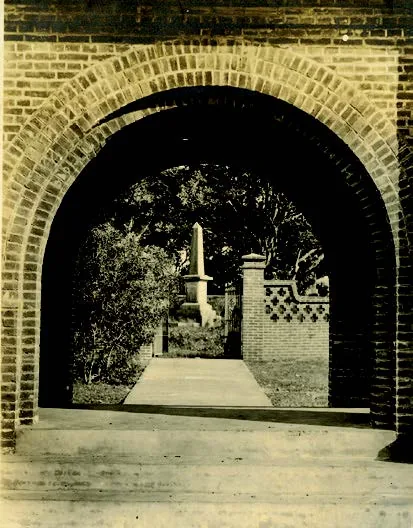
When first built, behind the main tower were the chapel and the dining hall; behind them a beautiful covered walkway ran to the gymnasium, and in it a plain red-brick arch served as the entrance to the Mackay cemetery, forming a graceful and unified campus.
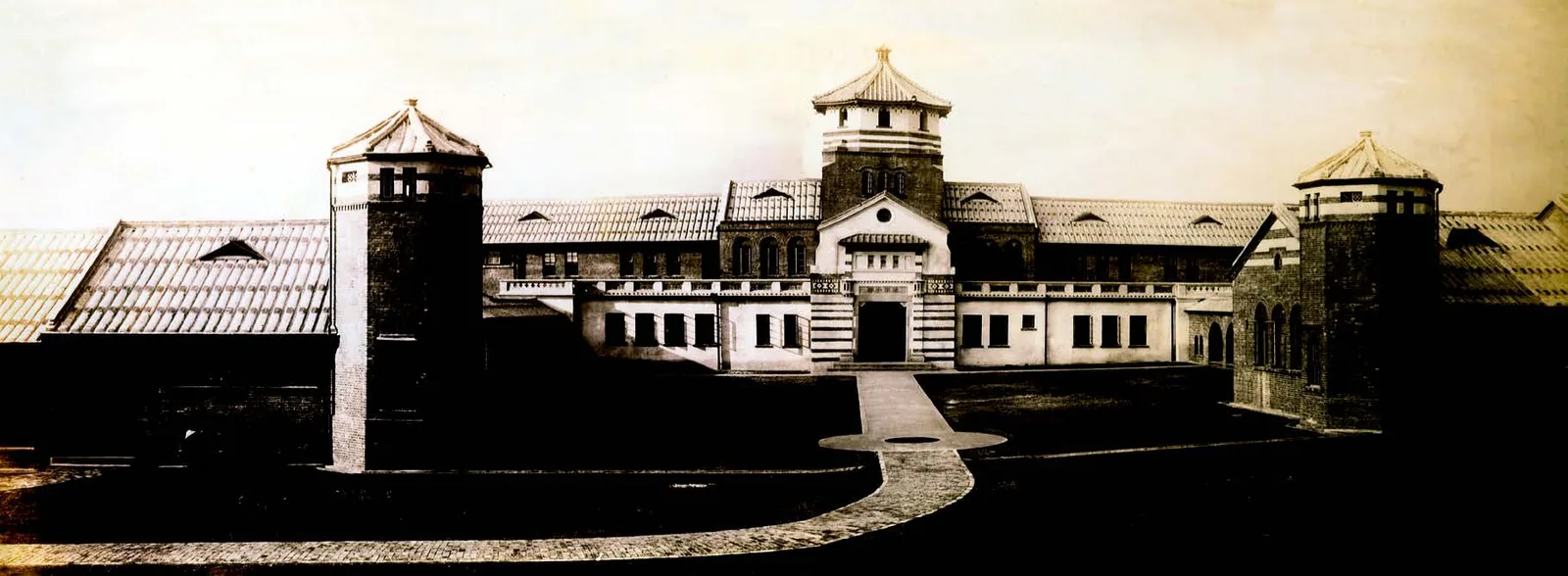
The main building of the Octagonal Tower is laid out as a three-sided courtyard. The main tower is crowned by an octagonal pagoda roof; the classrooms in the left and right wings were originally single-storey, so the skyline drops there, rises slightly again at the classrooms at the ends of the wings, and finishes with two plainer, simpler small octagonal towers as wing towers, an ordered arrangement of principal and subordinate. The three towers enclose a green forecourt, red brick set off against green grass. Along the classrooms on both sides runs a brick-arched arcade of fine proportion and superb workmanship, in which the successive arches differ not only in size but also include arches within arches, in keeping with the aesthetic principle of unity within variety and variety within unity.
The former gymnasiums of Tamsui Middle School and the Girls' Institute were both converted into martial arts halls to cultivate a martial spirit. The pictures show girls in a kendo class (naginata) in the martial arts hall and an archery class at the archery range.
In the picture on the left, the Octagonal Tower and the gymnasium are linked by the covered walkway
The funds for the 'Dr. Mackay Memorial Library' had been raised in the Tamsui Middle School era. The picture shows students who entered in 1940 with their homeroom teacher Mr. Matsunaga in front of the bronze statue of Dr. Mackay.
An arch can be seen opening in the covered walkway, the entrance to the Mackay cemetery

08The Tower of Faith, Hope and Love Commanding Poting

The Octagonal Tower was named the 'Tower of Faith, Hope and Love', from 1 Corinthians 13:13 in the Bible: 'Now these three remain: faith, hope and love; and the greatest of these is love.' The main tower is 60 feet high and was then the tallest building in Tamsui. A balcony was set beside the tower; in earlier years there were no buildings in front of it, and from here, facing south-west from the north-east, one looked ahead to Guanyin Mountain, to the left to Datun Mountain and to the right to the mouth of the Tamsui River, mountains and water all around and the scenery of Tamsui taken in at a single glance.

The Octagonal Tower premises were designed to hold five hundred students. The main building is of two storeys: on either side of the main tower the ground floor was administrative space and the upper floor student dormitories; at the rear the ground floor was the chapel and dining hall, and behind that the kitchen and other service spaces, with dormitories upstairs as well. The east side of the wings held ordinary classrooms, the west side special teaching spaces such as laboratories and a tiered lecture room; beside the two wing towers, besides classrooms, there was a porch in front serving as an entrance hall.
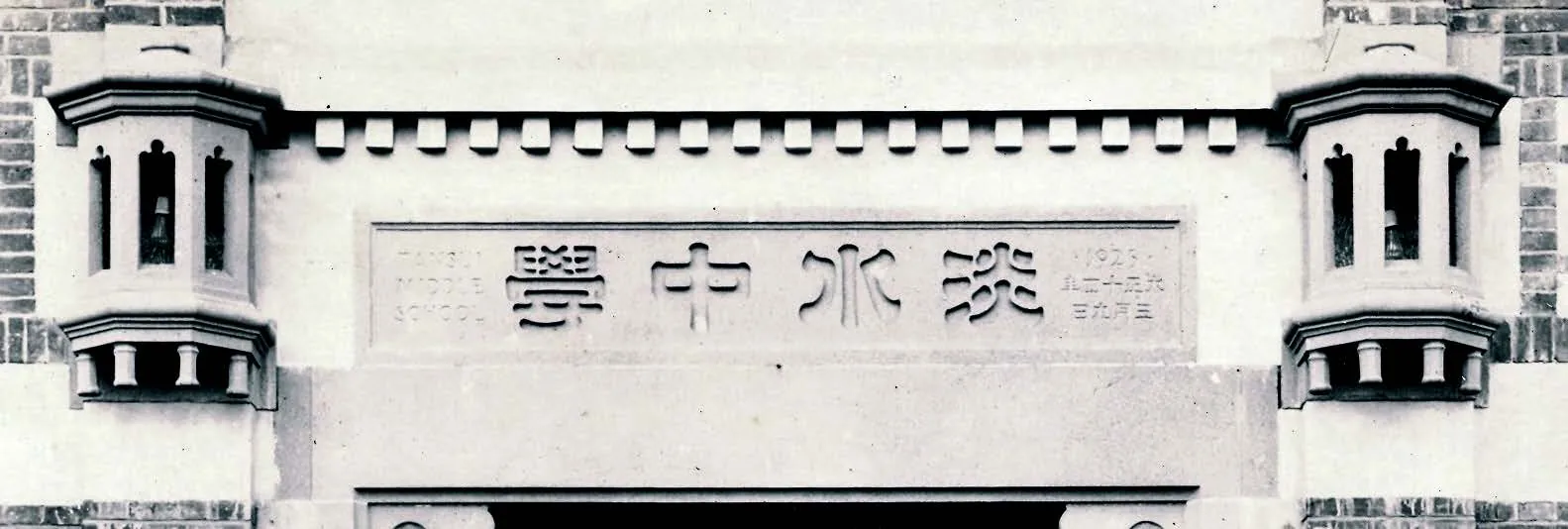
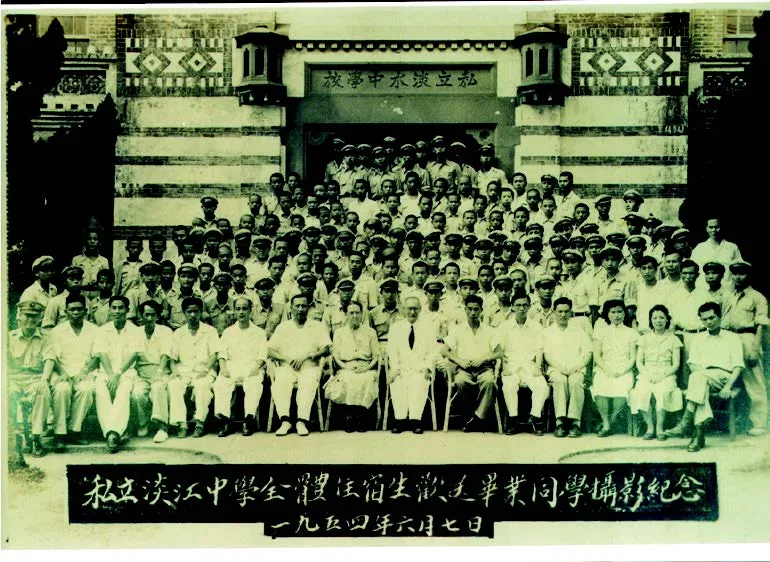
The Octagonal Tower has witnessed the changeability of Taiwan's history; the shifts of nearly a century have been reflected all along in the building's appearance
The Octagonal Tower has witnessed the changeability of Taiwan's history; the shifts of nearly a century have been reflected all along in the building's appearance. For example, the door lintel was originally carved with 'Tamsui Middle School' in Chinese and English, and with '9 March 1925, Taisho 14' in clerical script by Wu Ting-fang
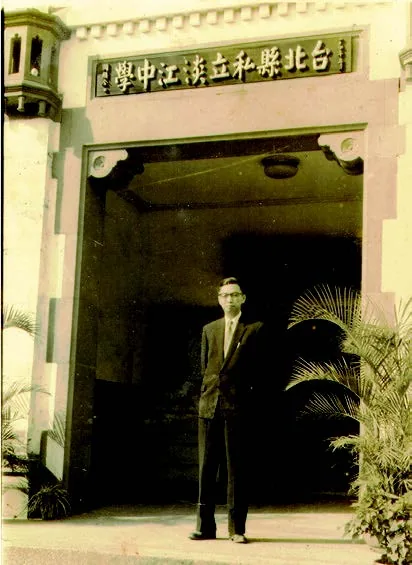
During Japanese management the school name 'Private Tamsui Middle School' was recarved; after the war, in 1955, a board with the newly changed name 'Taipei County Private Tamkang Senior High School' was hung above it, with the signature 'Kuan Chieh, March of the 44th year', together with a wooden board behind reading 'Propriety, Justice, Integrity and Shame'; these were not taken down until after 1980.
Taipei County Private Tamkang Senior High School
In fact the two wings of the Octagonal Tower splay slightly westward in a fan shape, and the right is longer than the left (the left has about three or four fewer arches), presumably because the school gate and the main road come from the west: the right-hand corridor (today's general affairs office) was the main entrance, and in early years the corridor extended further to the right into a porch and entrance hall (brick walls have since been built within the arches and the space enlarged into the biology classroom).

09The Tower under Militarism

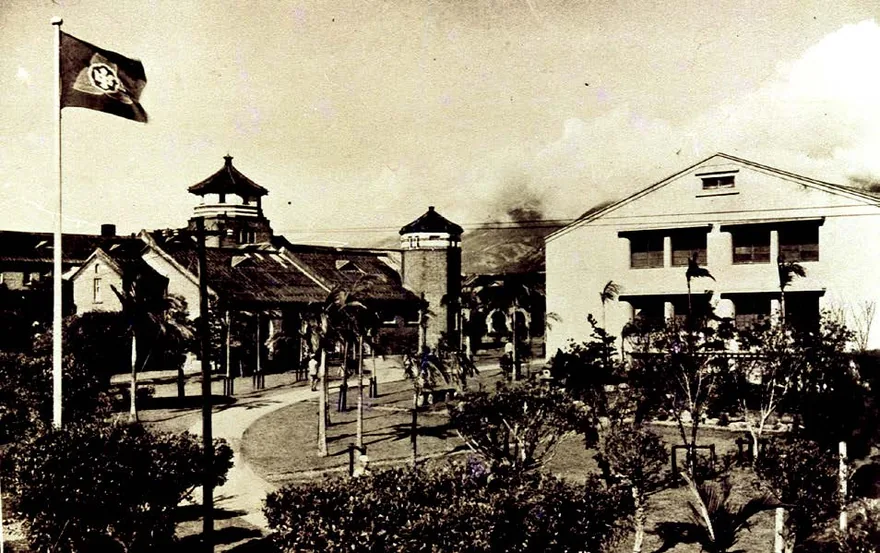
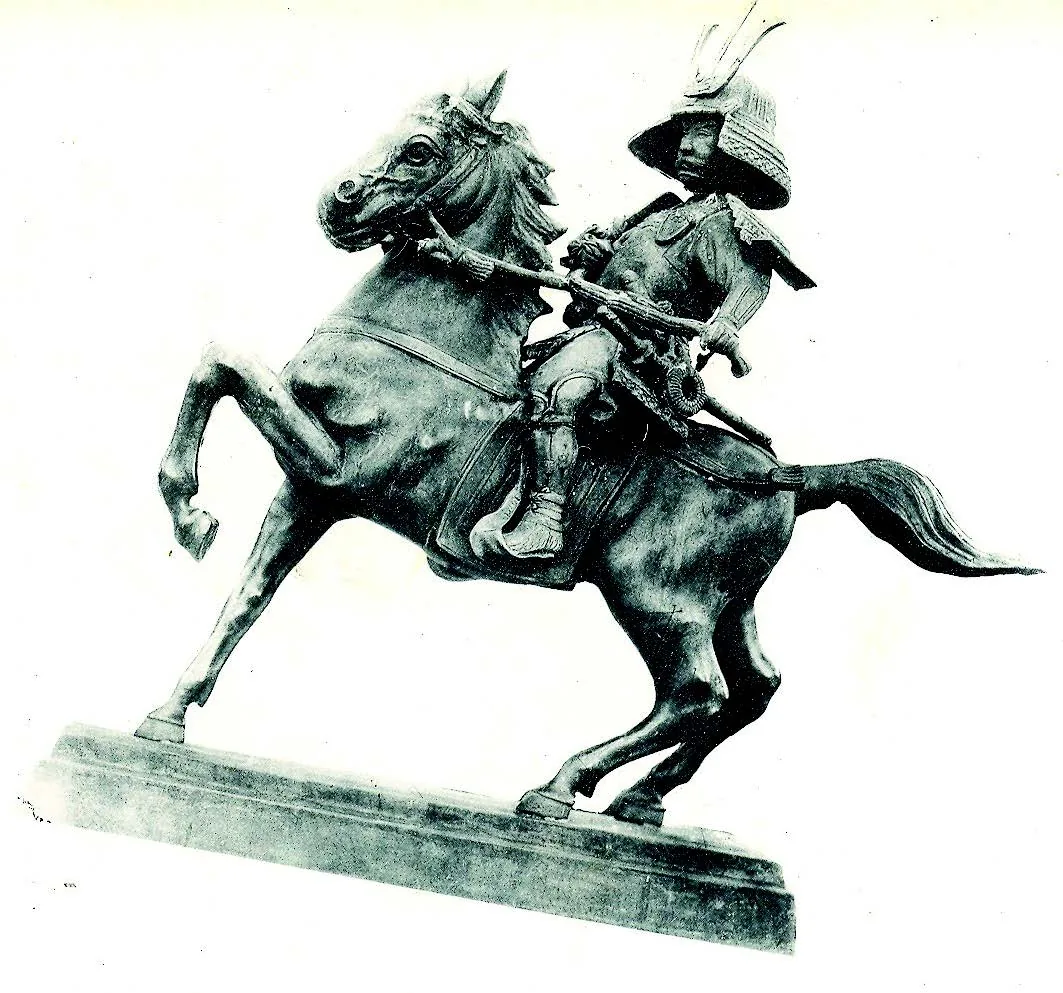
Tamsui Middle School was a mission school, and the religious character its campus gave off was naturally not tolerated by the daily expanding Japanese militarism. After repeated pressure, the Japanese authorities forcibly took over the school in 1936; besides altering its church character and changing the school badge, motto and song, the campus too was changed. After the school was raised in status and accredited in 1938, the new name 'Private Tamsui Middle School' was recarved on the door lintel; in 1941, to celebrate the third anniversary of accreditation, Alexander palms were planted along both sides of the forecourt road, and a design of three palm leaves replaced the old school badge. The three characters 'Faith, Hope and Love' were retained, but a small statue of the Japanese national hero Kusunoki Masashige was erected to the left front of the main entrance to strengthen Japanese spiritual education, and the meaning of the Octagonal Tower had been transformed into that of a tower symbolising Japanese militarism.

The appearance of the Octagonal Tower also changed at this time. As student numbers rose sharply and the classrooms were insufficient, a second storey was added to the classrooms on the east side of the Octagonal Tower in 1943, and at the rear, beside the gymnasium, a two-storey building was newly built, today's senior high classroom block.
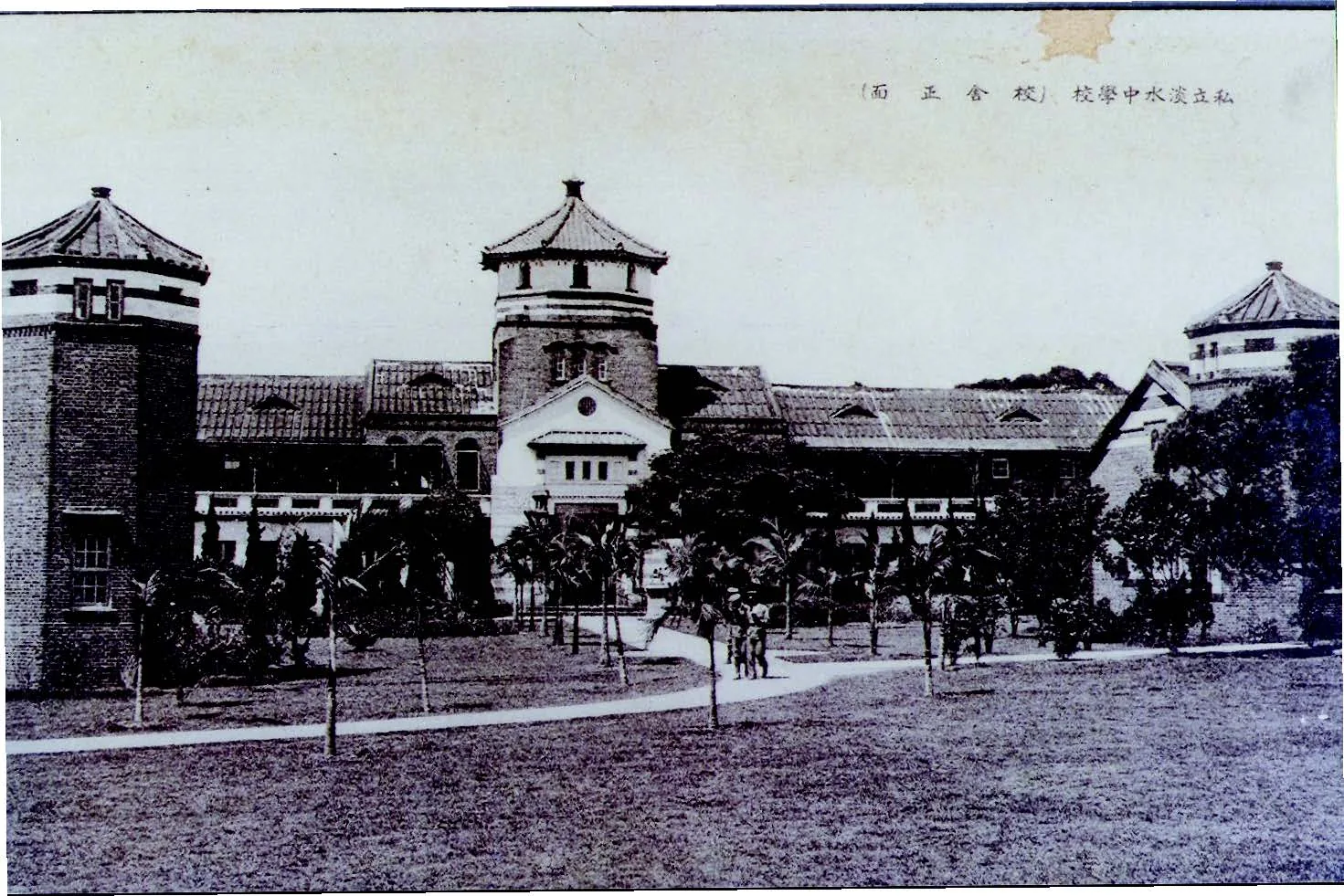
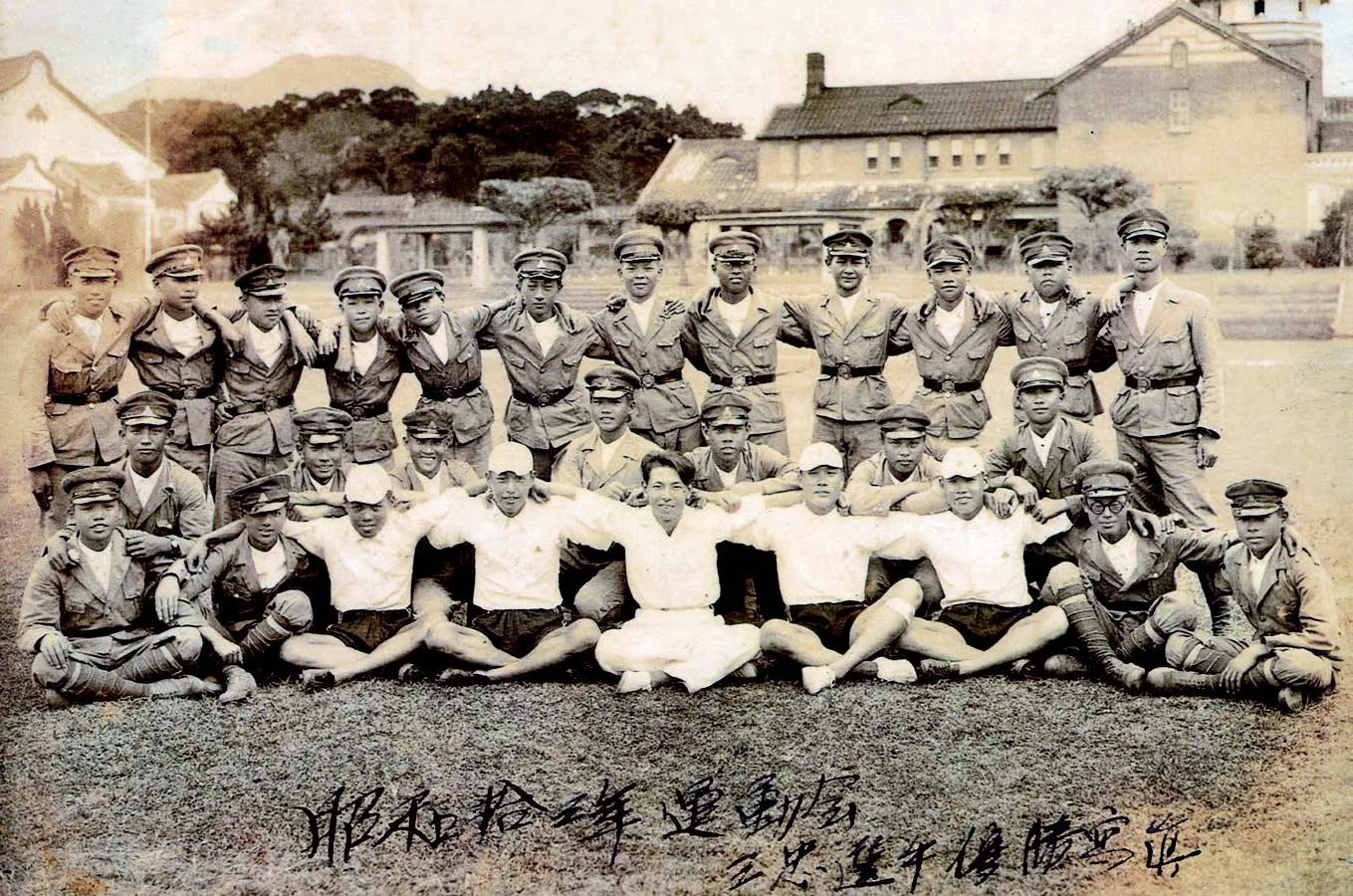
Under Japanese management the Octagonal Tower was a source of considerable pride, and 'hakko ichiu' was made the soul of the school, but its appearance began to change. In 1941, to mark the third anniversary of formal accreditation as a middle school, a row of Alexander palms was planted from the school gate all the way to the tower's main entrance.
A photograph from 1941; behind the teachers and students the view to the rear of the Octagonal Tower can be seen, which changed only when new classrooms were added in 1943.
Under Japanese management the Octagonal Tower was a source of considerable pride, and 'hakko ichiu' was made the soul of the school, but its appearance began to change. In 1941, to mark the third anniversary of formal accreditation as a middle school, a row of Alexander palms was planted from the school gate all the way to the tower's main entrance.
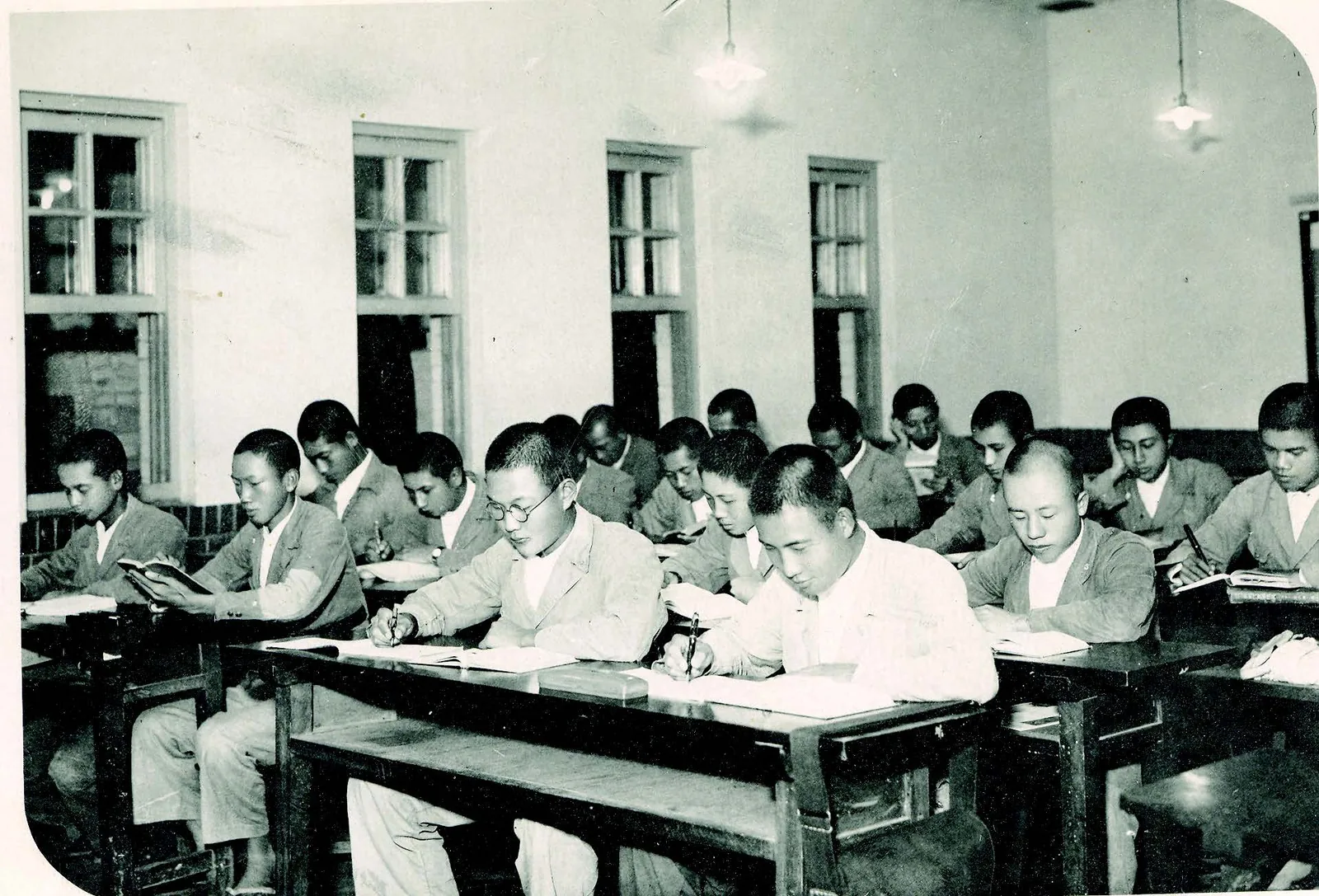
Tamsui Middle School students in class in a classroom of the Octagonal Tower
A photograph from 1941; behind the teachers and students the view to the rear of the Octagonal Tower can be seen, which changed only when new classrooms were added in 1943.
A chemistry class and an evening study session; by then there were more than five hundred students.
Under Japanese management the Octagonal Tower was a source of considerable pride, and 'hakko ichiu' was made the soul of the school, but its appearance began to change. In 1941, to mark the third anniversary of formal accreditation as a middle school, a row of Alexander palms was planted from the school gate all the way to the tower's main entrance.
The two rows of Alexander palms newly planted along the school's red-brick path and in the courtyard of the Octagonal Tower. The Japanese used the leaves of this palm as the motif for a new school badge and school flag, to replace the old badge with its Christian character.
A photograph from 1941; behind the teachers and students the view to the rear of the Octagonal Tower can be seen, which changed only when new classrooms were added in 1943.
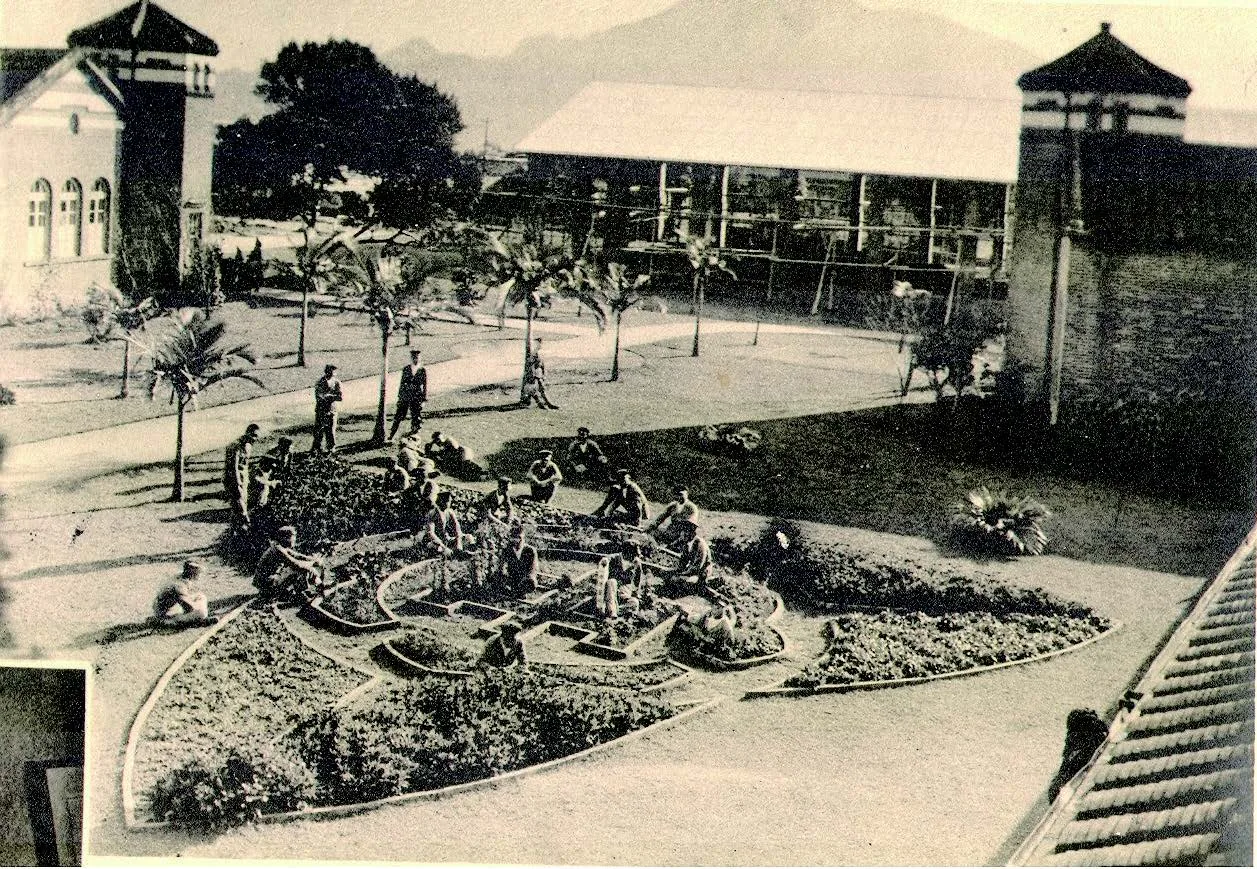
For a time the lawn on the west side of the courtyard had a flower bed in the shape of the palm-leaf school badge.
The statue of Kusunoki Masashige beside the Octagonal Tower; he was a Japanese national hero and a symbol of loyalty to the emperor.
A photograph from 1941; behind the teachers and students the view to the rear of the Octagonal Tower can be seen, which changed only when new classrooms were added in 1943.
In 1960 a second storey was added to the classrooms on the west side of the Octagonal Tower, to cope with the growing number of students.

10The Octagonal Tower of Love and Service

After the Second World War Tamsui Middle School returned to the Presbyterian Church, but had to change its name again to comply with new regulations; in 1954 a wooden board reading 'Taipei County Private Tamkang Senior High School' was hung on the door lintel of the Octagonal Tower. Two years later the boys' and girls' schools merged, and the Octagonal Tower became a '38th parallel', for a time dividing the campus into a boys' section and a girls' section.

Behind the main tower was originally the chapel, and the wall of the entrance hall beneath the tower had three arched windows. Chen Ching-hui used these windows to design stained-glass windows: the light-admitting one in the centre bore the school badge, the left a Canadian maple leaf, and the right an old pine representing China; from then on they were a famous sight on the Tamkang campus. After the great chapel was completed and opened in 1966, the small chapel was converted into classrooms (today's academic affairs office and the classrooms behind it).
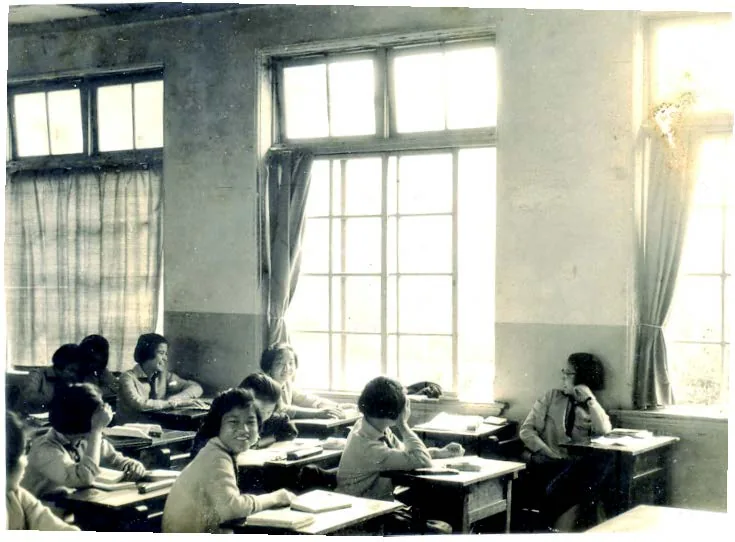
After the merger of Tamkang and Chun Teh, the boys' and girls' schools, the girls attended classes in the left wing of the Octagonal Tower; as there were then not enough classrooms, a second storey was added on the west side and today's biology classroom was built as an extension.
Because the boys' and girls' sections were strictly separated in the early years, a stairway passage was added in the right wing so that the boys could take the red-brick path beside the sports ground to the raising and lowering of the flag.

After the two schools merged and student numbers grew, the appearance of the Octagonal Tower changed further: not only was a second storey added to the west-side classrooms (1960), but the porches beside the two flanking towers and the first-floor dormitories were also extended into classrooms one after another; after the great chapel opened, the former chapel on the ground floor at the rear of the tower was likewise partitioned into classrooms; in 1983 classrooms were added at the rear, some even with a third storey. Finally, as traditional Taiwanese red tiles were hard to maintain, from 1992 the Taiwanese red-tiled roofs were gradually replaced with the present corrugated metal sheeting.

But what really makes the Octagonal Tower differ from the time it was built is the change in its surroundings: cold modern high-rise buildings have risen on every side, and it grows ever harder to avoid those discordant views of old and new.
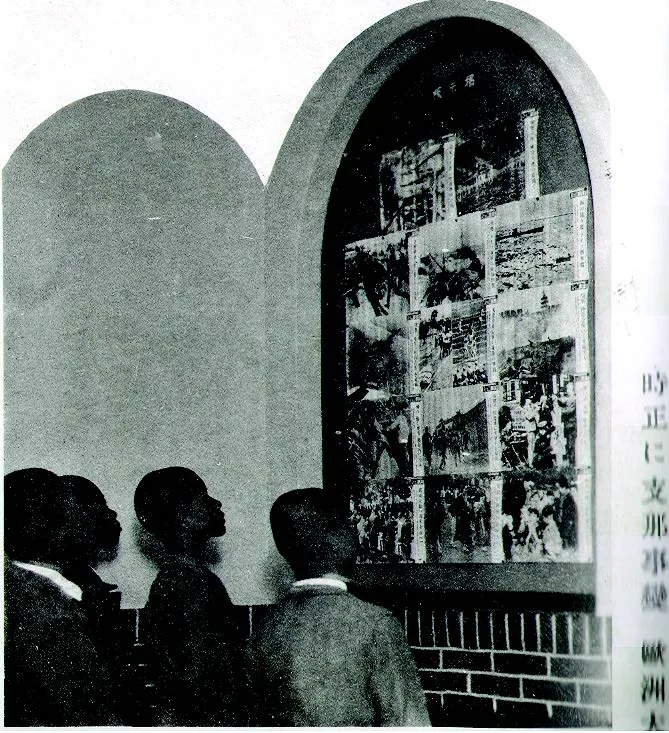
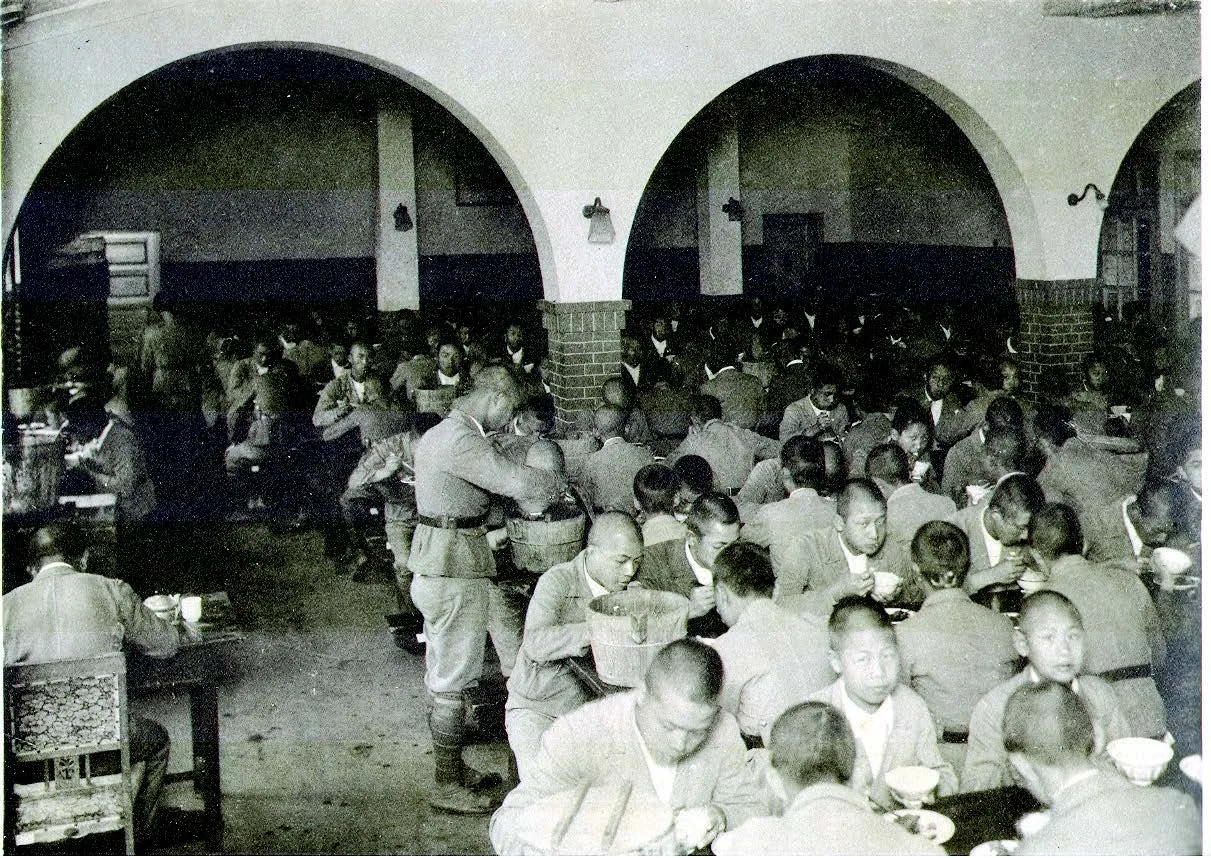
Behind the main tower was originally the chapel (which also served as the dining hall in the Japanese period); the wall of the entrance hall beneath the tower had three arched windows, of which only the middle one admitted light.
After the war Chen Ching-hui used the arched windows to design three stained-glass windows: the light-admitting one in the centre bore the school badge, the left a Canadian maple leaf, and the right an old pine representing tradition; from then on they were a famous sight on the Tamkang campus
After the great chapel was completed in 1966, the small chapel was converted into a classroom (today's academic affairs office).
The Octagonal Tower has served Tamkang people for nearly a century and has successfully shaped Tamkang's fine and proud campus culture. The picture shows the Octagonal Tower in 1982, before its roof tiles were replaced, with high-rise buildings already built behind it.
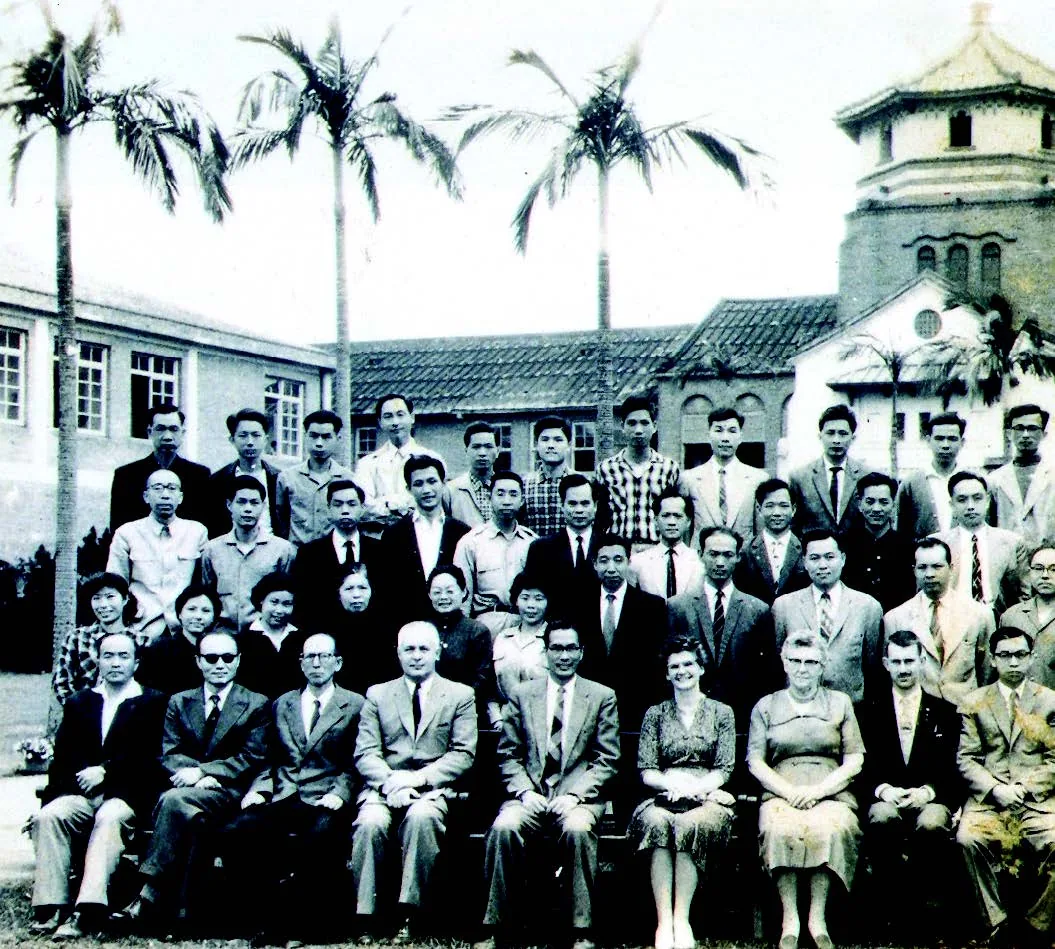
The teaching and administrative staff of Tamkang Senior High School in the 1960s. Besides Principal Chen Su-ti, from the right in the front row are: general affairs director Chang Ching-hsi (張慶羲), academic affairs director Tsai Hsin-yi (蔡信義), the Canadian missionary Kuo Te-shih (郭德士), Miss Tu Tao-li, and student affairs director Hung Chin-sheng (洪金生) (front row, first from the left). Another woman missionary, Miss Te (德姑娘), was home on furlough at the time.