
Symbols
The school's symbolsSymbols of the School Spirit
The emblem, the motto, the school song, and the chronology from 1844 on.
Translated from the gallery’s own Chinese text. Where the two differ, the Chinese is the record.
01The School Emblem
The emblem of Tamkang Senior High School is simple and clear, and expresses the school's founding spirit and character better than anything else. Its design still has a strikingly modern beauty when looked at today.
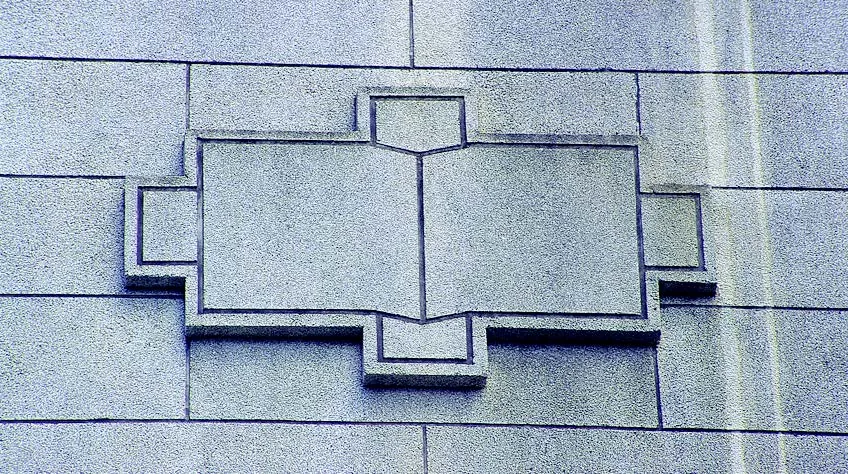
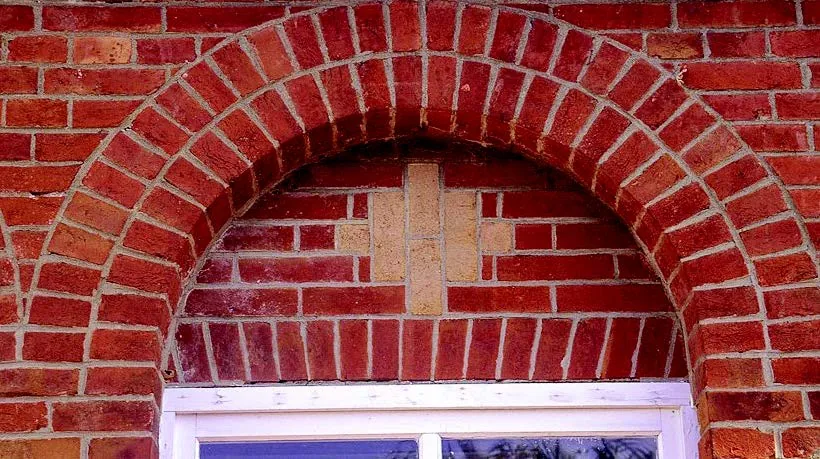
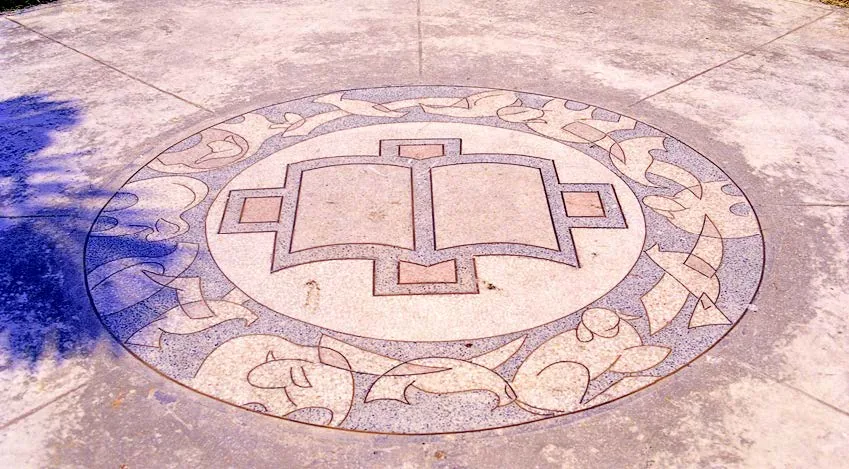
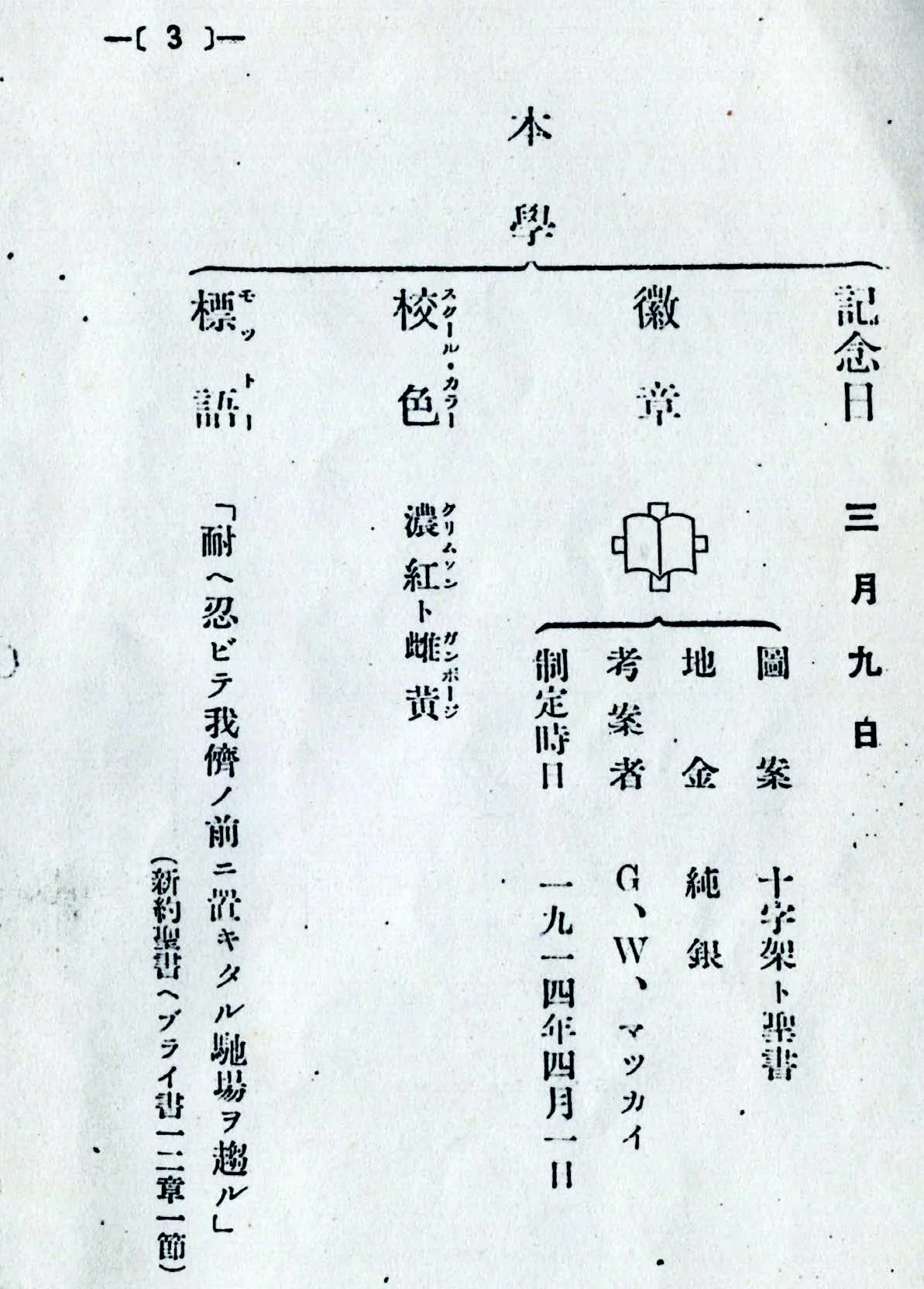
The emblem was designed and settled upon by the founding principal, George William Mackay (偕叡廉), himself on 1 April 1914. Its form places a Bible upon a cross, expressing the school's educational spirit — as shown by the scriptural verse carved in relief on the outer wall of the Integrated Teaching Building: 'The fear of the LORD is the beginning of wisdom, and the knowledge of the Holy One is understanding.' (Proverbs 9:10). A Bible was also buried in the foundations of that building when it was laid, as a statement of purpose.
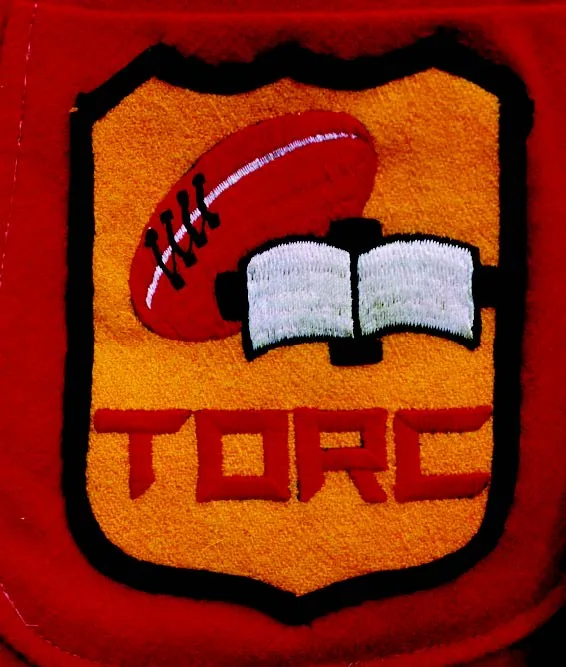
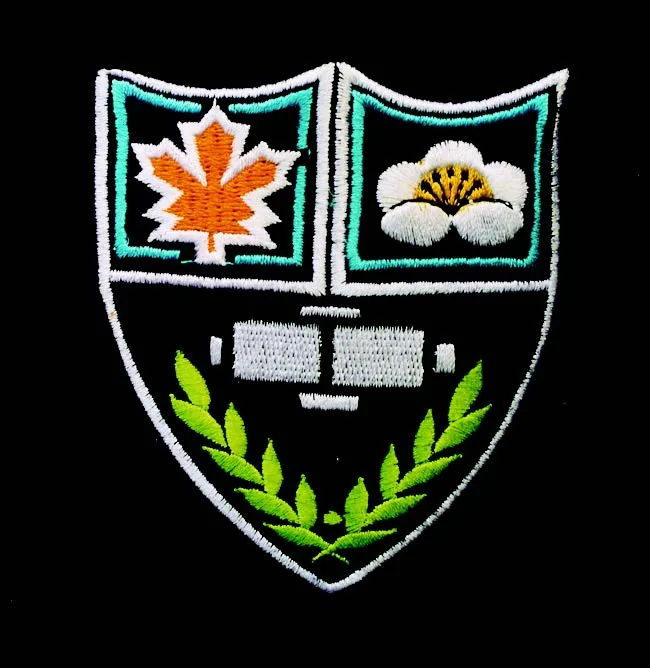
Besides the school flag and the school uniform, Tamkang Senior High School's greatest distinguishing feature is that the emblem appears everywhere on campus, in many different forms.
02The School Motto
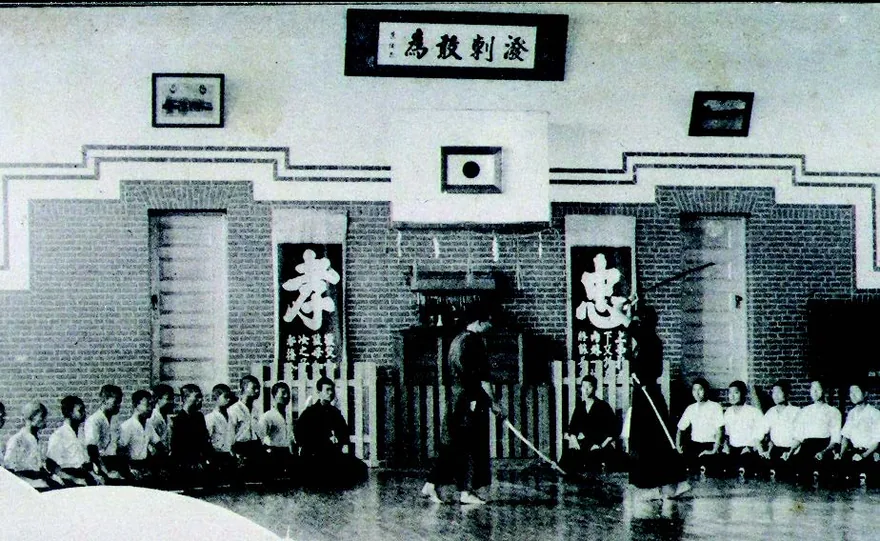
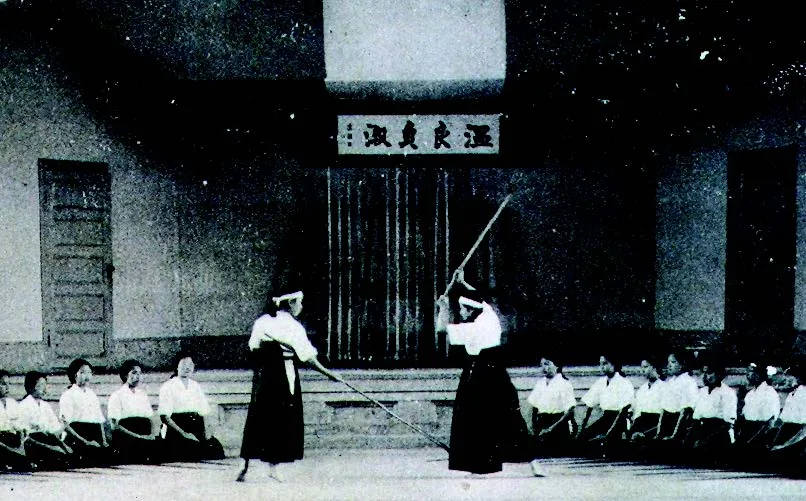
Tamkang Senior High School takes 'Love and Service' as its motto, and carries on the traditional spirit of the Presbyterian Church in Taiwan, 'Burning yet not consumed'.
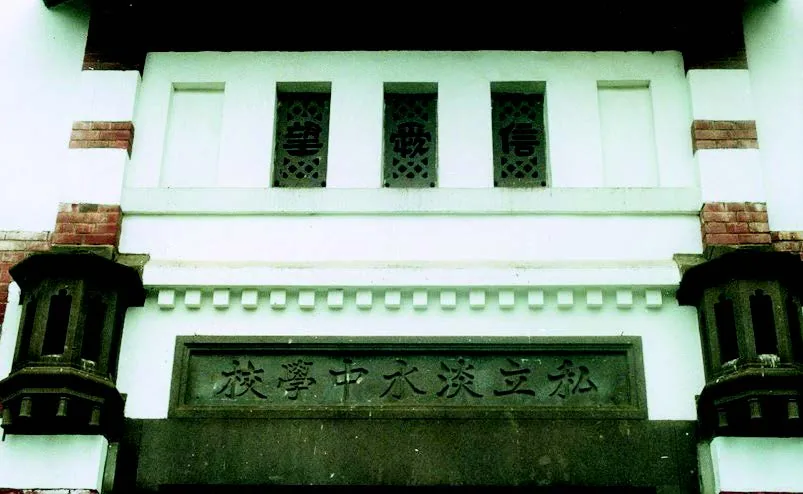
After the school was founded in 1914, Hebrews 12:1 — 'let us run with patience the race that is set before us' — was taken as its 'watchword' (a marker of its spirit), declaring the Christian faith of a church school. When the school's Octagonal Tower was completed in 1925, the three characters 信望愛, 'Faith, Hope, Love', were carved above the main entrance, after the words of Paul in 1 Corinthians 13:13, 'And now these three remain: faith, hope and love; and the greatest of these is love'; and the Octagonal Tower thus also came to be called the Tower of Faith, Hope and Love.
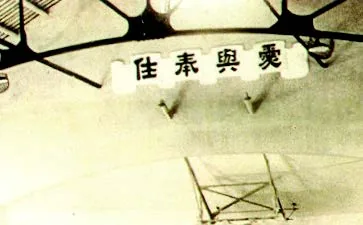
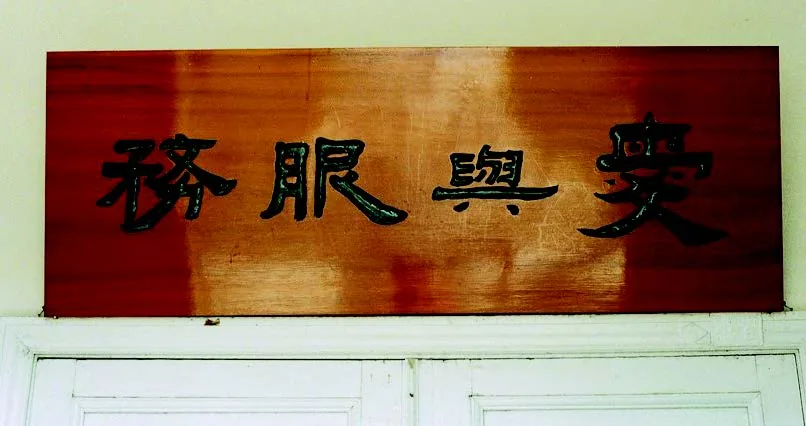
From then on, 'Faith, Love, Hope' (信愛望) in fact became better known than the original watchword. The Tamsui Girls' School took 'Love and Service' (愛與奉仕) as its motto, and that motto was moulded above the hall of the auditorium, which also served as the girls' gymnasium. After the war the girls' school was renamed Chun-te Girls' Middle School, and it too took 'Love and Service' as its motto. After the boys' and girls' schools merged in 1956 it has remained in use to this day.
03The School Song
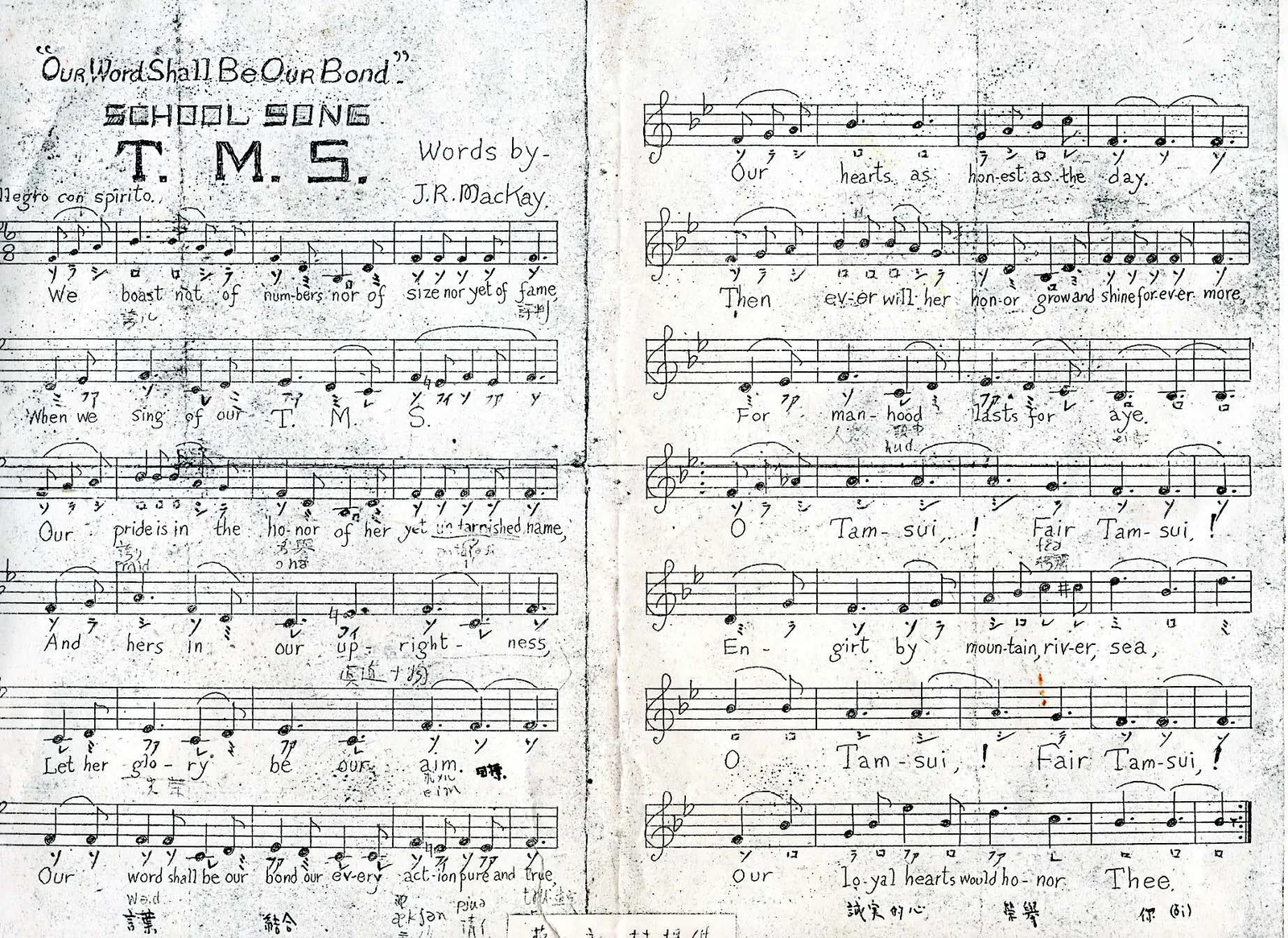
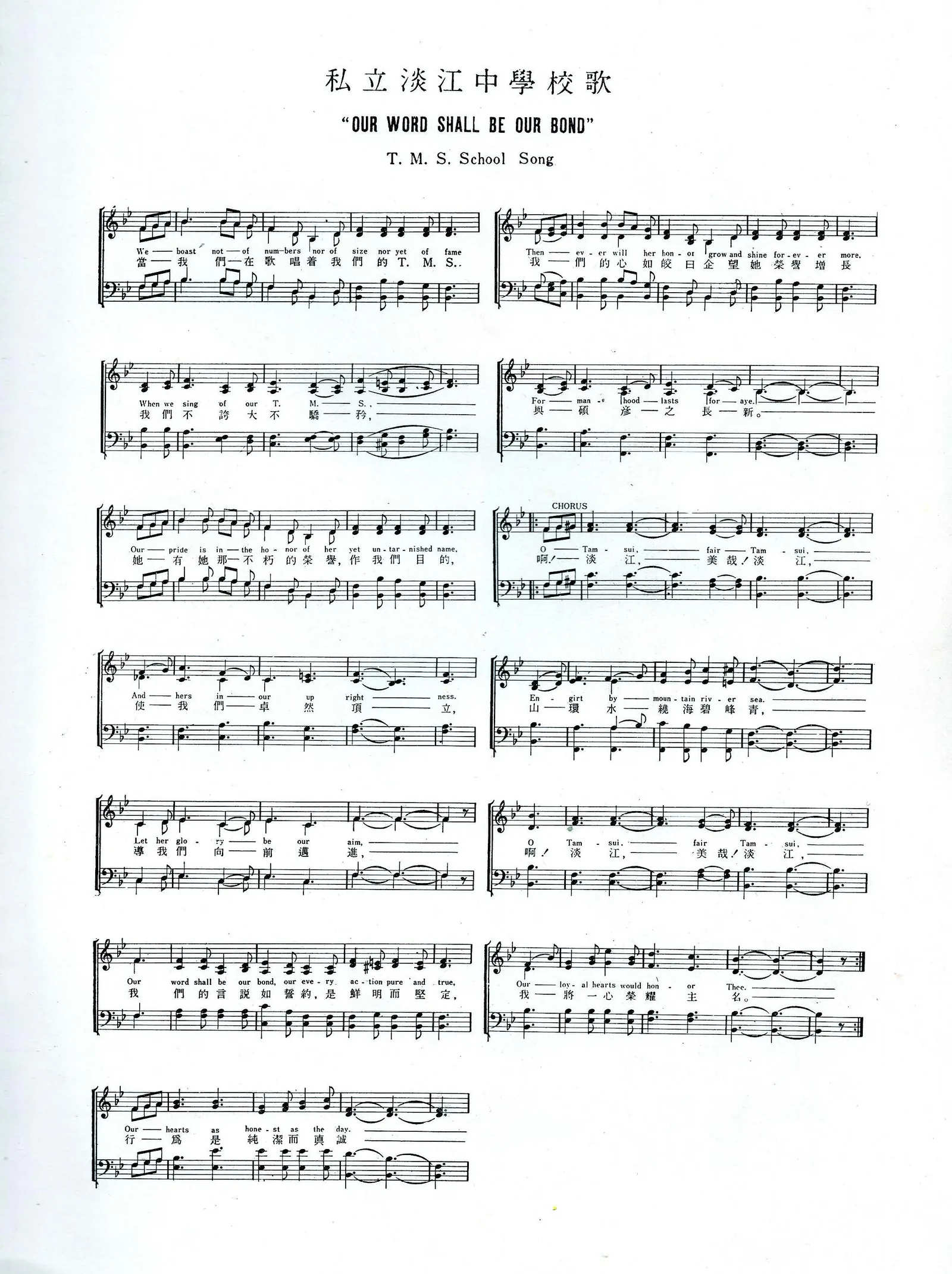
The words and melody of the Tamkang school song are enduring and gentle; it has been sung by Tamkang students for a hundred years, and is acclaimed as the most moving school song in Taiwan.
The words were written by Mrs. Mackay (偕仁利), the wife of the first principal George William Mackay; the song is titled 'Our Word Shall Be Our Bond', and the tune was taken from the school song of Amherst College in the United States. In the early years there were only English words, and the students sang it in English, which became one of Tamkang's great distinguishing features.
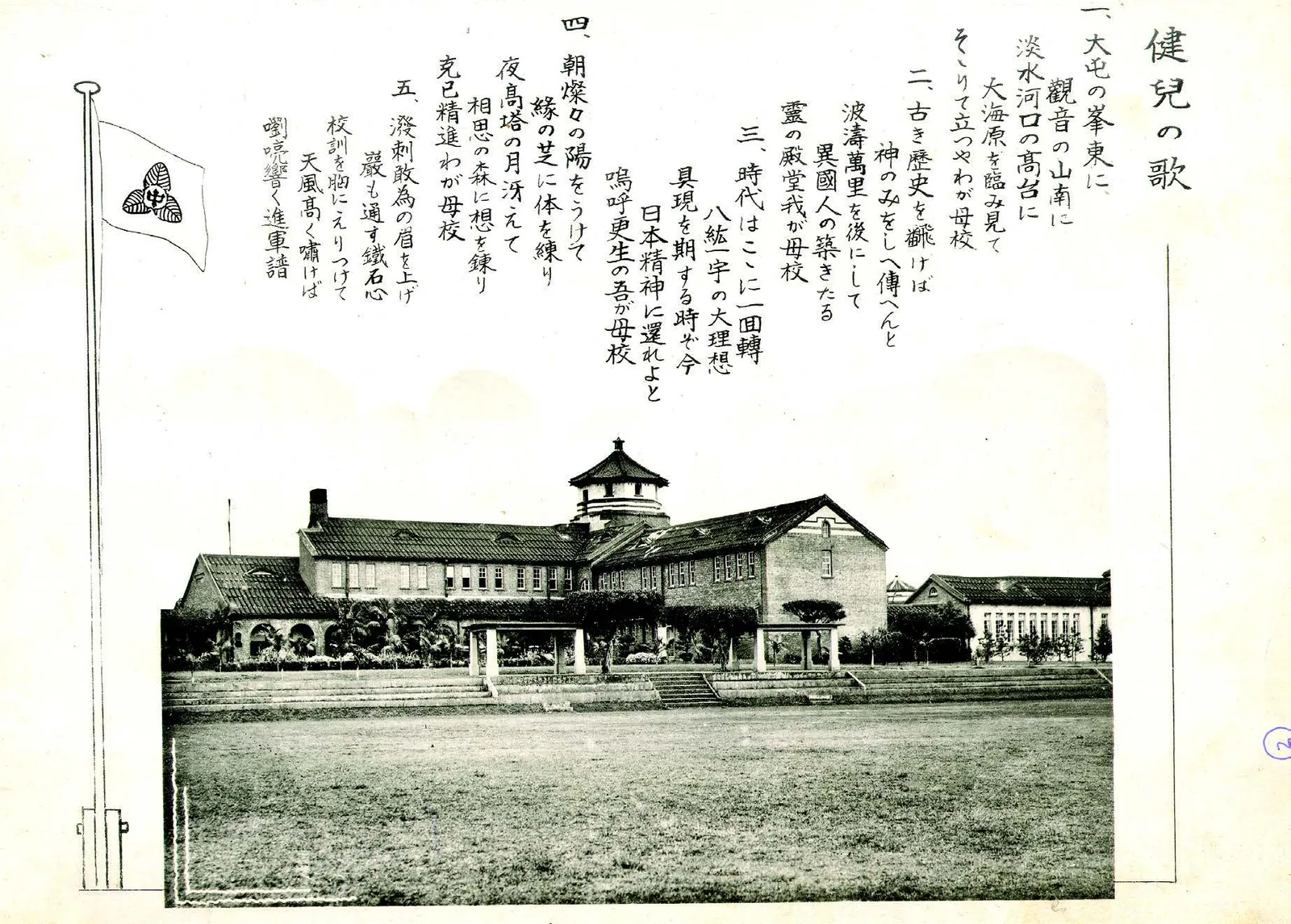
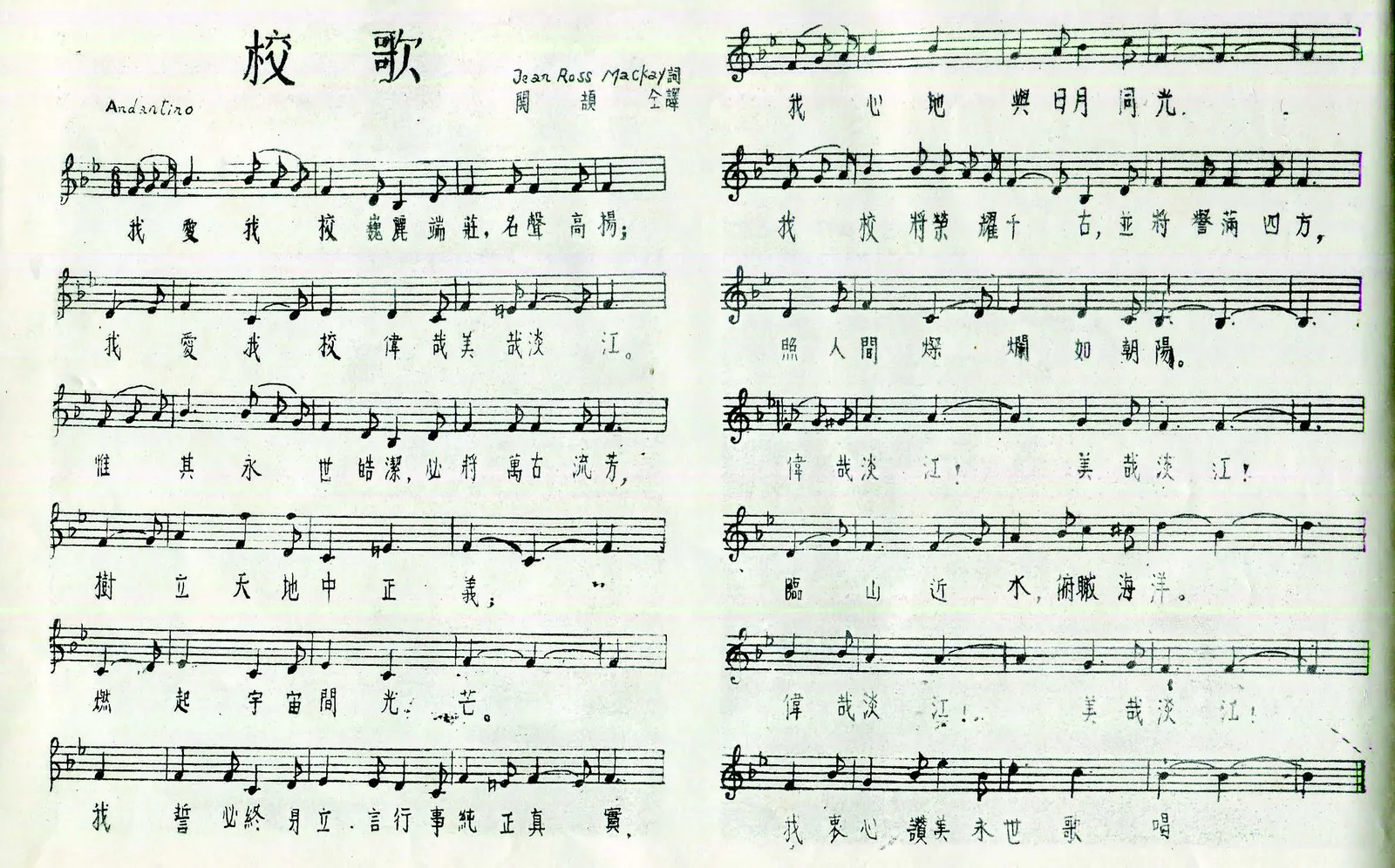
When the Japanese took over Tamsui Middle School, the 'Song of the Stalwart Youth' (健兒之歌) was used in its place. After the war the Tamkang school song was sung on campus once more, and in 1955 it was translated into Chinese for the first time; after the boys' and girls' schools merged in 1956 it was retranslated by the teacher Liu Fang (劉芳), giving the words of the school song as it is today. Whenever the school gathers, or alumni meet, the school song expresses the Tamkang spirit and the feeling for the school better than anything else. The last verse in particular — 'Ah! Tamkang, how fair! Tamkang, girt by hills and ringed by water, the sea blue and the peaks green. Ah! Tamkang, how fair! Tamkang, with all my heart I will glorify the Lord's name.' — moves all Tamkang people who hear it.
04Chronology
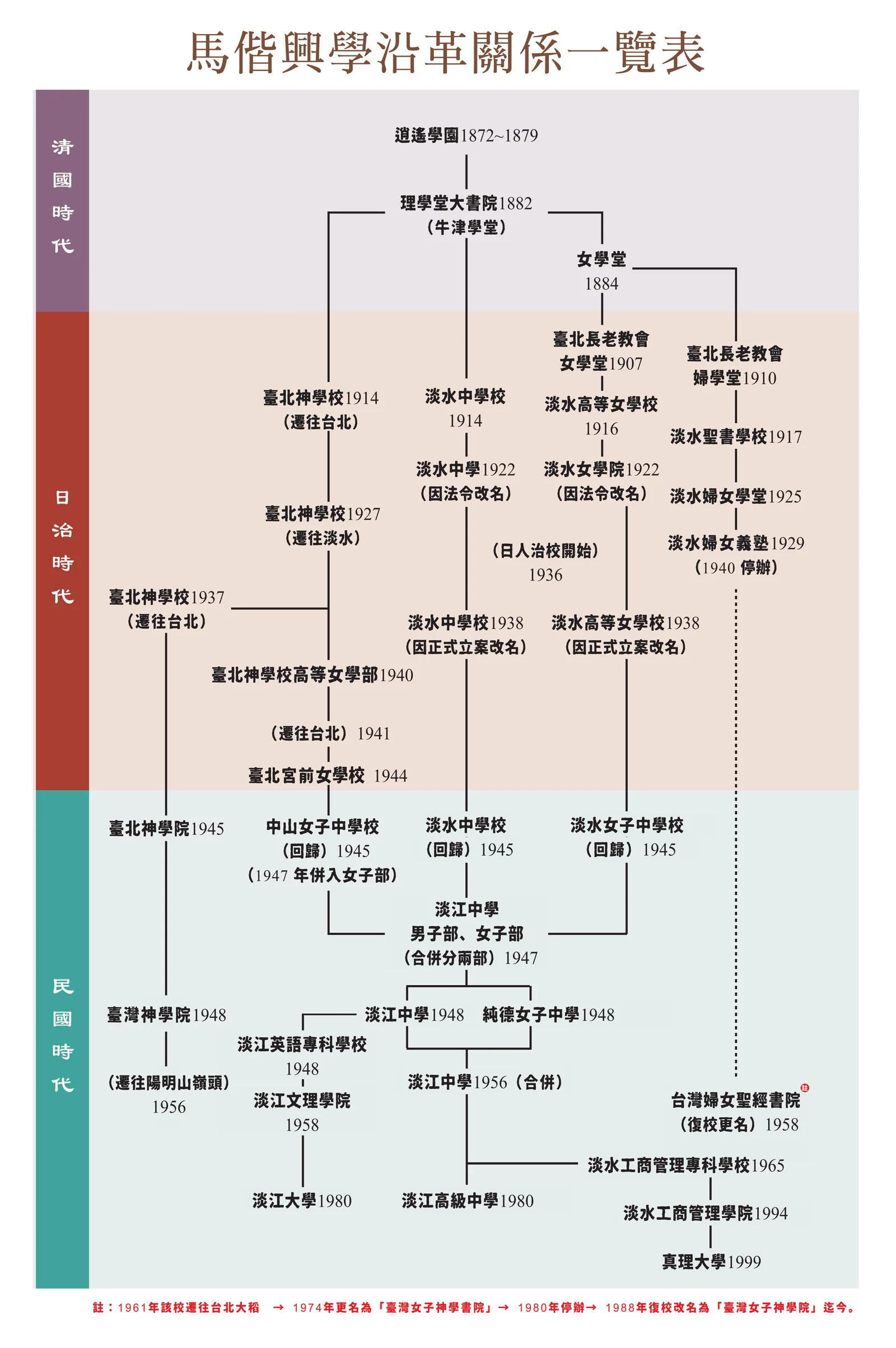
05The Qing Period
1844
21 March. George Leslie Mackay was born in the village of Zorra, Oxford County, Ontario, Canada.
1859
Mackay graduated from the Toronto Normal School and taught at the Maplewood and Maitland elementary schools. Seven years later he entered Knox College, the theological college of the University of Toronto, and Princeton Theological Seminary in the United States for further study, and volunteered to serve as an overseas missionary.
1871
June. The General Assembly of the Presbyterian Church in Canada met in Quebec, approved Mackay's offer to serve as an overseas missionary, and decided that China would be his field of service.
19 September. On behalf of the General Assembly, the Presbytery of Toronto ordained Mackay as a minister at Gould Street Church.
19 October. Mackay took leave of his family and boarded a train at Woodstock, setting out to preach in China.
1 November. He sailed from San Francisco for China aboard the steamer America.
29 December. He reached Taiwan aboard the two-masted schooner Kin-ling and landed at Takow (Kaohsiung).
1872
9 March. The Reverend Mackay came ashore at Tamsui at three in the afternoon from the British passenger ship Hai-lung, and chose Tamsui as his base for mission work in Taiwan.
10 April. He rented a house in a back lane of Tamsui and learned Taiwanese from country cowherds and local people, beginning his arduous work of preaching and healing. On the 25th of the same month he gained his first student, Yen Ching-hua (嚴清華), and over the following eight years he gained more than twenty students in all. This was the school's pioneering period (Ltinerant College), called in the school's history the 'Peripatetic School' (逍遙學園).
1873
9 February. The first five converts in northern Taiwan were baptised, and the Tamsui Church was founded.
1878
27 May. The Reverend Mackay married Chang Tsung-ming (張聰明), a woman of Wu-ku-keng, and so became a son-in-law of Taiwan. The Reverend Mackay and Chang later had two daughters and a son.
1879
14 September. The Hobe Mackay Hospital was completed.
1880
The Reverend Mackay returned home on furlough for the first time with his wife and children, travelling west by way of the South Seas, India, the Middle East and Europe before reaching Canada; in the same year Queen's University in Canada conferred on him an honorary doctorate of divinity.
1881
October. The people of Oxford County, Dr. Mackay's home district, held a farewell gathering for him at the Methodist church in the county town of Woodstock, and gave him donations of 6,215 Canadian dollars to help him build a school after his return to Taiwan.
1882
22 January. His only son, George William Mackay, was born in Tamsui.
26 July. The college building 理學堂大書院 was completed; in gratitude for the kindness of the people of Oxford County, it was given the English name Oxford College (牛津學堂). It opened on 14 September of the same year with eighteen new students enrolled, and was the birthplace of modern education in Taiwan.
1884
3 March. The Tamsui Girls' School opened, the first school for girls in all Taiwan and the beginning of this school's girls' department.
5 August. The Sino-French War broke out. The churches of the north suffered great destruction, and church buildings were badly damaged.
1891
3 July. The Chinese-Western Dictionary (中西字典) compiled by Dr. Mackay was printed in Shanghai.
1893
6 September. Dr. Mackay and his whole family sailed aboard the steamer Empress of India for his second furlough; after his return he served as Moderator of the 20th General Assembly of the Presbyterian Church in Canada. He also wrote the book From Far Formosa (published in 1895).
06The Japanese Period
1895
Japanese troops attacked Taiwan, and Taiwan became a Japanese colony. Dr. Mackay and his family arrived in Taiwan at the end of November.
1896
Governor-General Nogi came to Tamsui to visit Dr. Mackay and viewed the museum room in his school, afterwards sending someone here to photograph it for the record.
1901
31 May. Dr. Mackay was gravely ill; before the end he even rang the bell in the middle of the night to call the students to class in the college. Unable to make a sound because of throat cancer, he wrote what he meant on the blackboard, until the students, unable to bear it, helped him back to his bed.
2 June. At four in the afternoon Dr. Mackay died of his illness in Tamsui; three days later, on the 5th, he was buried in the Mackay family cemetery.
1904
9 May. The Presbyterian Church in northern Taiwan submitted a proposal to the mother church in Canada concerning girls' education for the new age and the founding of a middle school.
1907
The Tamsui Girls' School resumed teaching in the buildings of the former girls' school, with Miss Janne Kinney as its first principal. This was the beginning of this school's secondary education for girls.
1910
The buildings of the Tamsui Women's School opened and came into use. It took in married women who had missed their schooling, and was the forerunner of women's education and of care for disadvantaged women in Taiwan. Miss Hannah Connell was its first principal.
1911
4 December. Having completed his studies, Dr. Mackay's only son George William Mackay was appointed a missionary by the Presbyterian Church in Canada, and returned to Taiwan with his newly married wife, the elementary school teacher Jean Ross, to prepare for a formal middle school in Taiwan.
1914
9 March. Official permission to found the school was obtained from the Japanese government. This day was also the anniversary of the Reverend Mackay's landing at Tamsui and founding of a school 42 years earlier, and was later fixed as the school's Foundation Day. On 1 April the Tamsui Middle School formally opened at Oxford College, with George William Mackay as its first principal.
1916
The new buildings of the Tamsui Girls' School were completed and came into use with the opening of term on 1 June, and the school was renamed the Tamsui Girls' High School. Those buildings were used as classrooms and dormitories by this school's girls' department right up to 1999.
1922
February. In response to new regulations of the Japanese government, this school's boys' and girls' departments were renamed the Private Tamsui Middle School and the Private Tamsui Girls' Institute respectively.
1923
May. The gymnasium of Tamsui Middle School was completed and came into use. The first rugby team in all Taiwan, formed by Chen Ching-chung (陳清忠) — the Tamsui Middle School rugby team — was founded.
1925
The Octagonal Tower, the new building of Tamsui Middle School, was completed; on 1 June the students moved to the new site for their classes, and have remained there to this day.
1936
November. After several years of pressure from the Japanese government's imperialisation education policy, the boys' and girls' schools were forced to hand over their management to a foundation organised by the Japanese.
1938
Under the determined management of the Japanese principal Arisaka Issei, official accreditation was obtained from the Japanese government, and this school's boys' and girls' schools were renamed the Private Tamsui Middle School and the Private Tamsui Girls' High School respectively.
1939
Autumn. In keeping with what both parties had agreed at the time of the transfer, the Japanese school authorities built the Dr. Mackay Memorial Library and erected a bronze statue of Dr. Mackay.
1940
The Presbyterian Church in northern Taiwan again established the Girls' Higher Department of the Taipei Theological School, within the missionary residence in Tamsui. In May of the following year it moved to Miyamae-chō, Shuanglian, Taipei, and was afterwards renamed the Taipei Miyamae Girls' School.
1945
Japan surrendered, and the three schools — Tamsui Middle School, Tamsui Girls' High School and Taipei Miyamae Girls' School — returned to the Presbyterian Church in northern Taiwan.
07The Republic of China Period
1947
16 April. The boys' and girls' schools merged and, under the new regulations, were renamed the Private Tamkang Middle School, divided into a boys' department and a girls' department. In September the former Miyamae Girls' School, by then renamed the Private Chungshan Girls' Middle School, was also incorporated into the girls' department of Tamkang Middle School.
1948
July. The boys' and girls' departments were run separately, and the girls' department was renamed the Private Chun-te Girls' Middle School.
1953
July. The music department of Chun-te Girls' Middle School was expanded into an arts supplementary school, divided into four departments — music, fine art, home economics and early childhood care — the earliest specialised middle school in Taiwan. The Chun-te Kindergarten was attached to it in the same year.
1956
6 October. The boys' and girls' schools formally merged as the Private Tamkang Middle School, with Chen Su-ti (陳泗治) as the first principal after the merger.
1962
March. The boys' dormitory was completed and came into use.
1963
20 July. Dr. George William Mackay, founder of Tamkang Middle School, died of illness and was buried in the Mackay family cemetery on the Tamkang campus.
1966
9 March. This school's main chapel and religious activities centre was completed and came into use.
1980
May. The school took the name Private Tamkang Senior High School, which it bears to this day.
1987
Meikei Gakuen High School of Japan visited, opening Tamkang's international exchange. Schools in Japan, the Philippines, Canada, Korea and other countries afterwards became sister schools of this school one after another.
1990
1 September. The girls' classroom building (today the first-year senior high building) was completed and came into use at the start of the new term.
1994
August. Music and fine art classes were established. This was the beginning of the school's development along diverse lines.
1996
This school established a comprehensive high school. Besides the academic programmes in the sciences and in social studies, there were programmes in information technology, commercial art, early childhood care and business economics, as well as foreign language programmes in English and Japanese, in order to carry out this school's educational aim of teaching according to ability and developing each student's aptitude.
2000
4 March. The Integrated Teaching Building was completed and formally came into use. It was this school's flagship construction as it crossed into the twenty-first century.
27 June. Principal Yao Tsung-jung (姚聰榮) led a tug-of-war team of teachers and students to Canada in search of the school's roots, and helped Tamsui Township and Oxford County become sister municipalities. Besides calling on Woodstock City Hall and the General Assembly of the Presbyterian Church in Canada, they met four of Dr. Mackay's grandchildren. The visit was moreover this school's leading step towards internationalisation and a wider field of education.
2001
2 June. On the centenary of Dr. Mackay's death, the Directorate General of Posts issued a commemorative stamp, and a series of commemorative events was held in Taiwan. Dr. John Mackay (偕約翰), of the third generation of the Mackay family, returned to Tamkang Middle School to take part in the memorial events.
15 December. The Chun-te Kindergarten buildings and early childhood care classrooms, converted from the girls' gymnasium built in 1925, were completed and came into use, forming the 'Tamkang Early Childhood Care' teaching campus. It was the first of this school's historic buildings to be reborn from the fire.
2002
March. The George William Mackay Memorial Park was completed; the History Gallery, the Taiwan Rural Life Museum, the practice shop Roots Garden and the indigenous slate house within the park all opened formally on the same day, unveiled in person by George William Mackay's third daughter, Ma-lieh Mackay (偕瑪烈).
August. This school strengthened bilingual teaching, bringing in foreign teachers and adopting streamed English classes.
2003
March. This school marked the 80th anniversary of rugby, and the monument to the first kick-off of rugby in Taiwan was completed.
2004
March. To mark the 90th anniversary of the founding of this school's boys' middle school department, the Tan Chung Garden (淡中園) and the Puting Bell Tower were completed, and President Lee Teng-hui unveiled them and rang the bell.
2005
February. This school built a climbing tower to promote adventure education.
March. The 80th anniversary of the completion of the Octagonal Tower was celebrated with Foundation Day commemorative events.
June. At the first growth camp, second-year senior high students went rafting on the Laonong River in Kaohsiung, changing the former form of the graduation trip.
2006
March. On the 90th anniversary of the building of the Chun-te Building, the premises of the former girls' department, a thanksgiving service was held.
2007
March. On the 60th anniversary of Taiwan's 228 Incident, this school erected the Puting 228 Memorial to those who suffered, in remembrance of the teachers who died for the school.
March. An elementary department was founded, and the former Chun-te Building (the Shan Building) was renovated as its premises.
2008
March. The Arts Building and the heated swimming pool were completed and came into use.
2011
4 June. The elementary department's newly built classroom building, Chun-te Fort (純德堡), was completed and came into use.
2014
March. A series of events celebrating the centenary of the founding of Tamsui Middle School was held.
2016
Reconstruction work began on the woodland classroom (the Banyan and Maple Pavilion).
2018
The Humanities and Social Sciences class was launched, rooted deeply in the local community and looking out to the world through a vision of 'care'.