
History · Chapter 5
Tamkang, in love and serviceTamkang Senior High School of Love and Service
Translated from the gallery’s own Chinese text. Where the two differ, the Chinese is the record.
01The February 28 Incident and Tamsui Middle School
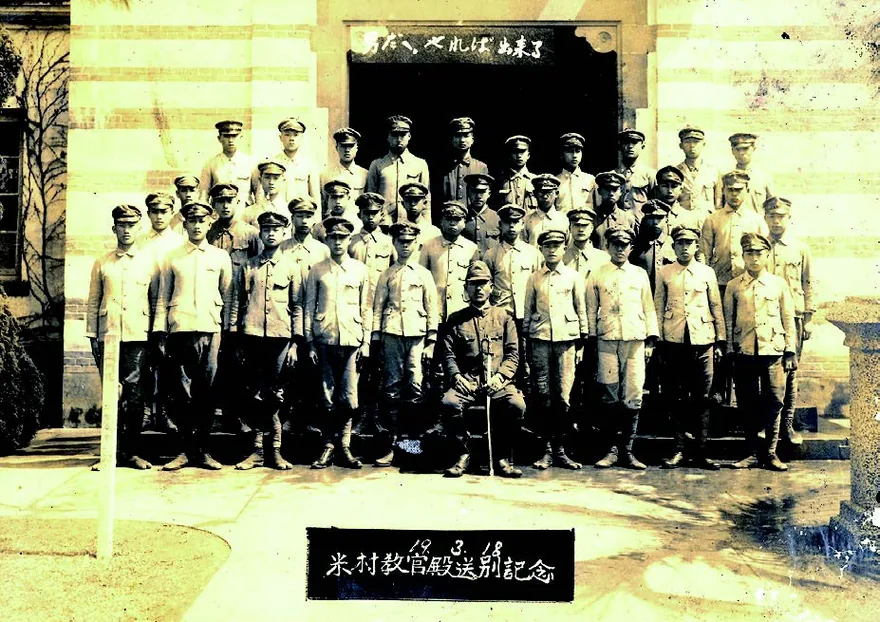
After Japan's defeat and surrender, the Northern Synod of the Presbyterian Church in Taiwan immediately formed a board of directors to prepare for the takeover. Dr. Lin Mao-sheng (林茂生) was chosen as chairman, and on November 20, 1945 the board took back Tamsui Middle School, Tamsui Girls' High School and Miyamae Girls' Middle School (宮前女中) from the Japanese, renaming them Tamsui Middle School, Tamsui Girls' Middle School and Chungshan Girls' Middle School respectively. Lin Mao-sheng served concurrently as principal of all three schools, and appointed Chen Neng-tung (陳能通) and Chen Ching-chung (陳清忠) as deans of studies of the Tamsui boys' and girls' schools. Two days later, the staff and students of the two Tamsui schools held a farewell gathering for Principal Arisaka (有坂) at Tamsui Middle School.
Taiwanese society was highly unstable after the war, but under Principal Lin's management the affairs of the two schools gradually became settled. In May 1946 the two deans of studies were promoted to principal. Yet at just this time Taiwanese society was beset by crises on every side, as post-war misgovernment ruined administration and every trade fell into depression, and this directly affected the schools' development.
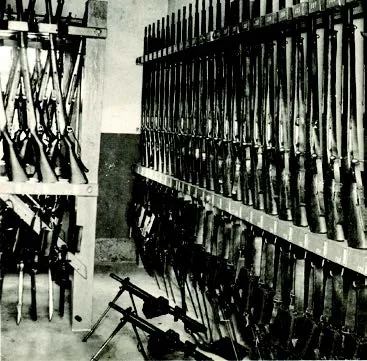
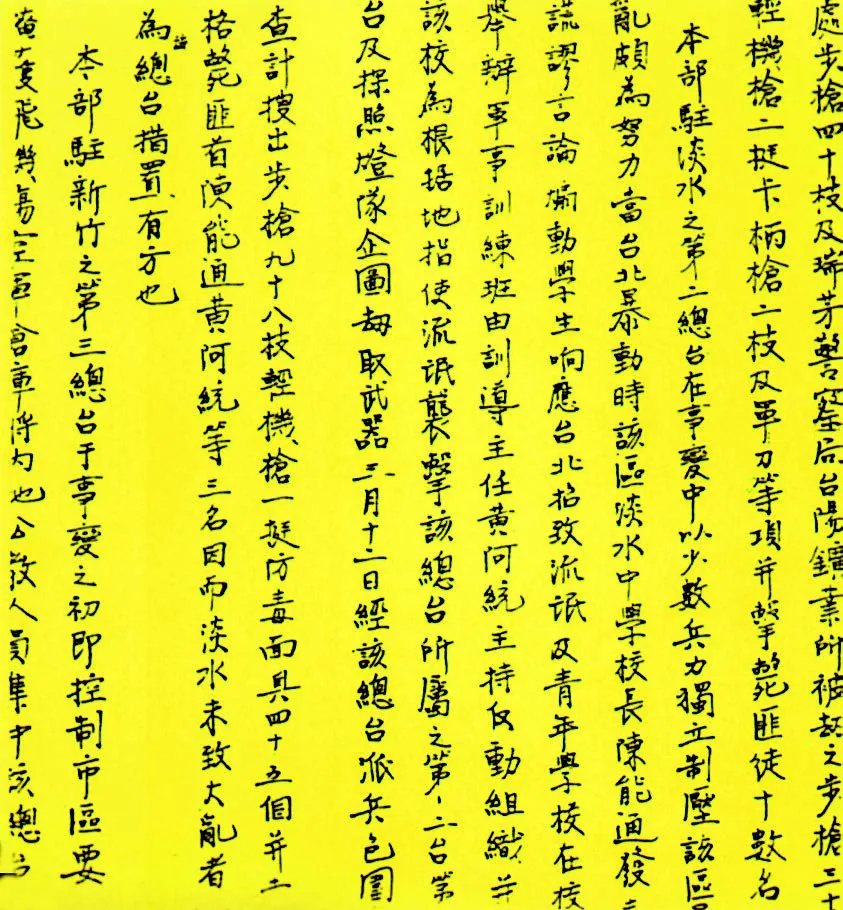
In February 1947, an operation to seize tobacco and liquor smuggled into Tamsui from the mainland was followed by the outbreak of the 'February 28' tragedy in Taipei, and the incident spread rapidly across Taiwan. During the disturbances in Tamsui, young men from the town entered Tamsui Middle School and seized the military-training rifles to attack the garrison at Shuijiantou, which later brought harm upon the school's teachers and students.
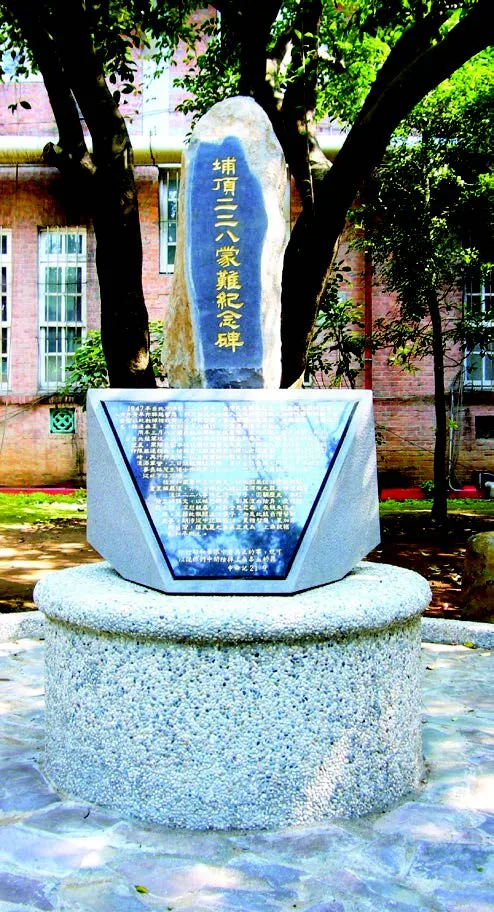
On March 10, after government troops in the Shalun area received reinforcements from Taipei, the soldiers rushed into the streets of Tamsui that morning and killed many townspeople. Kuo Hsiao-chung (郭曉鐘), a boarding student at Tamsui Middle School, had just gone down the hill to buy something and was shot dead by soldiers, his body left in the street. It was not until the afternoon that Principal Chen Neng-tung was able to go down and recover the body so that his family in Tainan could be notified. At five o'clock the next morning a large body of armed soldiers broke into the campus. They forced their way into the dormitory and took Principal Chen Neng-tung away, shot and wounded the physics and chemistry teacher Lu Yuan (盧園), who had come to save the principal, and seized the physical education teacher Huang A-tung in front of the girls' school.
Principal Chen and Huang A-tung were later taken to Shalun, and three days after that townspeople saw them bound and being sent by military truck to Keelung. From then on the two were killed and their bodies were never found. Lu Yuan also died of his wounds eight days later, and the board chairman Dr. Lin Mao-sheng was killed in Taipei.
Principal Chen Neng-tung graduated in the second class of Tamsui Middle School (1920) and then went to Japan for further study, graduating from Kyoto Imperial University; he was a rare talent in science and engineering in the Taiwan of that time. In 1927 he returned to teach at his alma mater, Tamsui Middle School, a teacher who won his students' respect by his own example. He cared for their studies and their daily lives, and was moreover their mentor in faith.
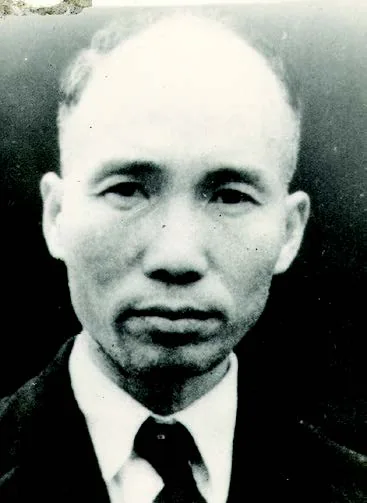
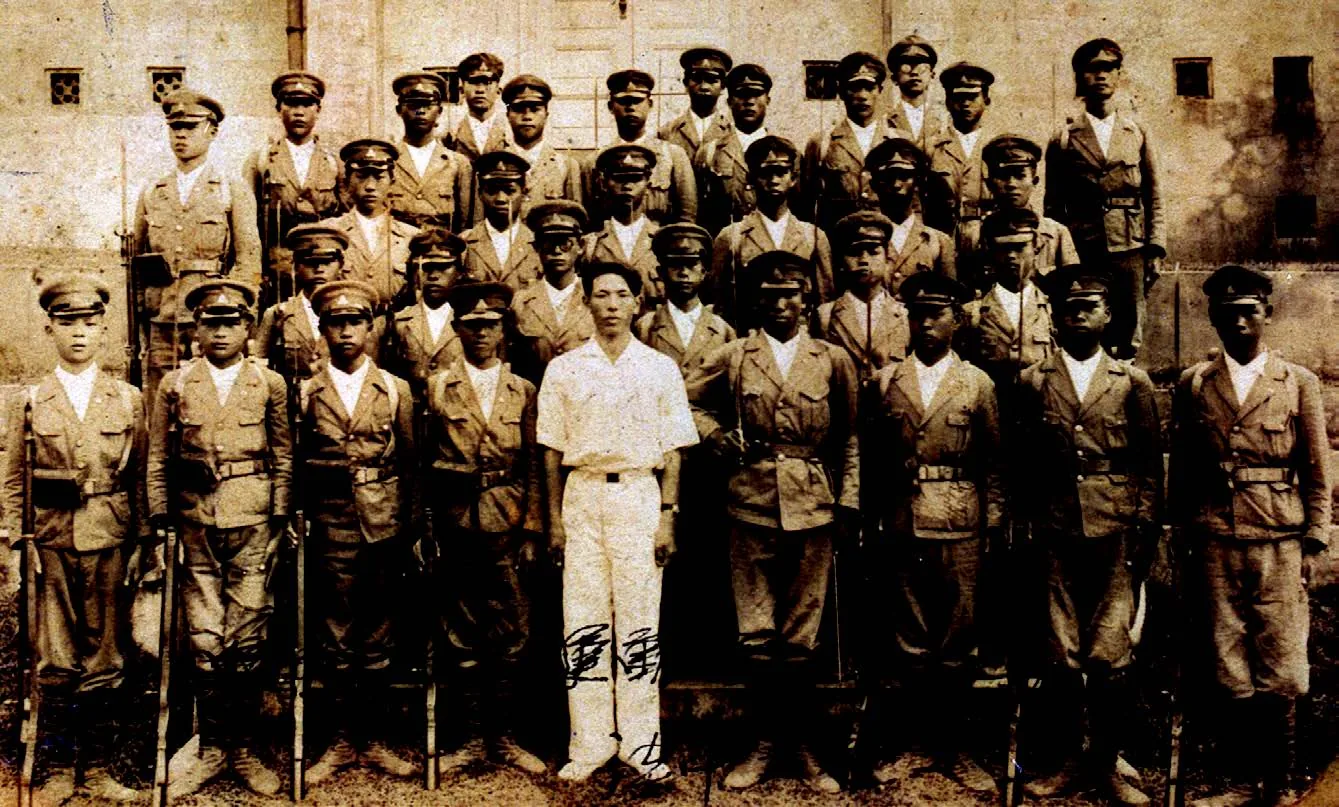
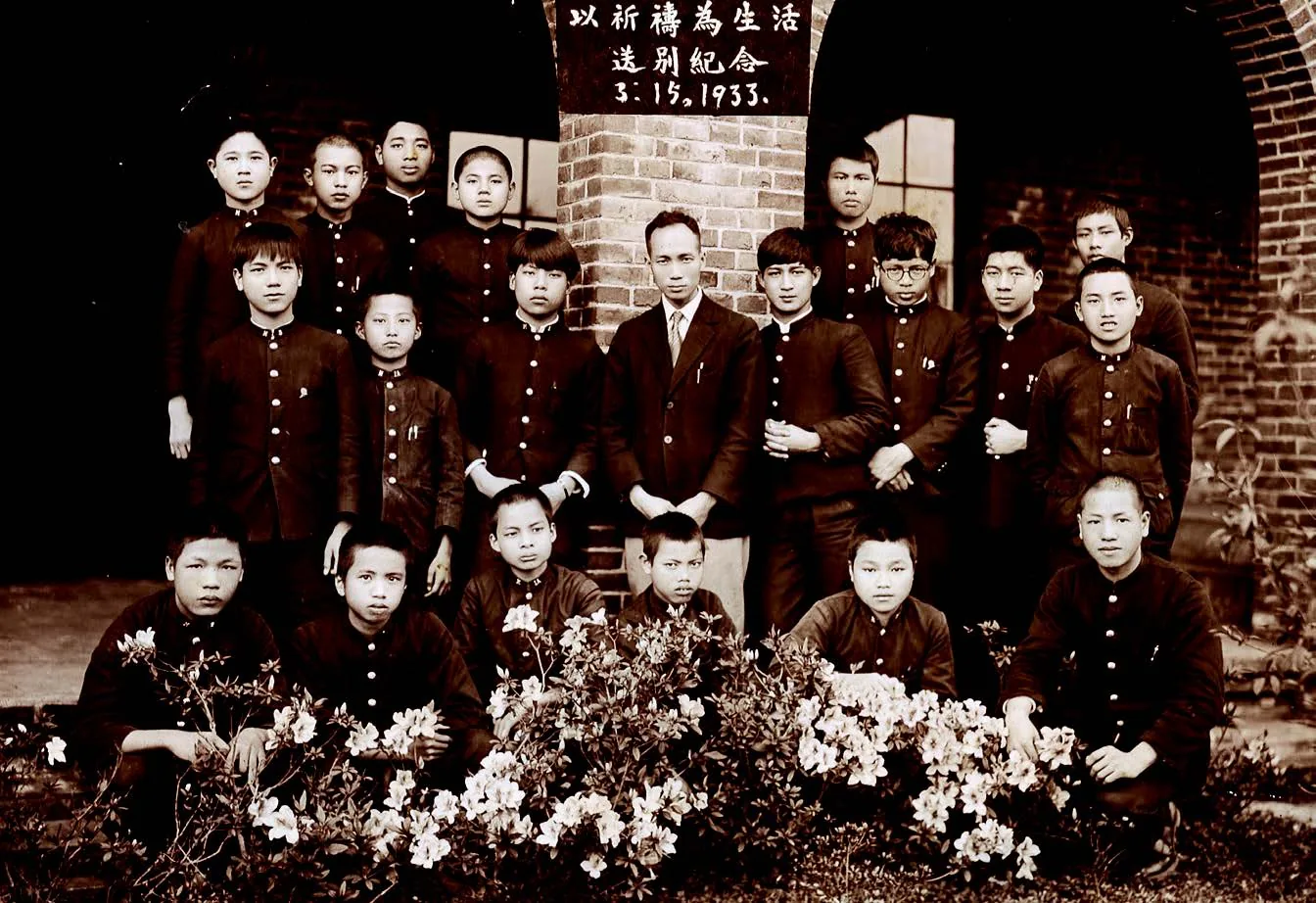
After the Japanese took over the school he had to leave Tamsui Middle School, but he continued to serve in church schools. After the war he returned to his alma mater and became principal in 1946. In the early morning of the day of the incident, Principal Chen was taken by force from his dormitory, and nothing was heard of him again.
Huang A-tung was a Hakka from Hsinchu and one of its leading young men. He graduated from Taipei Second Normal School and had served as a discipline master in a primary school. He came to teach at Tamsui Girls' High School in 1943, and was loved by his students for his affection for them and his devotion to public service. At the time of the incident he was a physical education teacher who also handled student discipline; he came to the school early that morning to make arrangements for the student who had been killed, and because of this he never returned.
Another thing for which the teachers and students of those years remained grateful was Principal Arisaka's practice of not discriminating against Taiwanese children. Under the long period of unequal, discriminatory education imposed by the Japanese, the public schools were almost monopolised by the Japanese, while the private Tamsui Middle School and Tamsui Girls' High School were made up almost entirely of Taiwanese children. To encourage his students' learning and raise the school's competitiveness, Principal Arisaka not only recruited teachers from the public schools to teach at Tamsui Middle School but also transferred his three sons from the public schools they attended to Tamsui Middle School, to study alongside the Taiwanese students as a demonstration of fairness.
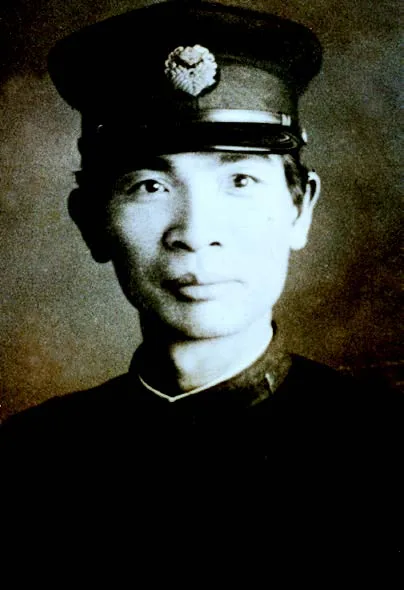
Lu Yuan graduated from Tamsui Middle School in 1941 and then went to Japan for further study at the Ueda Textile School; during the Second World War he served as a second lieutenant in the Imperial Army. After the war he was invited by Principal Chen Neng-tung to return and teach at his alma mater. At the time of the incident he was preparing for his engagement, only to be parted from the living for ever.
Principal Chen and the two teachers Huang and Lu were all men of rare ability at that time, and the authorities concerned never made public the reasons for their deaths. Only after the political taboo was lifted in 1992 did it become known that this so-called 'pacification' operation at Tamsui Middle School was carried out because they had 'incited students to respond to Taipei by bringing in hoodlums and young men to conduct military training at the school', and that having them 'shot dead' and 'executed' was claimed to be purely a matter of 'measures well taken'. Such fabricated and trumped-up charges gravely slandered the fact that the three of them had shed their blood and died at their posts.
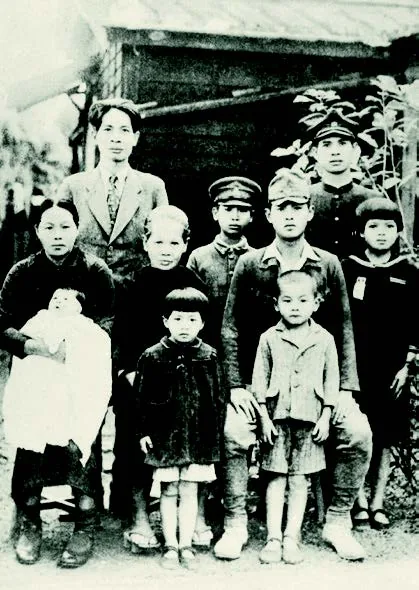
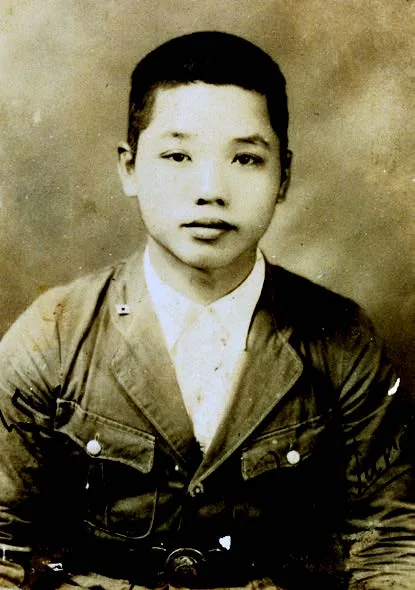
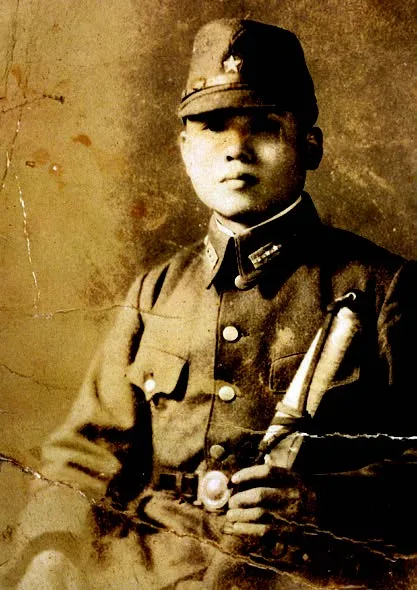
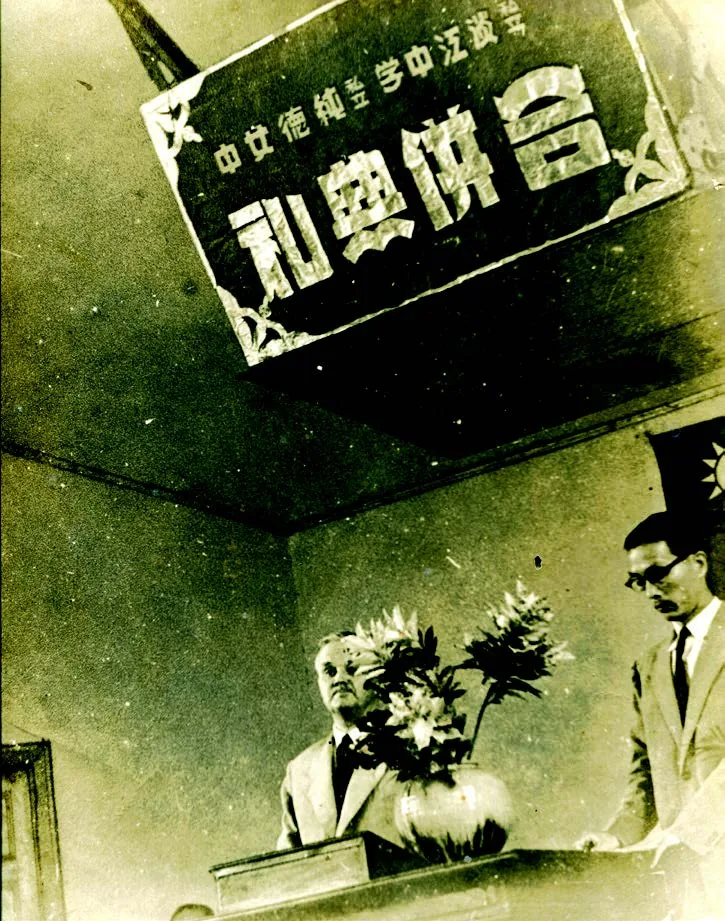
Calm did not return to the two Tamsui schools until April. The Northern Church engaged Yu Mi-chien (游彌堅), mayor of Taipei, as chairman of the board of the three schools and concurrently as principal, in order to steady public feeling. At the same time the two Tamsui schools were merged, and because government regulations did not allow private schools to use place names, they were renamed the boys' division and the girls' division of Tamkang Senior High School. In September of the same year, Chungshan Girls' Middle School in Taipei was also merged into the girls' division of Tamkang Senior High School.
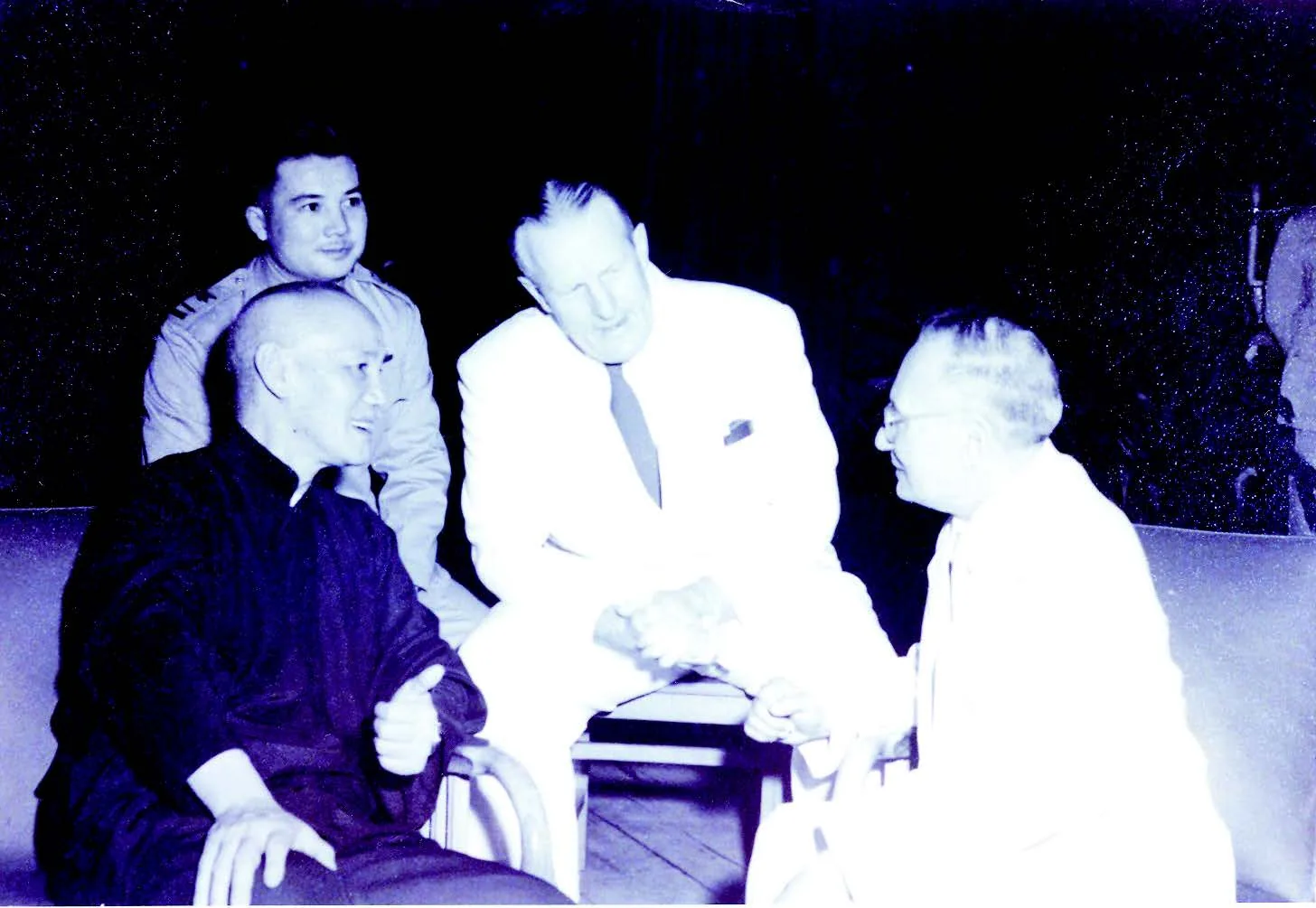
02Chunte Girls' High School
Although the Tamsui boys' and girls' schools had been merged into Tamkang Senior High School with separate boys' and girls' divisions, in the short term it was still impossible to overcome the fact that the two schools had long been run independently. The two differed in their historical origins, and in the mission councils and staff that had run them in earlier years and in the board organisation of the present day.
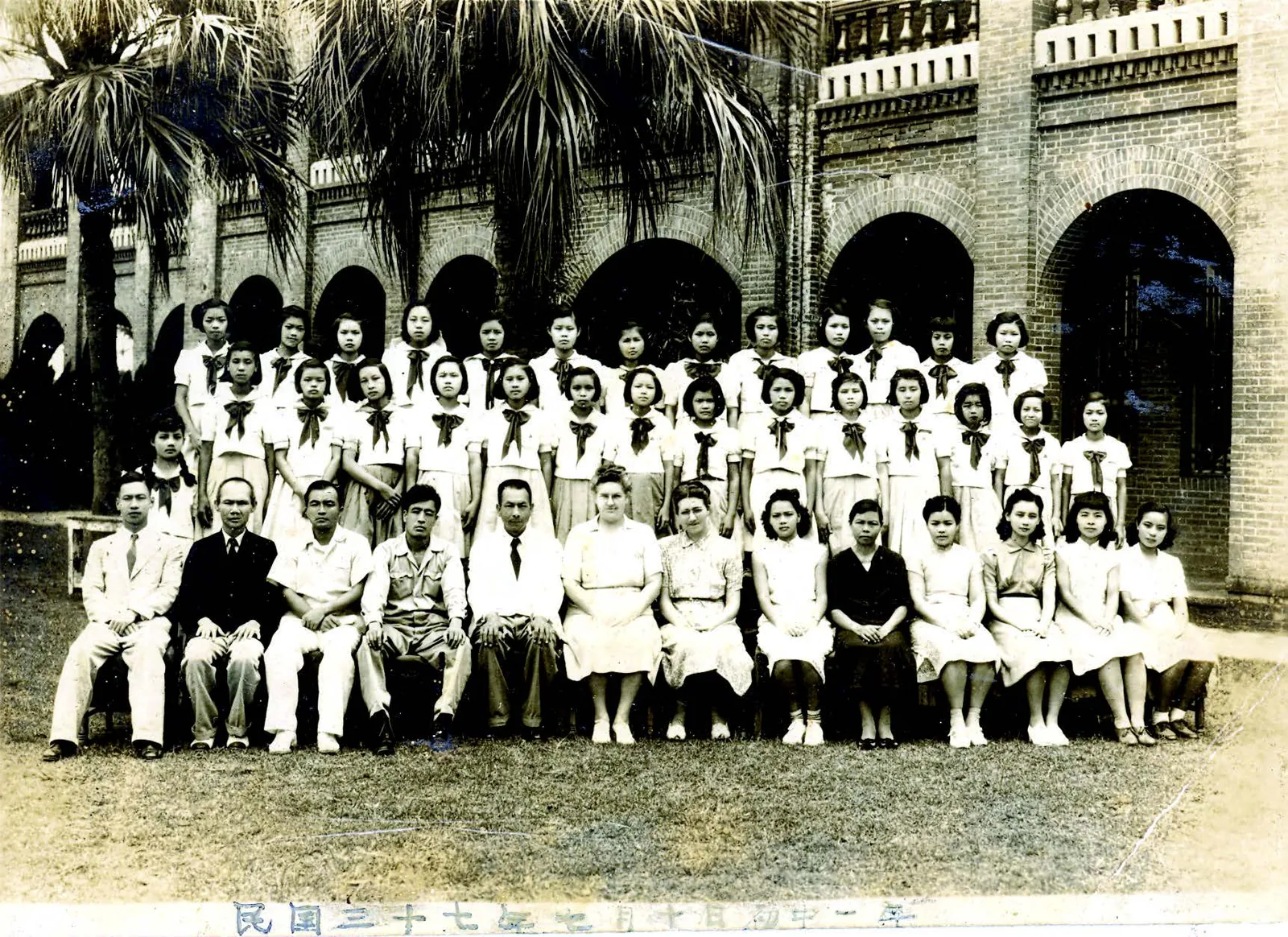
In 1948 the Northern Synod resolved that the boys' and girls' divisions should be run separately, each with its own board. Yu Mi-chien remained chairman of both boards, and Wang Shou-yung (王守勇) and Chen Ching-chung were engaged as principals of the boys' and girls' schools respectively. In July of the same year the girls' division was formally renamed 'Chunte Girls' High School'.
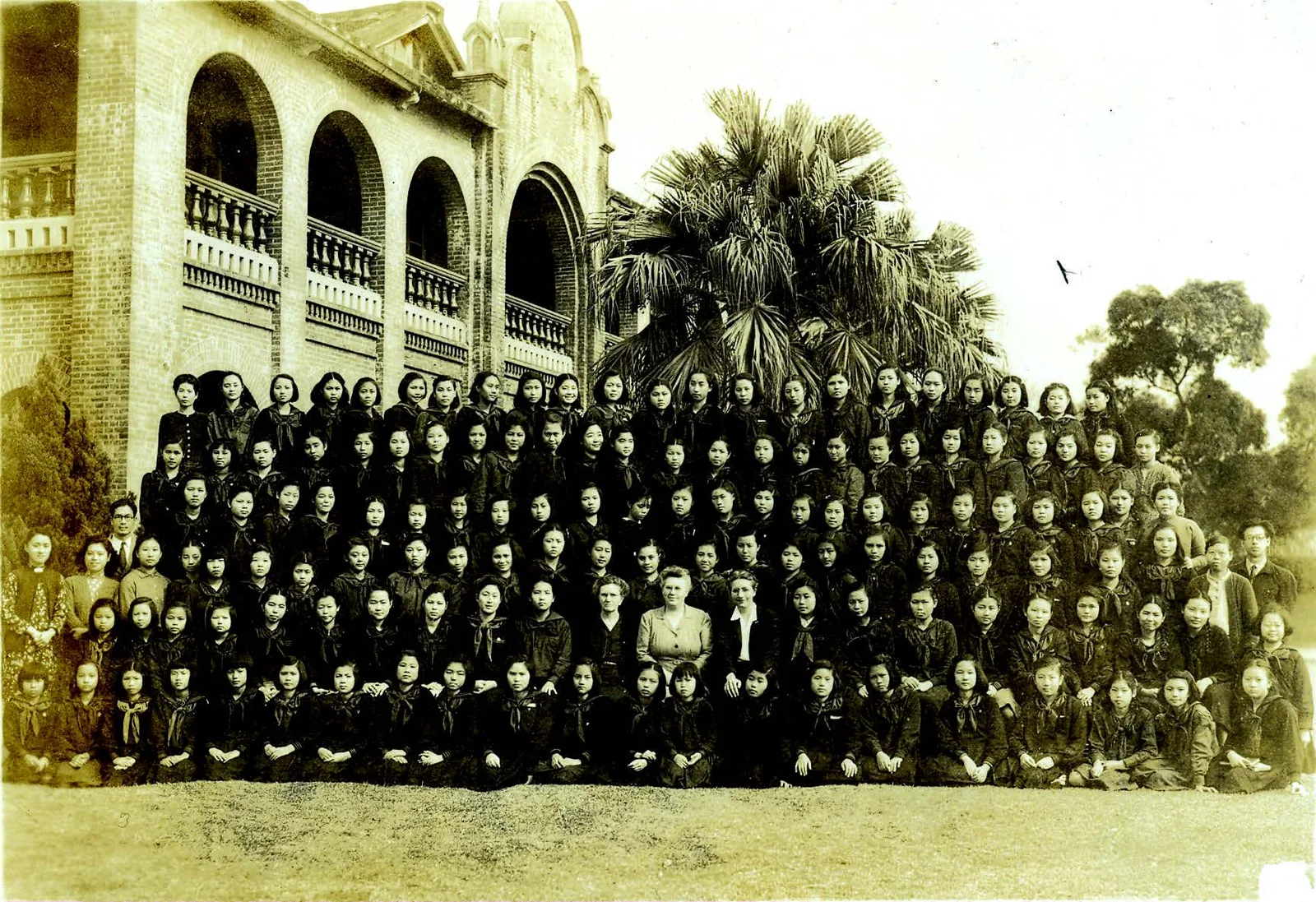
After Chunte Girls' High School began to operate independently, school affairs developed steadily, and the two women missionaries who had been in Taiwan before the war, Miss Tu Tao-li (杜道理) and Miss Te Ming-li (德明利), both returned to serve in Taiwan. Miss Tu, a former principal of the Girls' Academy, was highly experienced; she directed religious activities and also taught English, while Miss Te founded a music department at Chunte Girls' High School.
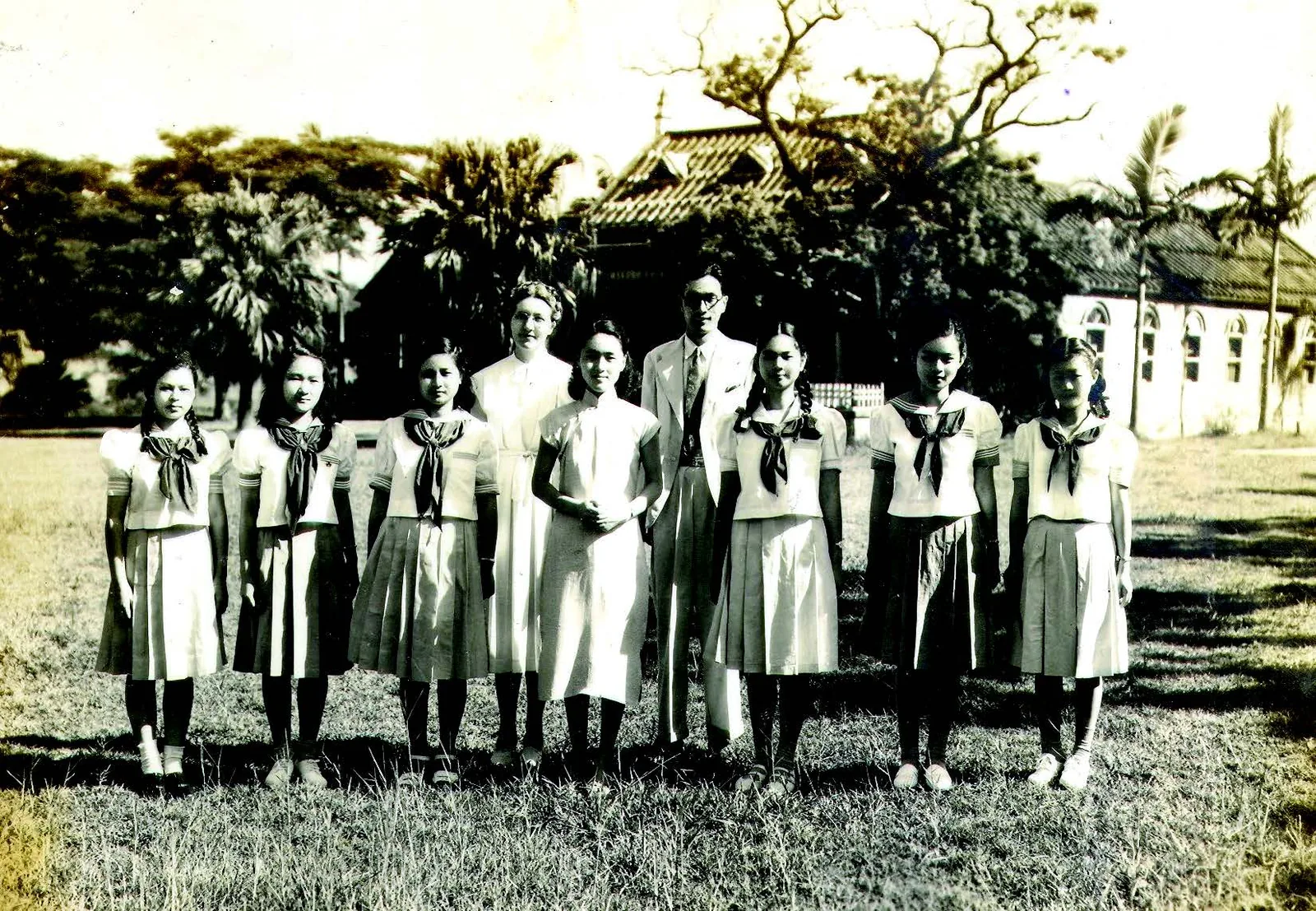
In February 1952 Principal Chen Ching-chung resigned on grounds of ill health, and the board engaged Chen Su-ti (陳泗治) to succeed him. Chen Su-ti was a well-known musician and a pupil of Miss Te, and this appointment signalled that Chunte Girls' High School was to develop as a music school.
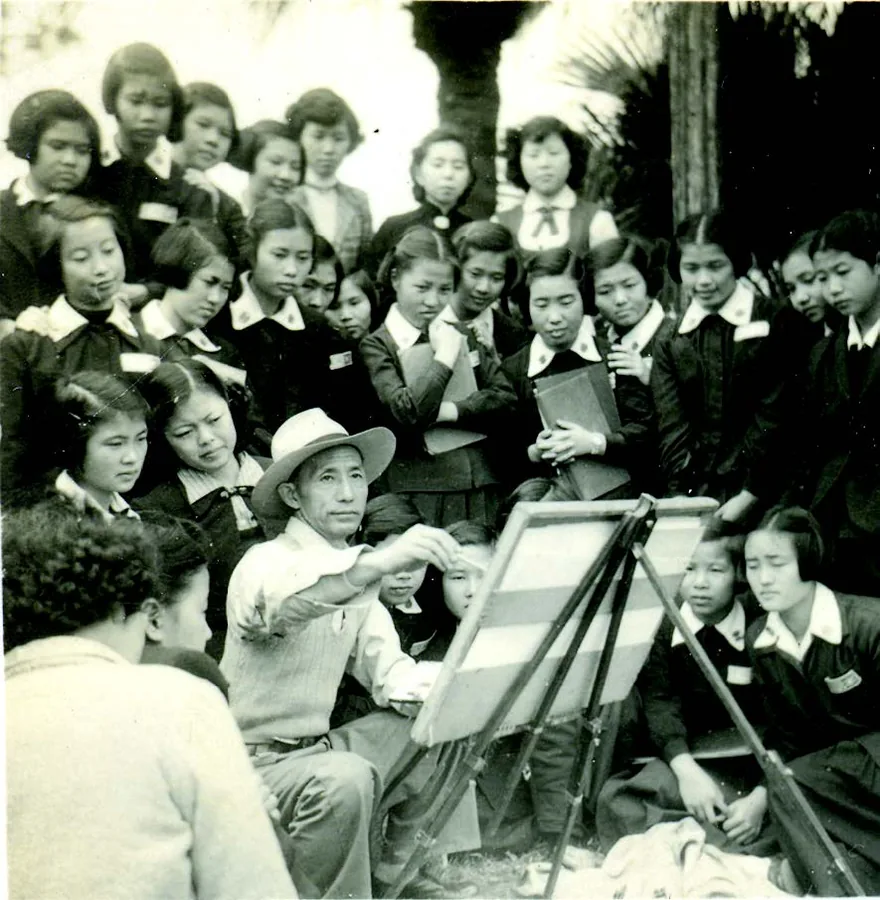
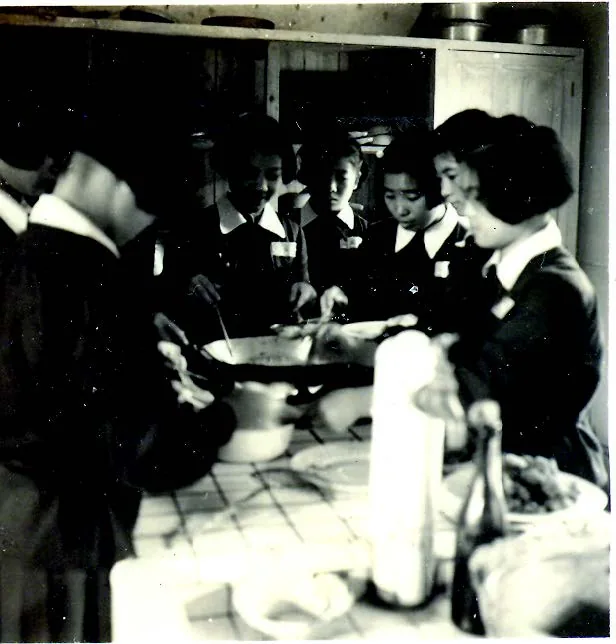
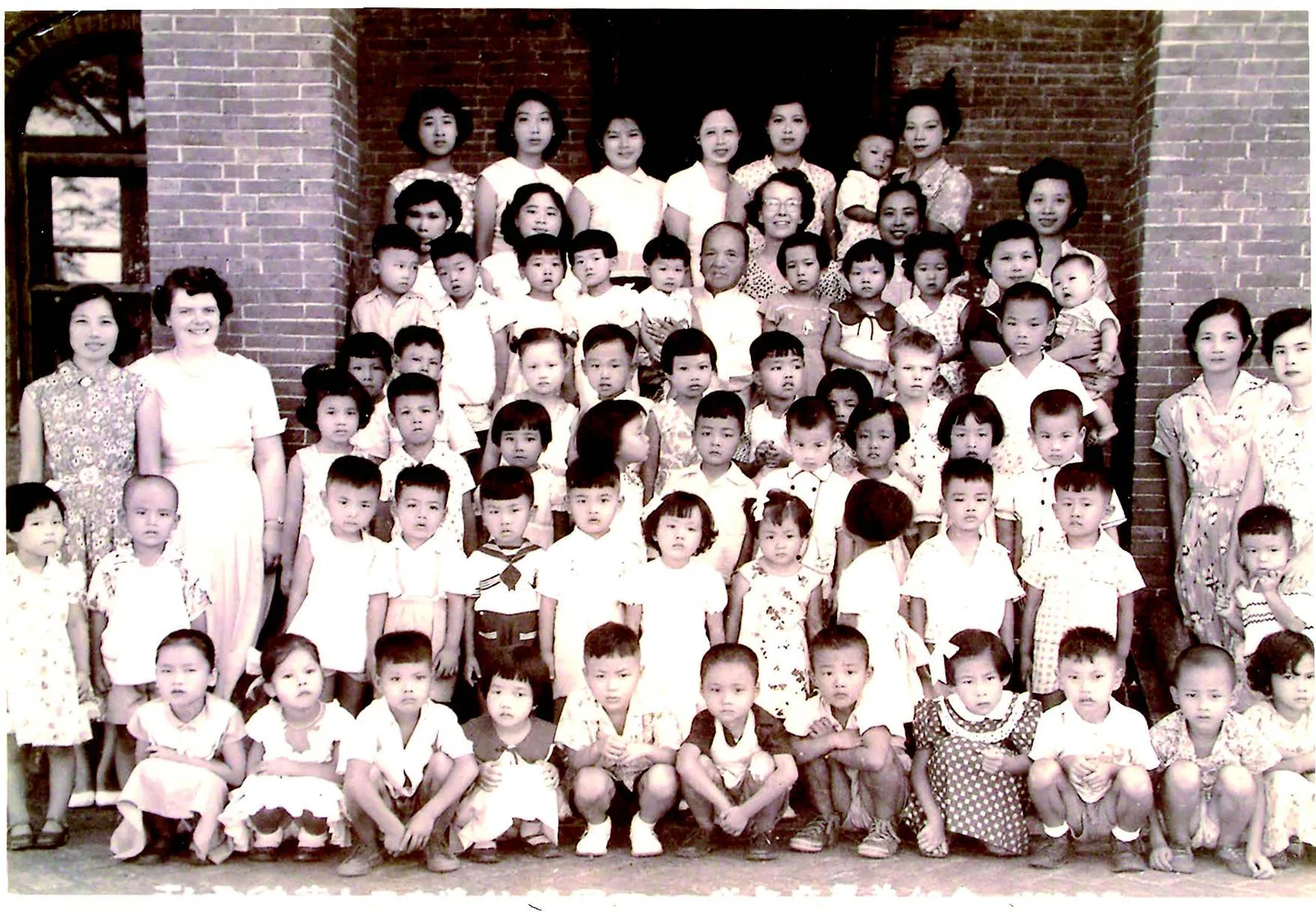
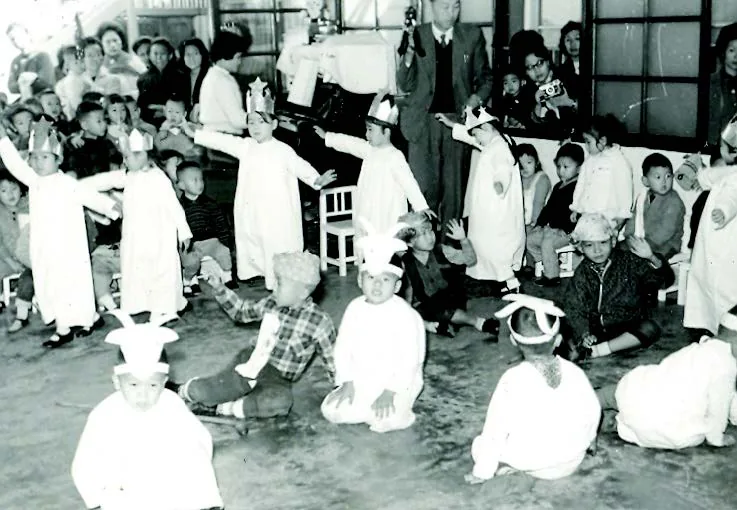
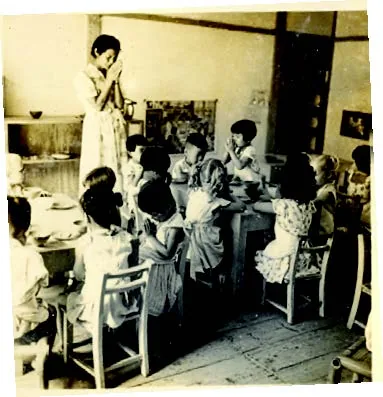
In 1953 the music department was expanded into the arts supplementary classes attached to Chunte Girls' High School, with departments of music, fine art, home economics and early childhood care established in turn, headed by the noted painter Chen Ching-hui. Such a specialised arts secondary school was distinctly advanced for the social outlook of the time, and shows the vision and determination of the teachers and students of Chunte Girls' High School. In the same year Chunte Kindergarten was added, in the charge of Miss Margaret MacKenzie (高瑪烈姑娘). This kindergarten may be traced back to the 'Tai Kindergarten' (台幼稚園) founded by the pre-war mission council at Oxford College, and is the oldest in Tamsui.
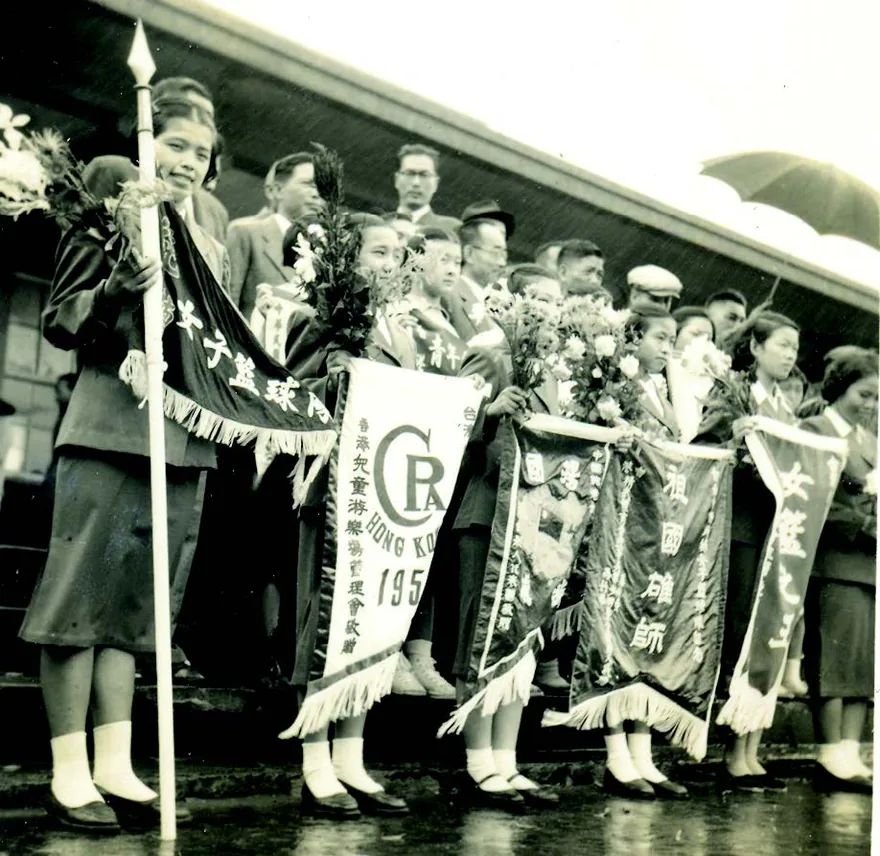
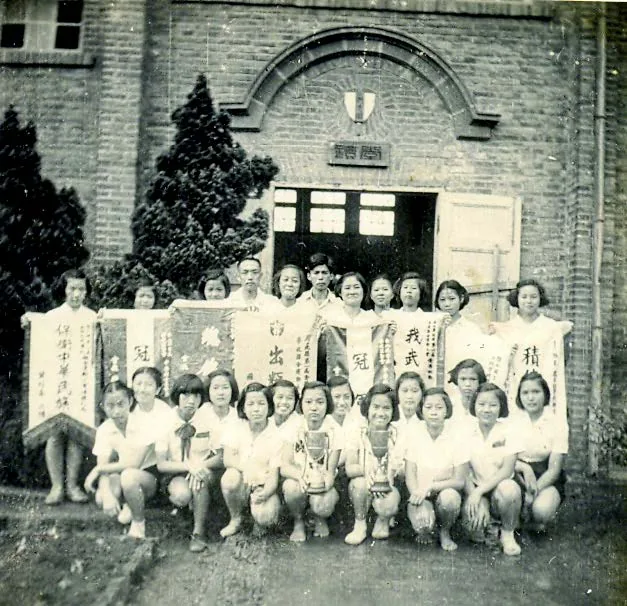
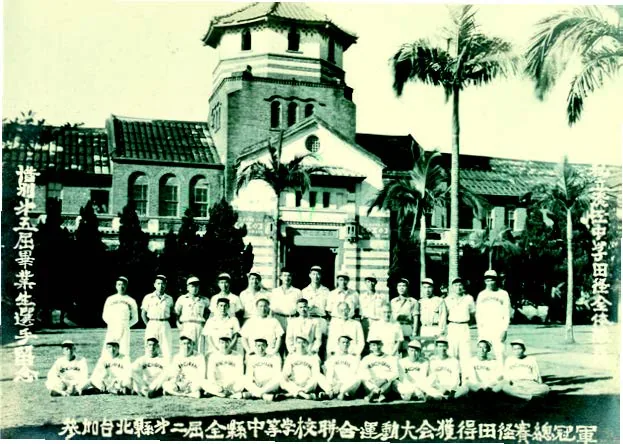
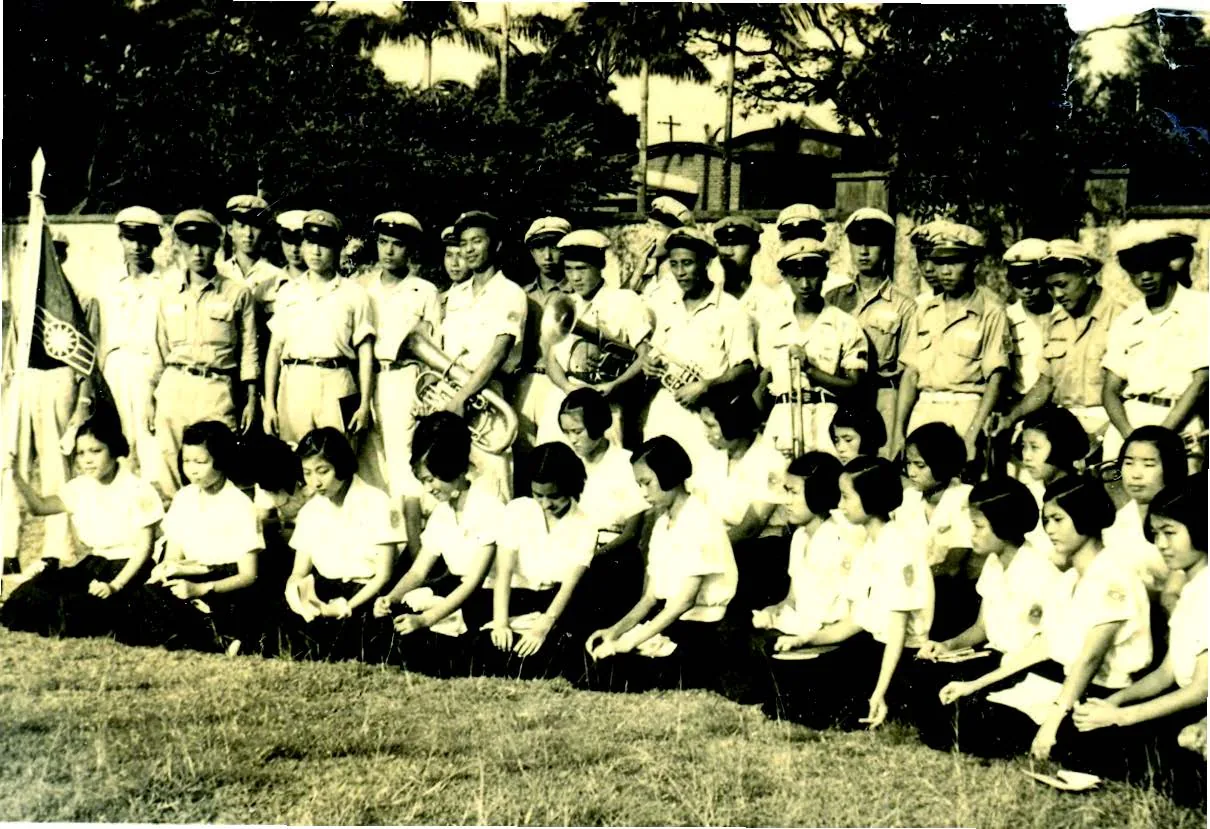
Chunte Girls' High School also performed outstandingly in sport: the Chunte girls' volleyball team, trained by teacher Hung Chin-sheng (洪金生), won the provincial games championship three years running. The Chunte girls' basketball team, formed in 1947, won the provincial games championship many times over and travelled as far as Southeast Asia to compete, winning fame at home and abroad; its renown was no less than that of the Tamsui Middle School rugby team of earlier years.
The campus of Chunte Girls' High School at that time comprised, besides the original Tamkang girls' school grounds, Oxford College and the former missionary residences. In 1957 the girls' division chapel was completed and brought into use, serving both for the weekday and Sunday worship of the girls who boarded there (the Tamkang boys all worshipped at Tamsui Church) and for assemblies.
Just as the affairs of Chunte Girls' High School were flourishing, Tamkang Senior High School, only a wall away, fell into a period of confusion beset by troubles within and without.
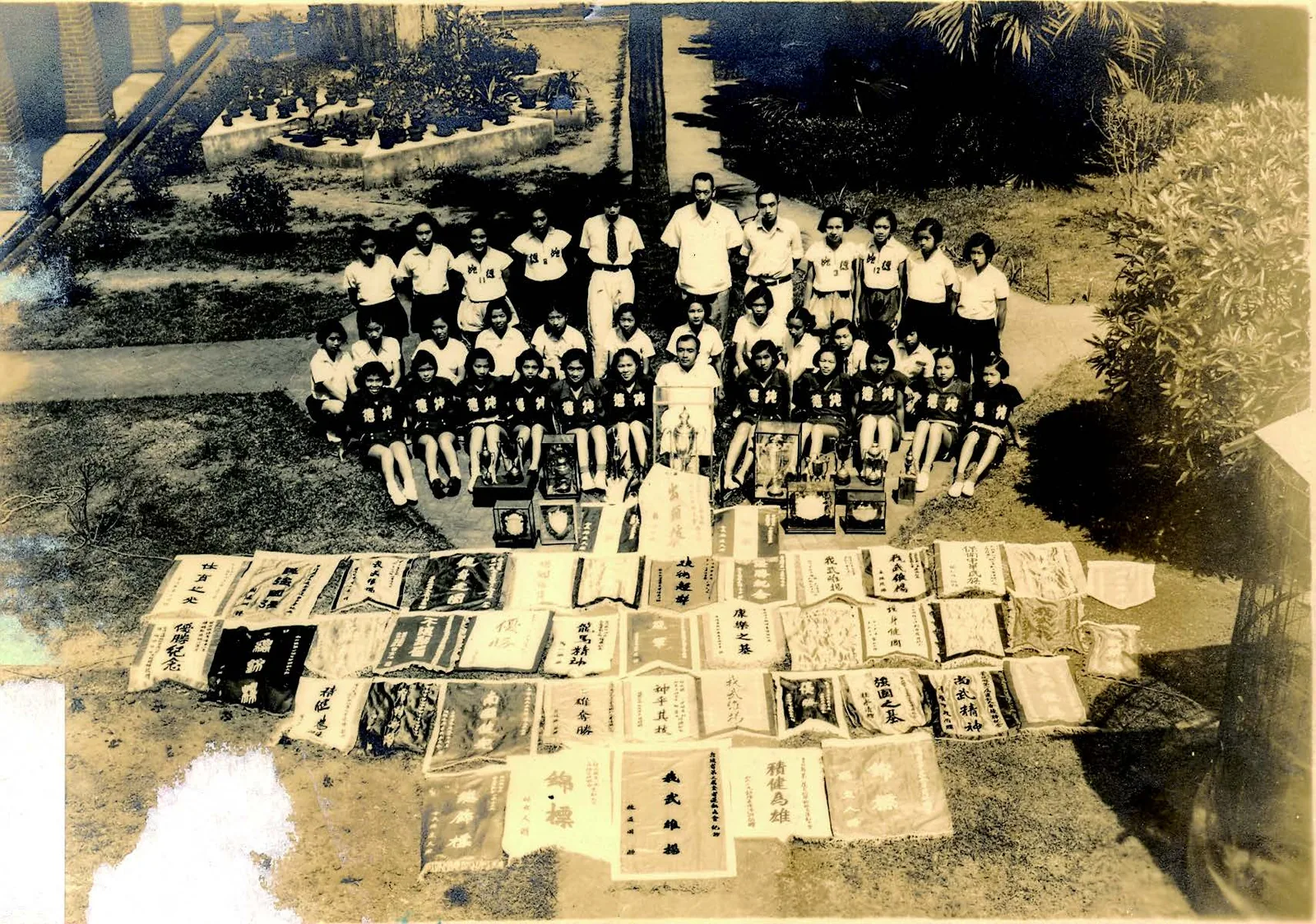
The Chunte girls' basketball team dominated Southeast Asia for more than a decade, winning honour for the country several times as the 'mighty lions of the motherland' and bringing comfort to overseas compatriots.
03Tamkang Senior High School in turmoil
The six years from 1949 to 1955 may be called a turbulent era for Tamkang Senior High School.
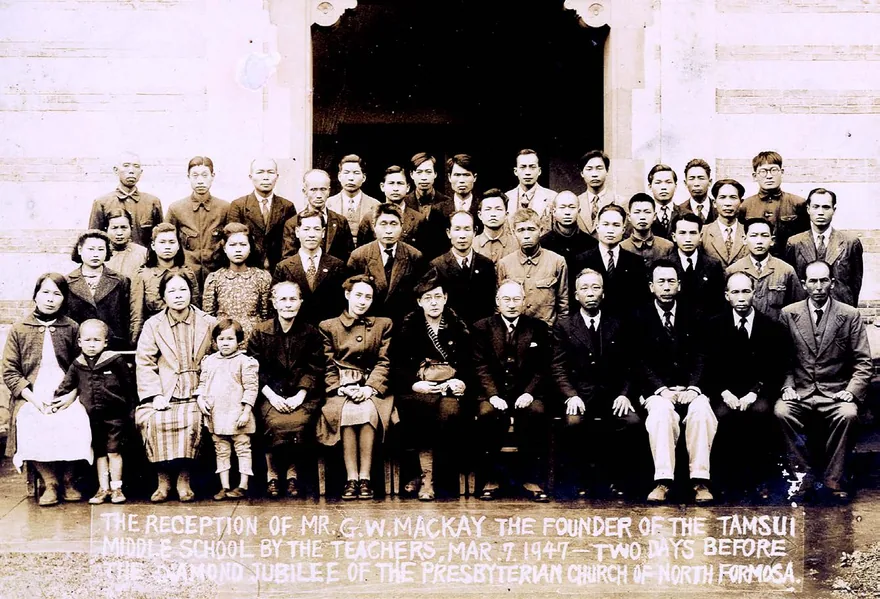
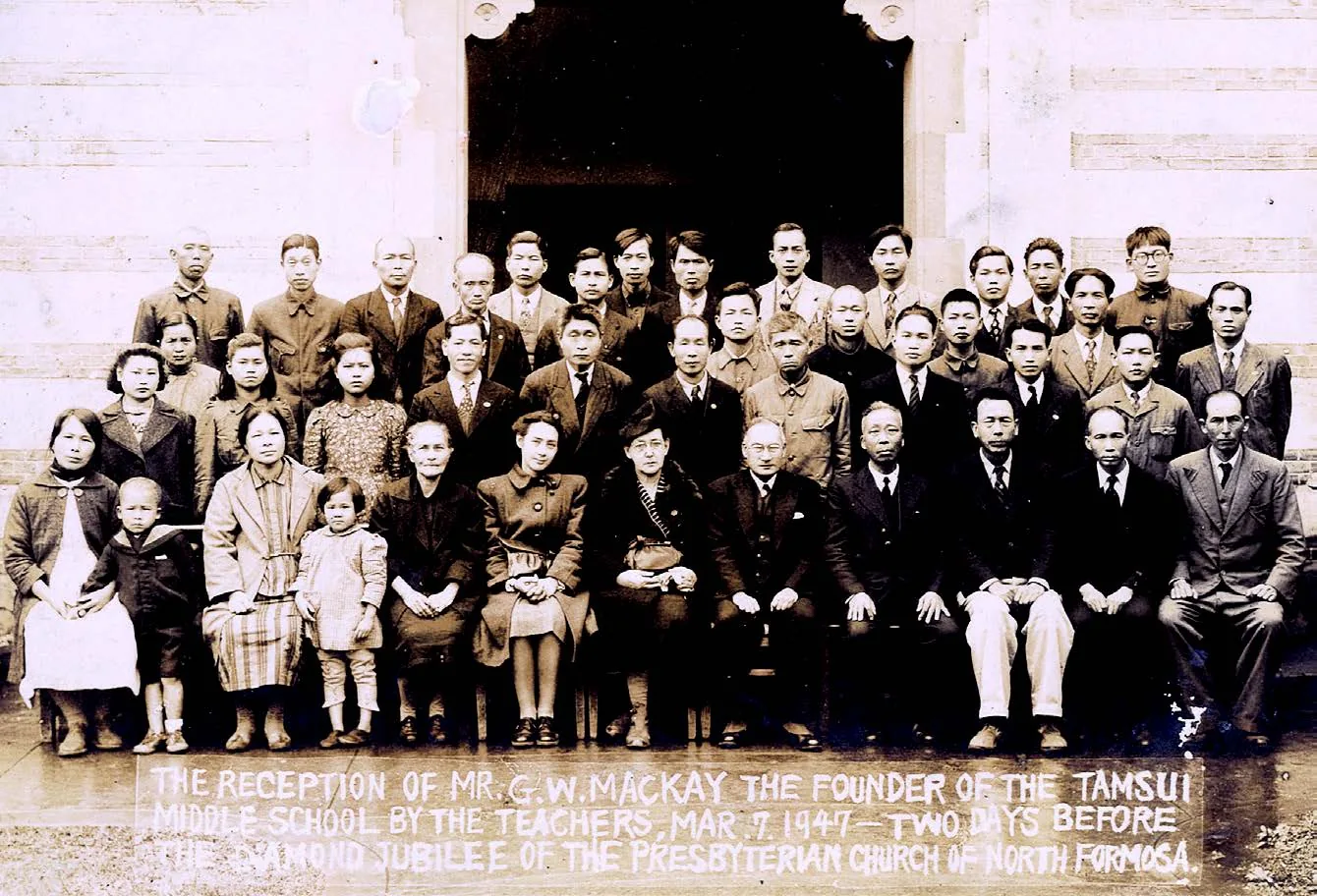
In the early post-war period, since the missionaries who had returned to Canada during the war had not yet come back to the school, it was taken back from the Japanese and run by a board appointed by the standing committee of the Northern Synod of the Presbyterian Church in Taiwan. But this form of management, with its changes of development and of character, was not accepted by Mr George William Mackay, the founder of Tamsui Middle School, who returned to Taiwan after the war. He had himself been the first principal, and the one with the longest term of office, and since the school's founding it had always been run by the mission council he led.
Because the board at that time did not take account of the fact that the mission council had run the school before the war, Mr Mackay, on his return to Taiwan, suddenly found himself in a school environment utterly changed by the war, and difficulties arose between the two sides in reaching agreement. The matter finally erupted into conflict in 1949, after Mackay appointed Wang Shou-yung as principal. On July 20 the board resolved to dismiss the principal and all teaching and administrative staff, and submitted its collective resignation to the Northern Synod. Although the Northern Synod reorganised the board and engaged a new principal on this account, the dispute did not end.
In 1951 Mackay went so far as to reorganise the board himself in his capacity as founder and to register it with the Provincial Department of Education. Because the dispute between the two sides continued without pause and many teachers and students were drawn into it, the Provincial Department of Education stepped in to mediate and sent the inspector Kuan Chieh-tung (關頡仝) to take over the office of principal; the affairs of Tamkang Senior High School were seriously affected.
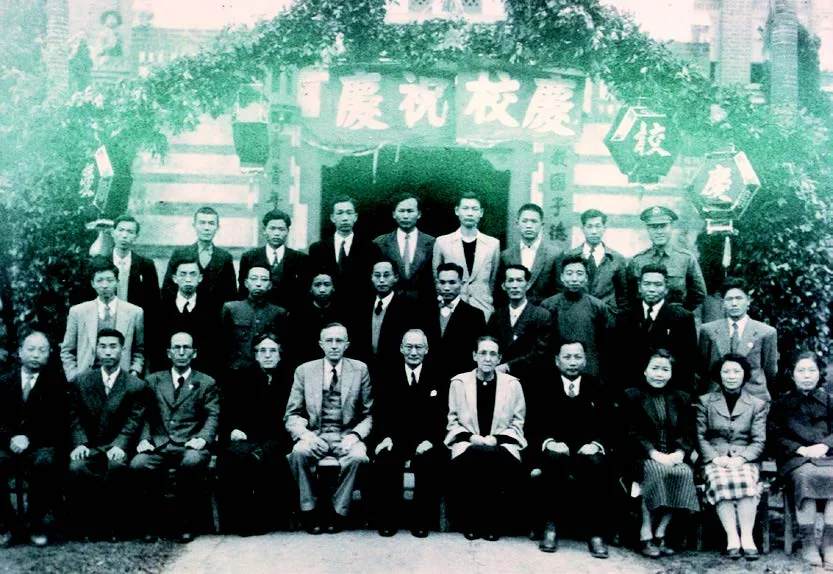
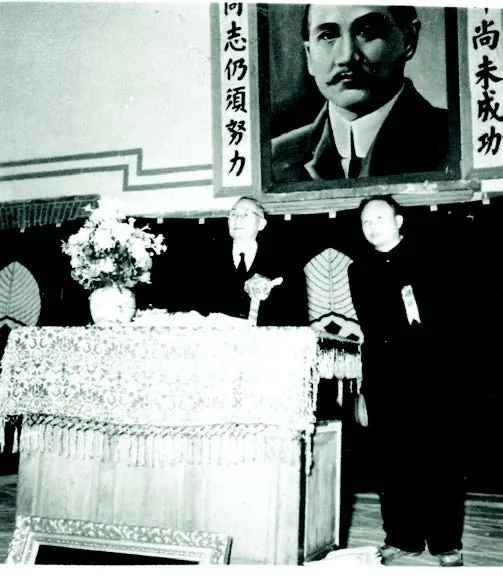
Finally, in January 1955, Canada sent its highest-ranking representative, the Moderator of the General Assembly, Dr. J. L. W. McLean (馬禮安), to Taiwan; he handed Tamkang Senior High School directly to the Northern Synod of the Presbyterian Church in Taiwan to run, reorganised the board, and appointed Principal Chen Su-ti of Chunte Girls' High School to take charge of school affairs, thus ending a dispute that had lasted six years.
During the same period Tamkang Senior High School was also involved in the affair of the 'Tamkang English Junior College'. Commonly known as the 'English College', it was the forerunner of today's Tamkang University. The 'English College' was originally an English junior college founded within the grounds of Tamkang Senior High School in June 1948. It was established because Tamkang Senior High School felt the lack of higher education at that time; but because information was then insufficient, it was not registered in time.
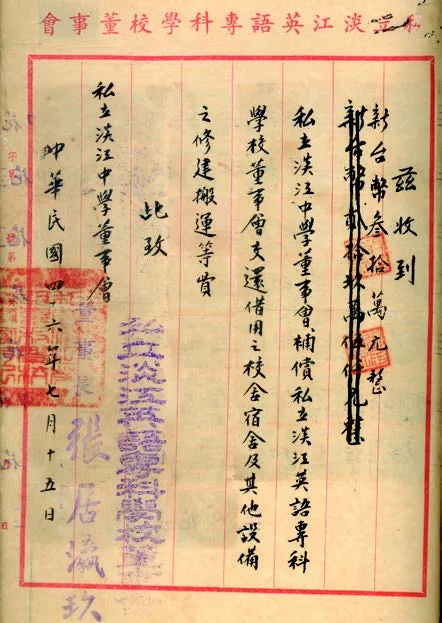
In 1950 the board engaged Chang Ming (張鳴) as chairman and concurrently principal. Chang Ming had also set about founding a university but had not obtained approval, so he applied for registration using the existing establishment of the Tamkang English Junior College and made himself principal. In January of the following year Chang Ming died, and his wife Chang Chu Ying-chiu (張居瀛玖) succeeded him as principal of the English College, steadily expanding it within Tamkang Senior High School. That one campus should hold two independently run schools naturally gave rise to a good deal of conflict.
This problem was not resolved until the affairs of Tamkang Senior High School had become settled, when in July 1957 the school paid the English College NT$300,000 to assist its move to Tatienliao in Tamsui, on the land donated to it by the gentry of Tamsui. The English College afterwards developed into today's Tamkang University.
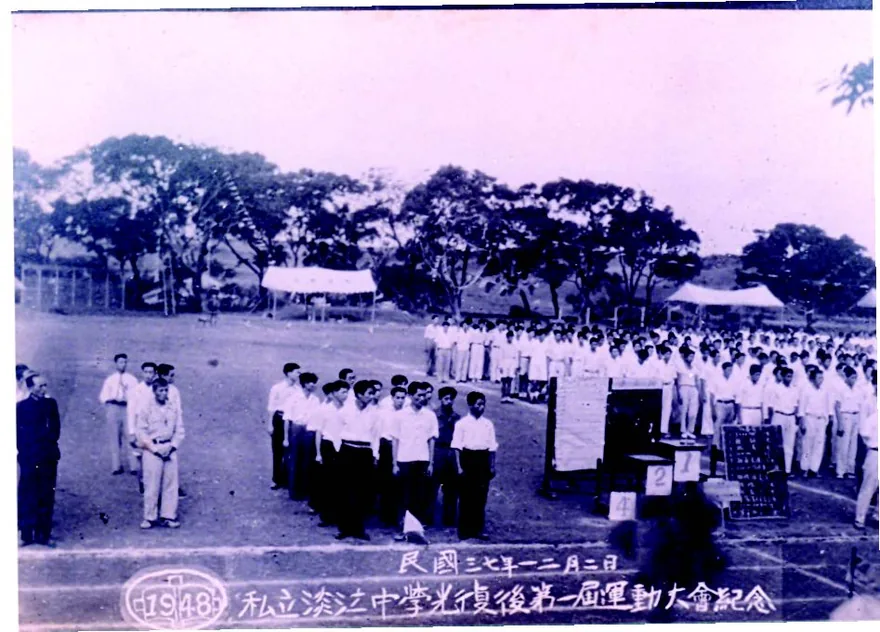
In April 1956 the Northern Synod of the Presbyterian Church accepted the request of the boards of Tamkang and Chunte and merged the two schools into one again, with separate boys' and girls' divisions; after the merger Chen Su-ti became the first principal. Once the repair and extension of the school buildings was complete, the boys' and girls' divisions were abolished in 1958, ending more than ten post-war years of division and merger, and from then on Tamkang Senior High School entered a new era.
04Tamkang Senior High School after the merger
After Mr Chen Su-ti took over as principal of Tamkang Senior High School he ran the school for twenty-six years, the longest term of any principal, and his style of leadership directly shaped the character of the modern school.
Chen Su-ti was an early alumnus of Tamsui Middle School (graduating in 1928). He was himself a musician and a pastor, and moreover a seeker after humanistic education, with a particularly strong attachment to, and sense of mission for, aesthetic education. When he first took charge of Tamkang he had the support in teaching of Miss Te, Miss Tu, John E. Geddes H.A. (郭德士), Tsai Hsin-i (蔡信義), Chen Ching-hui and Hung Chin-sheng, and the students performed outstandingly in music, fine art, physical education and English.
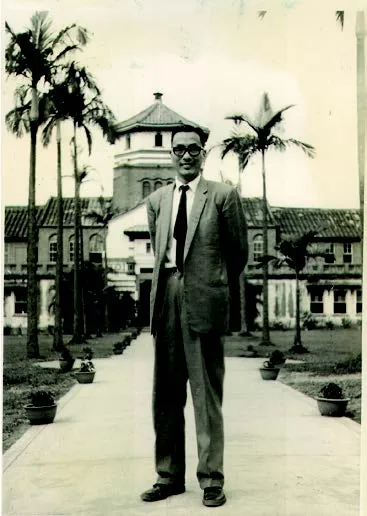
By the 1960s he had completed several important projects, laying a good foundation for Tamkang Senior High School: the repair of classrooms and dormitories, the addition of specialist classrooms, the acquisition of equipment and facilities, and the establishment of various scholarships.
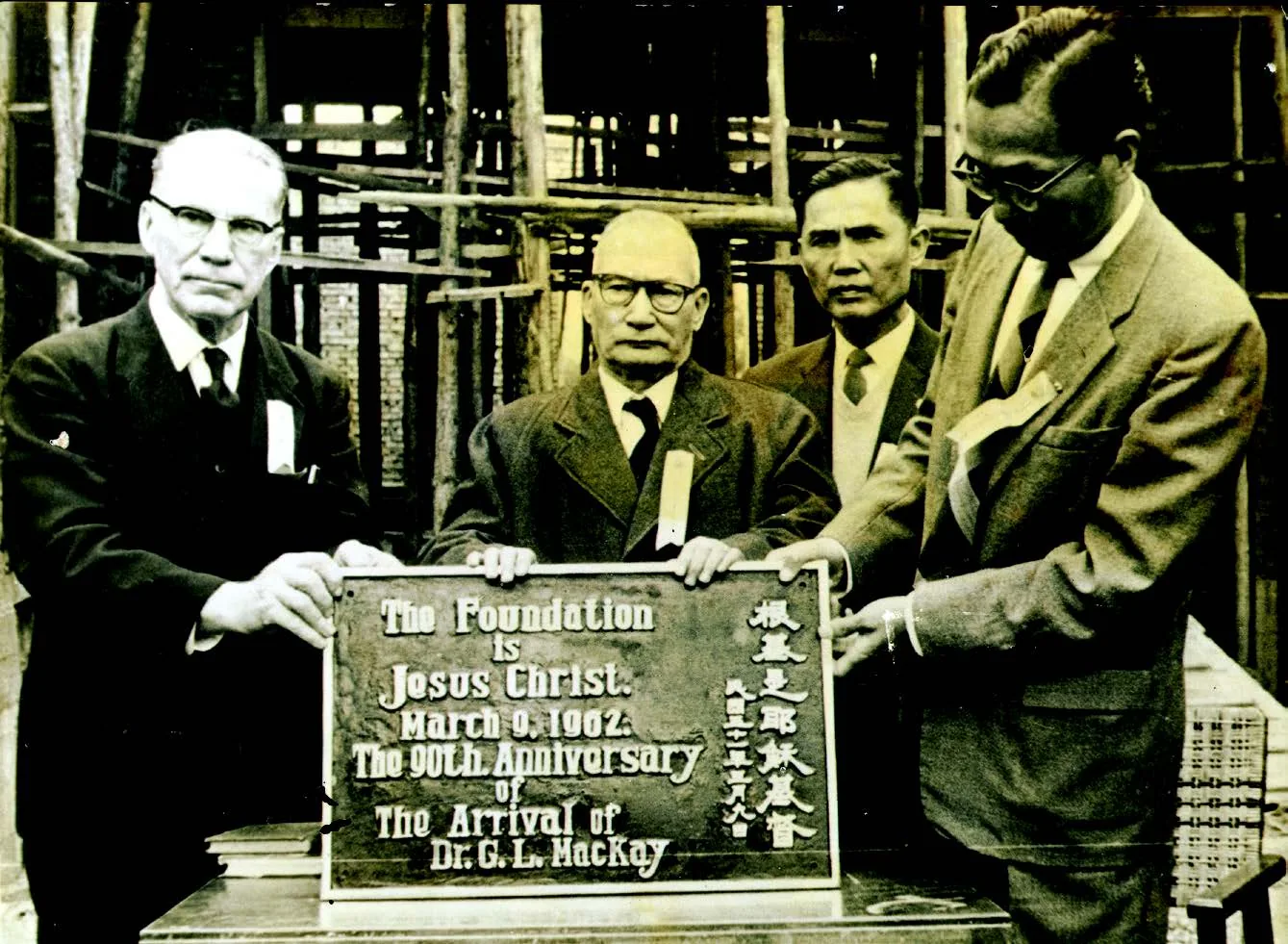
To solve the long-standing problem of old and insufficient boys' dormitories, in 1960 Principal Chen launched a 'Ten Thousand One Hundred Donors Campaign' among the church, parents and alumni to raise funds for building work. On March 6, 1962 the boys' dormitory was dedicated, marking the ninetieth anniversary of Dr. Mackay's arrival in Taiwan. The building could then accommodate four hundred boarders, and was the beginning of Principal Chen's plan for boarding the whole student body. In addition, the Tamkang Grand Chapel and religious activity centre, praised at the time as the largest in the Far East, was built in 1965 and dedicated on March 9 of the following year. This attention to education for daily living, and the nurturing of the spirit through religious activity, became distinguishing features of the school.
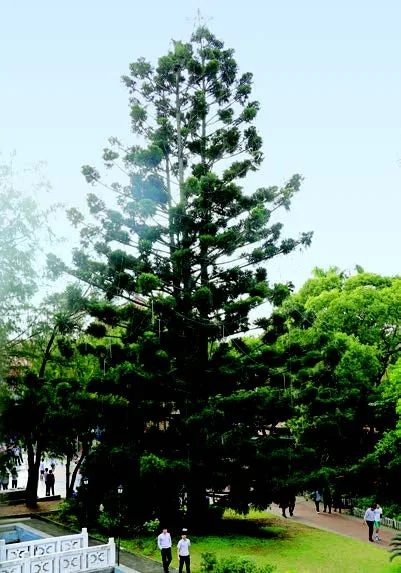
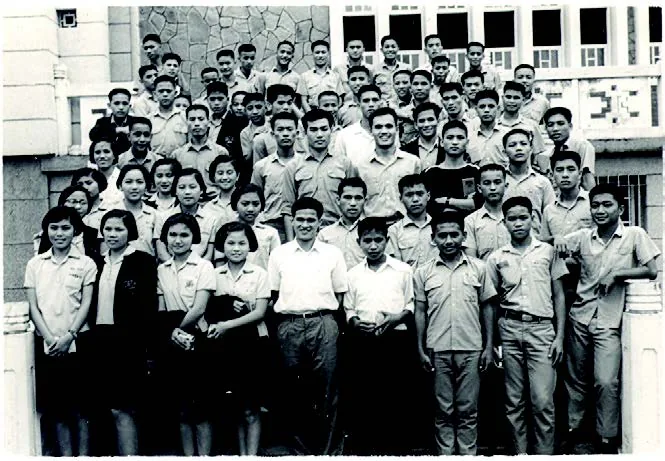
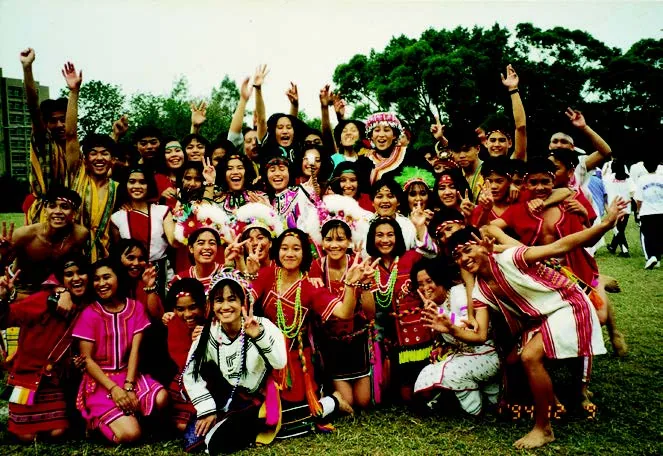
The 1970s were an extremely difficult time for running a private secondary school. Not only were educational resources unevenly distributed, but the temper of society, which had turned to seeking quick success and immediate gain, relentlessly squeezed the space in which private schools could operate, and severely tested the value of Tamkang's educational spirit. Yet Principal Chen held throughout to small classes, put aesthetic education first, and encouraged his students to be 'people of culture'; he did not judge a student's worth by marks, and he gave them great scope to express themselves. In a teaching environment dominated by the cult of advancement to higher schools, he made Tamkang a piece of unspoiled ground. In return, Principal Chen and the school bore pressures beyond words.
After Principal Chen Su-ti retired in 1981, Mr Tsai Hsin-i, the dean of studies, served as acting principal. He had been dean of studies throughout Principal Chen's time and had acted as principal on several occasions, and so was well suited to the post. In his five years as acting principal he worked to raise academic standards and the rate of advancement to higher schools, established various schemes of reward, and even set up scholarships funded by donations from the teachers themselves, with notable results.
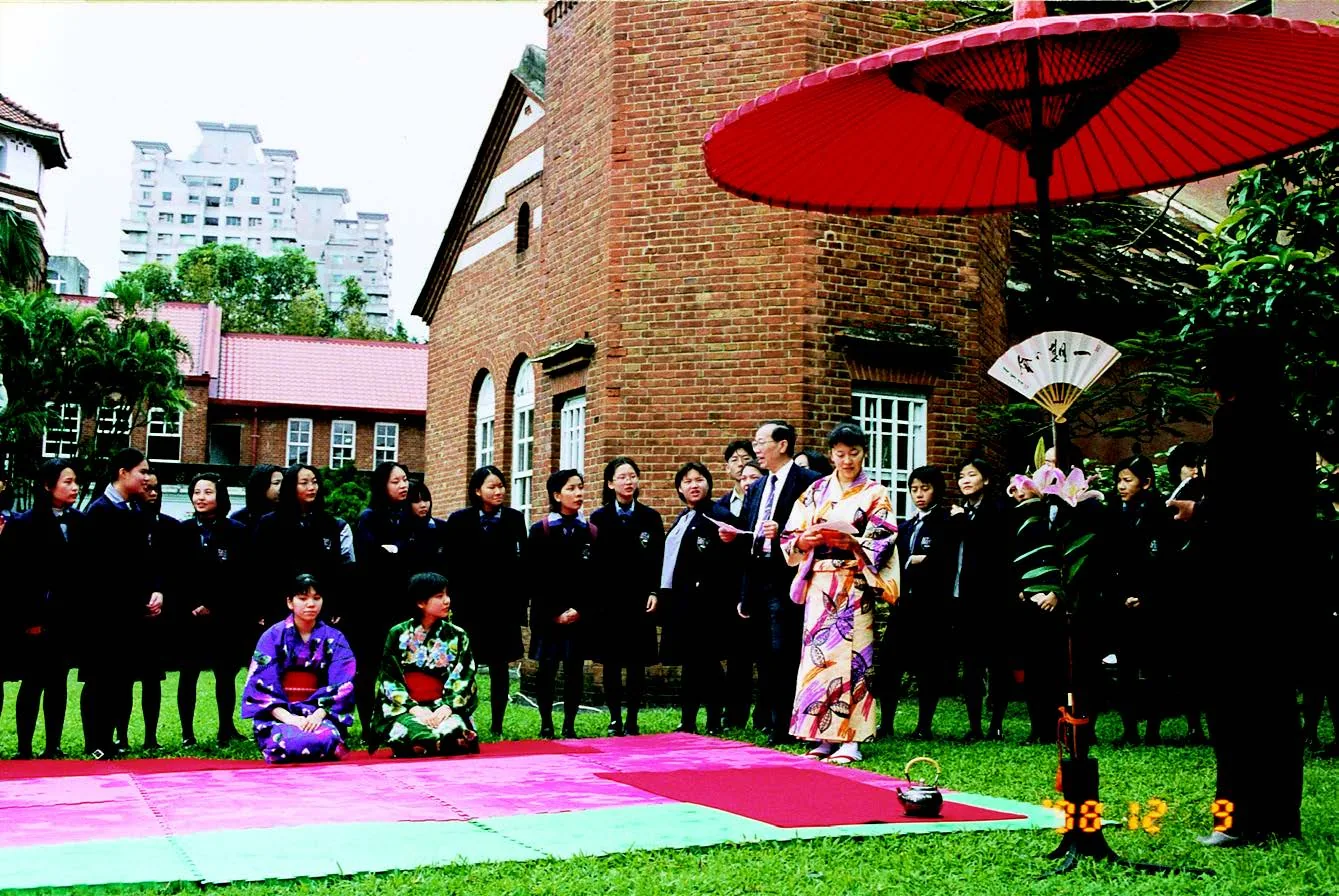
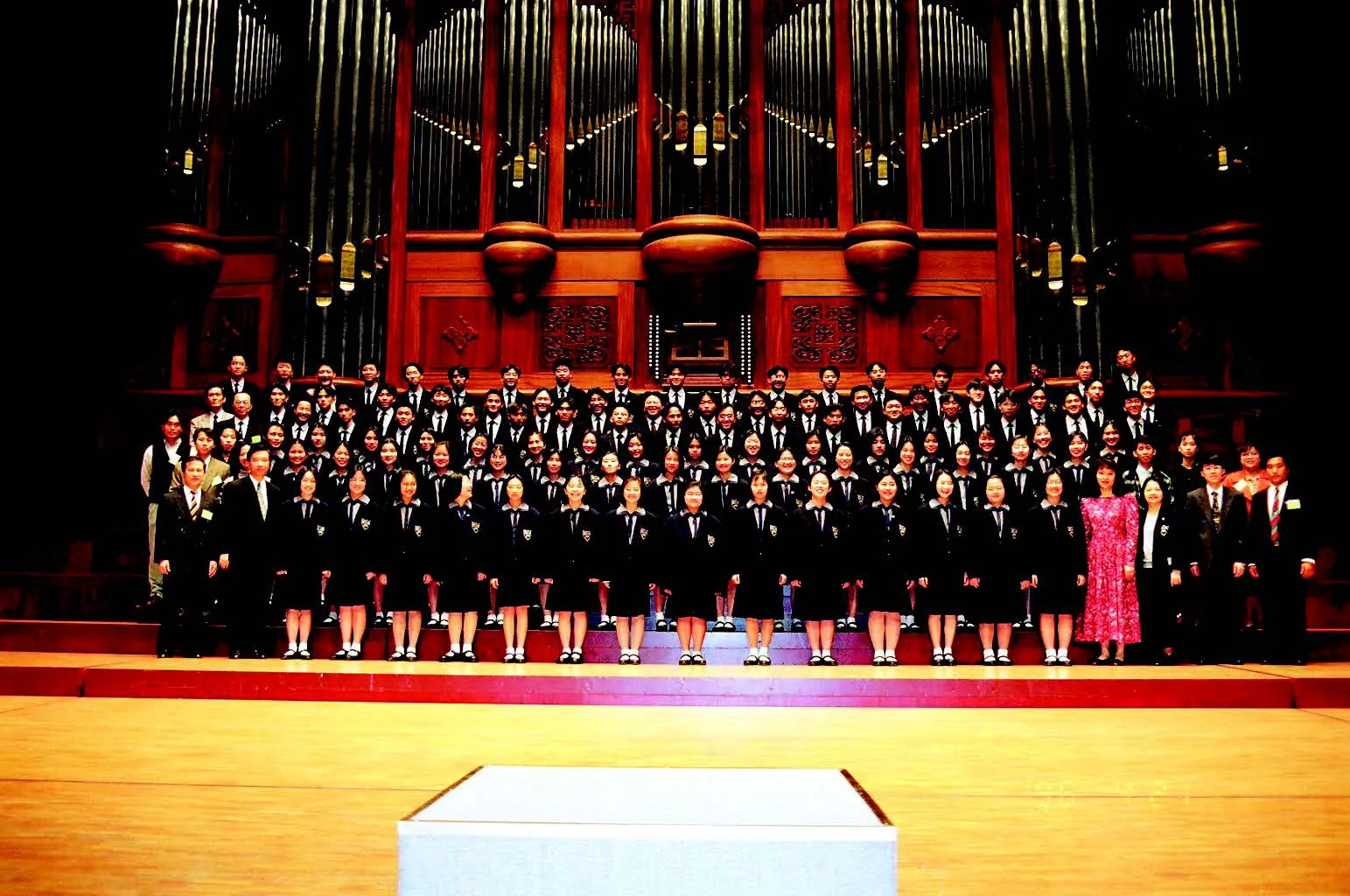
In 1985 Mr Hsieh Hsi-te (謝禧得), then dean of student affairs, was promoted to principal. Besides continuing to strengthen students' studies, Principal Hsieh worked to raise the school's profile: the international exchange with the noted Japanese school Meikei Gakuen High School, for instance, not only broadened students' horizons and established a new tradition but also enhanced the school's reputation at home and abroad. He also improved teaching facilities, undertook major repairs and improvements to the school buildings that had become precious historic monuments, and in 1990 completed the present first-year senior high classroom block. In 1991 Tamkang Senior High School was designated by the Ministry of Education as a key development school for the humanities and social sciences, with a grant of funds.
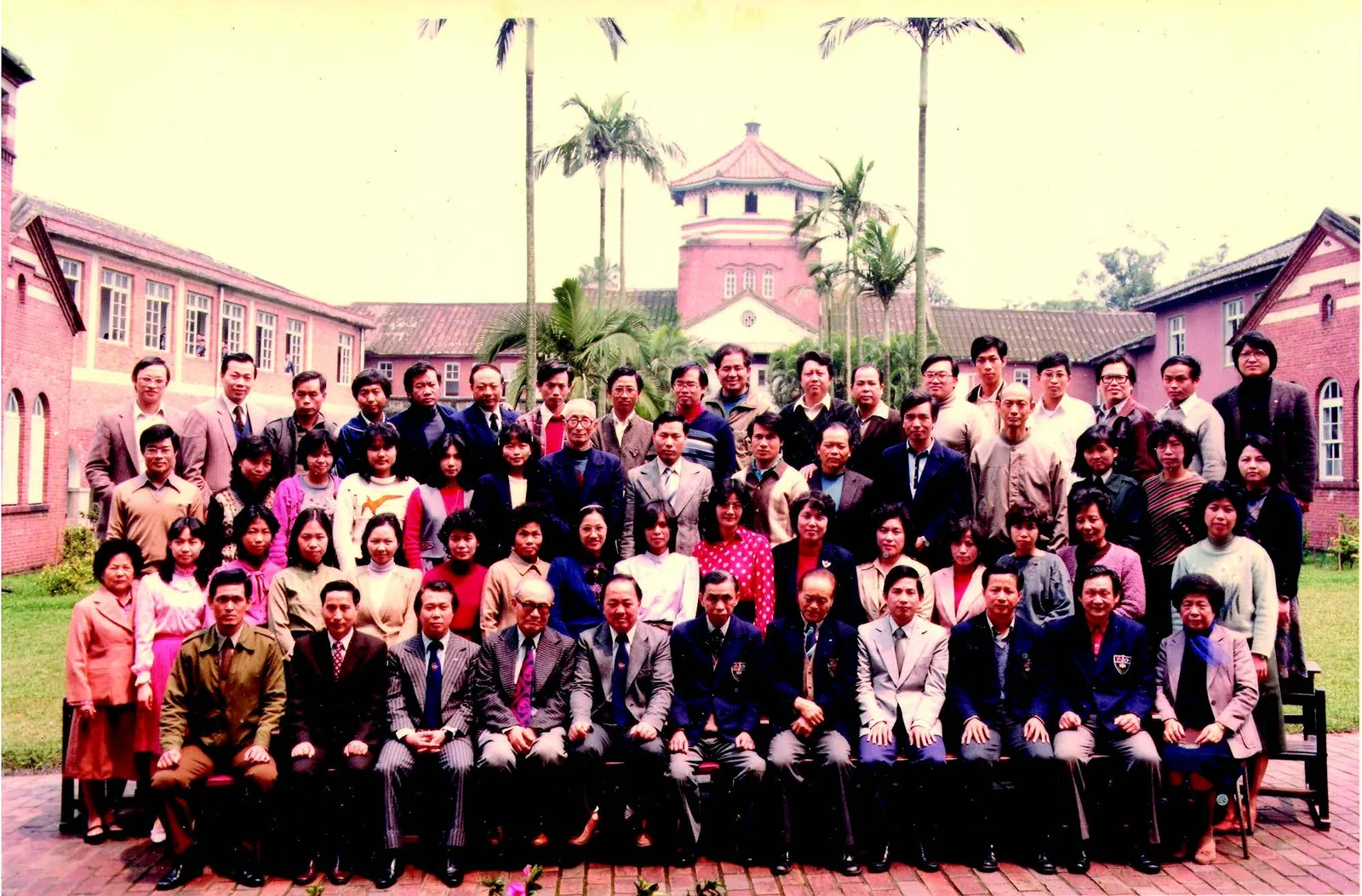
In 1995 Principal Hsieh died of illness in office, and Mr Yao Tsung-jung, the dean of studies, served as acting principal, being promoted to principal in March 1997. By this time Taiwanese society had changed considerably: advancement to higher schools was no longer the ultimate aim of education, and Tamkang Senior High School's inimitable historical tradition, its plain and elegant campus setting, and its educational ideal of diverse development were exactly what the educational climate of the time looked for.
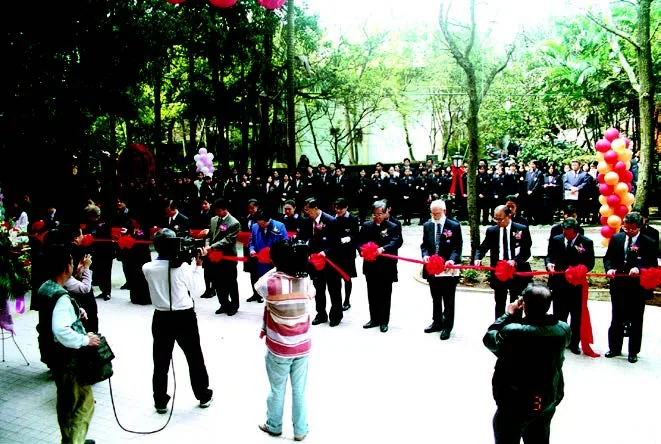
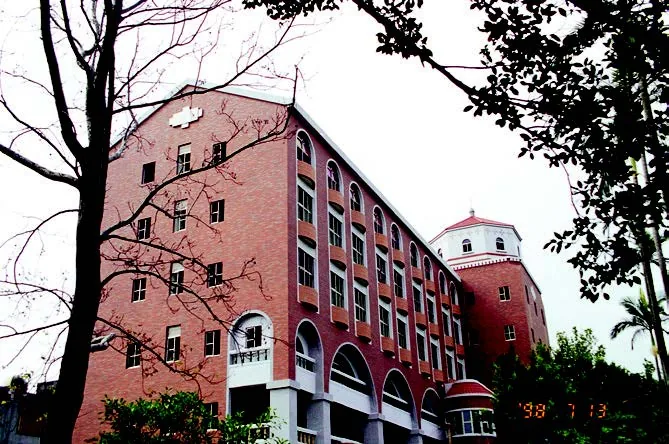
In July 1994 Tamkang Senior High School again admitted fine art and music classes. This may be said both to carry on the past and to open the way ahead, reaching back to the pursuit of aesthetic education in the days of Chunte Girls' High School and also meeting the challenge of a diverse curriculum to come. From August 1996 it formally adopted the comprehensive high school system, and besides the academic programmes (science and humanities), it successively established specialist programmes in applied foreign languages (English and Japanese), business management, information applications, early childhood care and commercial art (now transformed into advertising design), offering students a diverse choice of courses and creating a learning environment suited to individual development. On December 12, 1996 ground was broken for the long-planned 'Comprehensive Teaching Building'; the scale of its cost and the difficulty of the work made this major project the greatest challenge Tamkang Senior High School had faced since the war. On March 4, 2000 the building was completed and opened, a sign that Tamkang Senior High School would meet the coming of another new age with an entirely new face.
05Tamkang Senior High School today
Since entering the twenty-first century, social issues and policies such as the falling birth rate, the wide establishment of senior high schools and twelve-year basic education have severely tested private schools. Besides actively building and renewing its facilities to keep pace with educational trends, Tamkang Senior High School has gone back to the source of its history, recovering from Tamkang's rich historical culture the core values on which the school was founded, and taking these as the direction of its efforts to meet changes in the educational environment and to answer society's expectations.
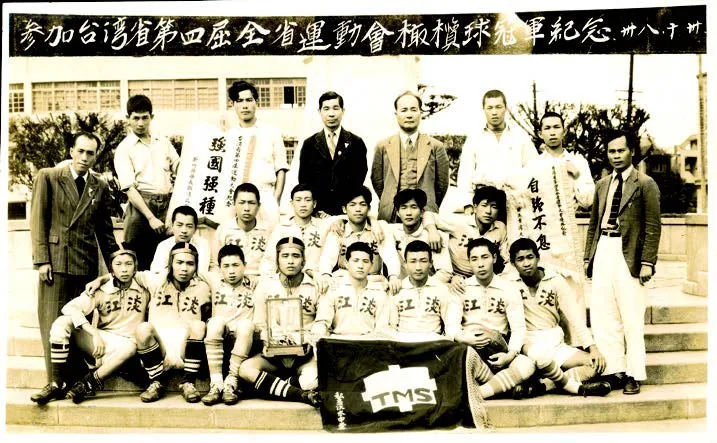
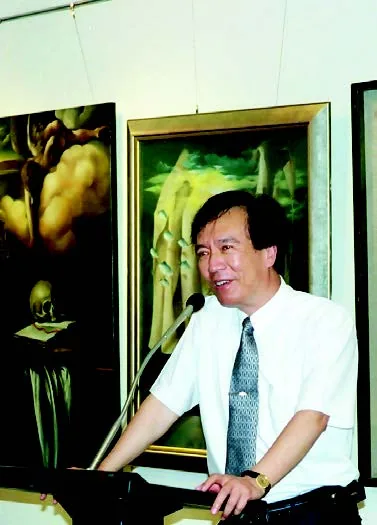
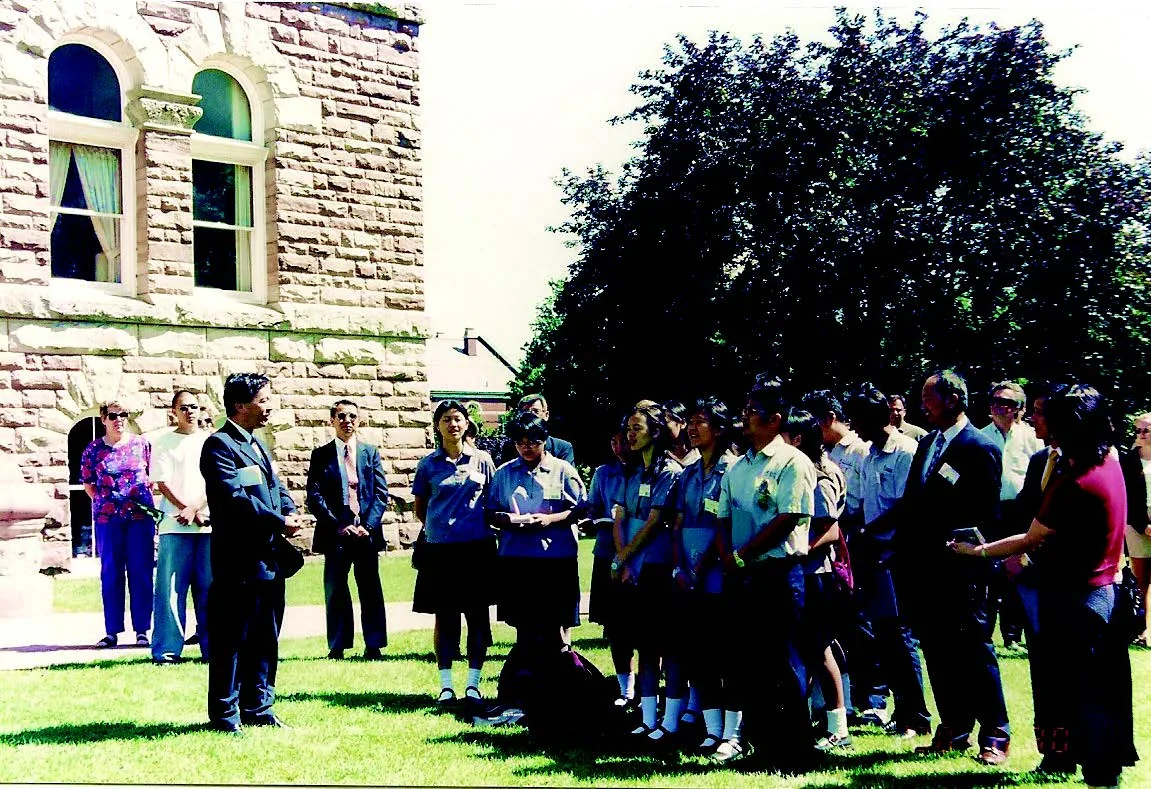
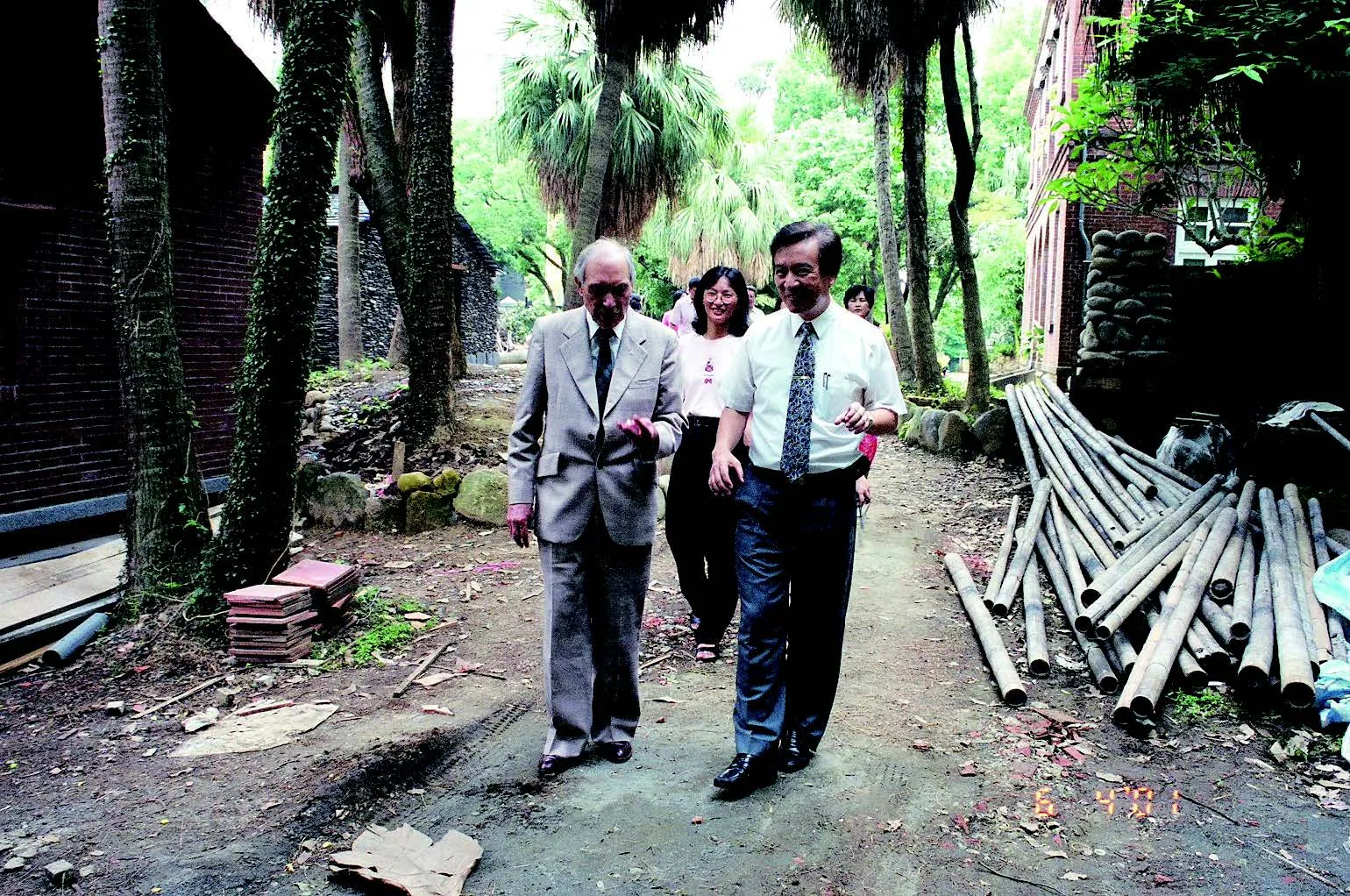
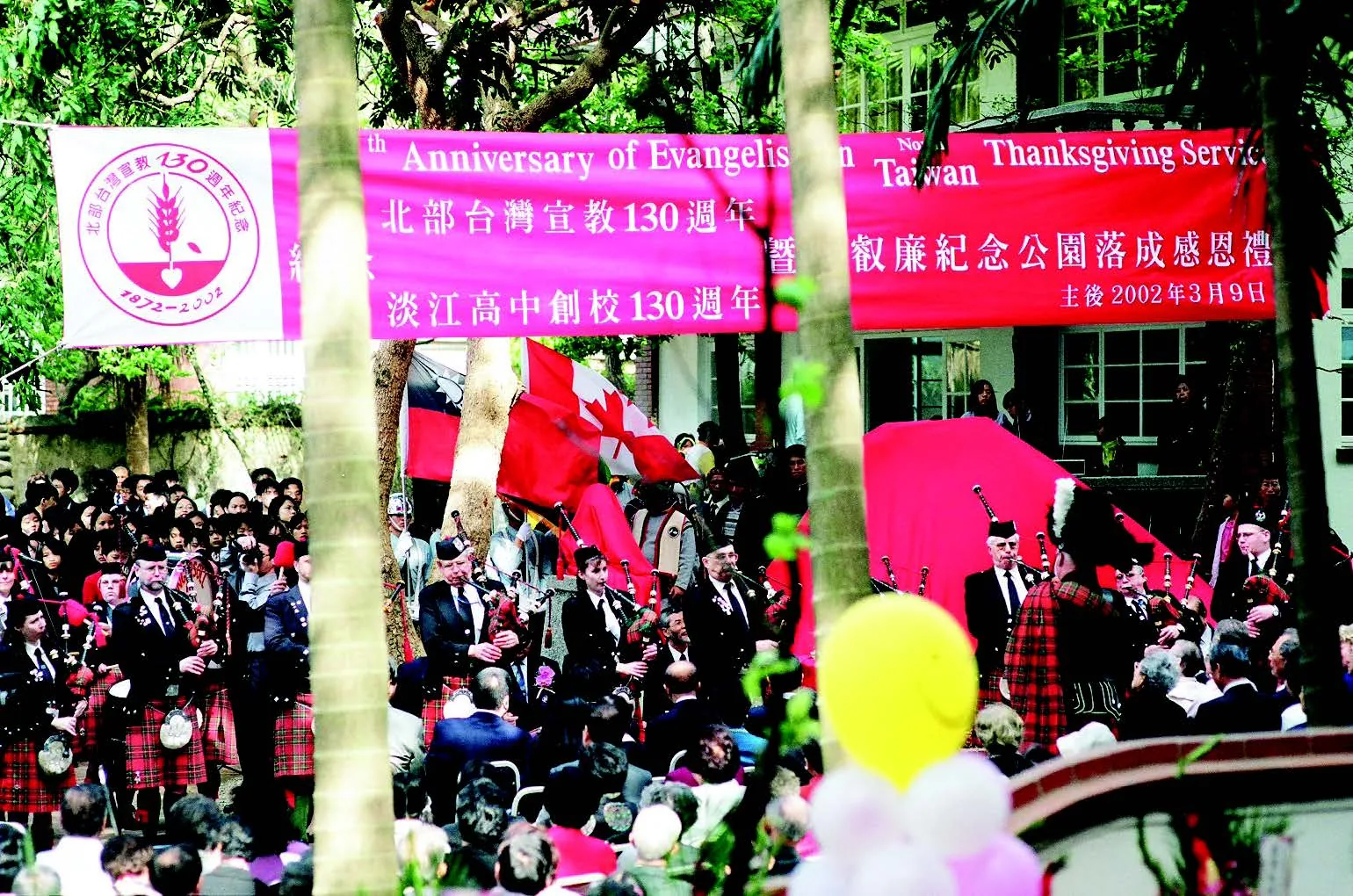
In June 2000 Principal Yao Tsung-jung led a party of teachers and students forming a tug-of-war team on a 'journey to their roots' to Mackay's home country of Canada; this was the starting point of the search for the school's origins, and helped Tamsui Township conclude a sister-city relationship with Oxford County, Ontario, Dr. Mackay's home district. (See 'Appendix Four', pp. 212-213.) Then, in March 2002, the 'George William Mackay Memorial Park' was completed and opened. The School History Gallery, the Taiwan Rural Artifacts Museum, the Roots Garden practice shop and the indigenous slate house within the grounds also opened officially the same day, forming the 'Tamkang School History Education Park'.
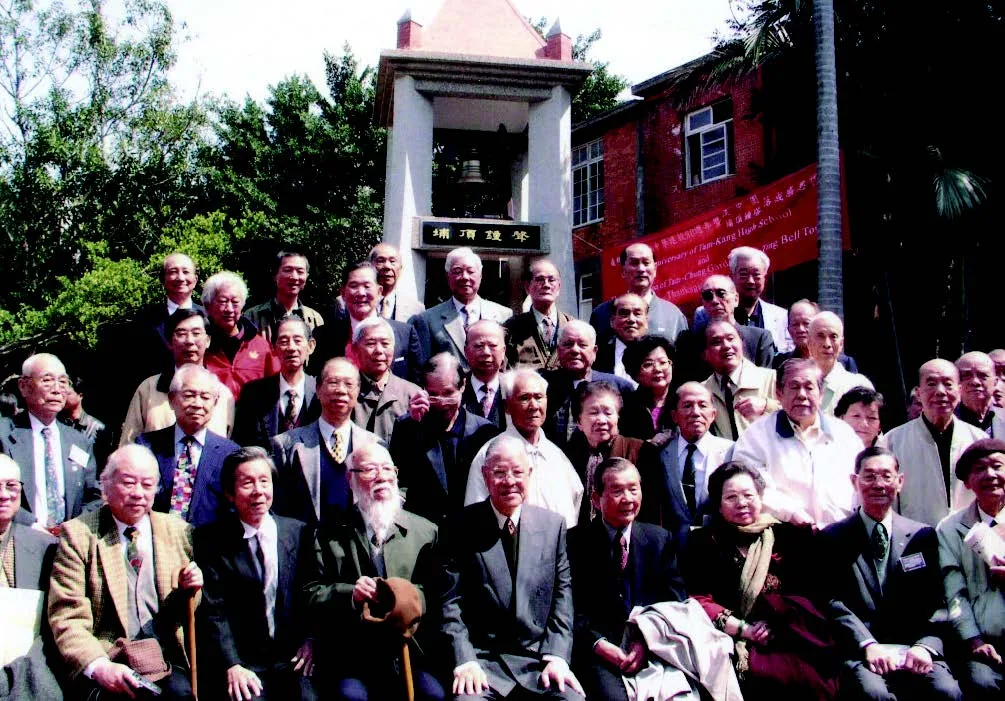
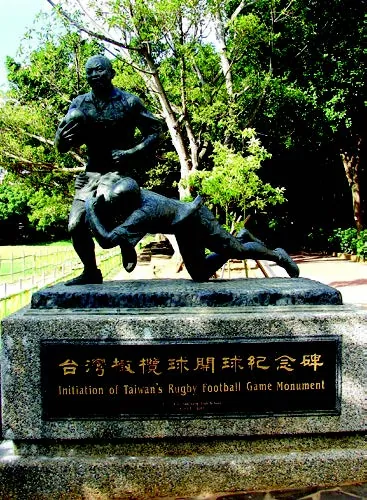
In March 2003, to mark the eightieth anniversary of the passing of the rugby ball, the school erected the 'Monument to the First Rugby Kickoff in Taiwan' in memory of Principal Chen Ching-chung's part in bringing the game here. In March 2004, to mark the ninetieth anniversary of the founding of the school's boys' secondary division, the 'Tamchung Garden' and the 'Puting Bell Tower' were built, unveiled and the bell rung by former President Lee Teng-hui. This was also an affirmation and commemoration of Principal George William Mackay and of the forebears who founded the school through hardship and toil.
Moreover, when the comprehensive high school system was introduced in 1996, the school did what no secondary school in Taiwan had done before by making 'The History of Tamkang Senior High School' part of the school's own required curriculum. Through knowledge of the school's history and cultural depth, students not only come to understand the school's historical value but are also stirred to a sense of honour and self-confidence, an influence that has gone deep in Tamkang's vigorous development over the past twenty years.
Building a curriculum with the school's own character, on the foundation of its existing educational work and in the light of the needs of the times, has always been at the heart of Tamkang Senior High School's work. Given its background as a church school and its rich and varied historical culture, the school not only broadens students' international outlook by inviting friends from Canada and other countries to visit through various activities, but has found it all the more urgent to construct a curriculum framework based on foreign-language learning. Accordingly, from 2002, in order to strengthen bilingual teaching, foreign teachers were brought in and English was taught in graded classes; then in 2007 a 'bilingual class' was set up to give students an all-English learning environment. International exchange is also an important curricular activity for Tamkang students: since the regular international exchange between Meikei Gakuen High School of Japan and Tamkang Senior High School began in 1987, the close exchanges and mutual visits with Omi Brotherhood High School, Aletheia Shonan High School of Heiwa Gakuen, Linghui College in the Philippines and other schools have been an important measure of the school's internationalisation.
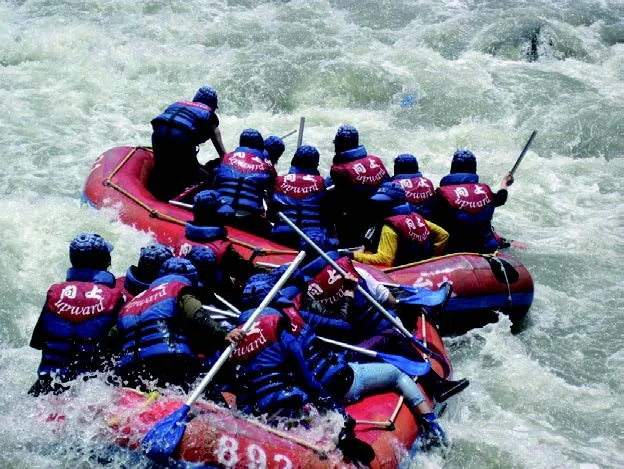
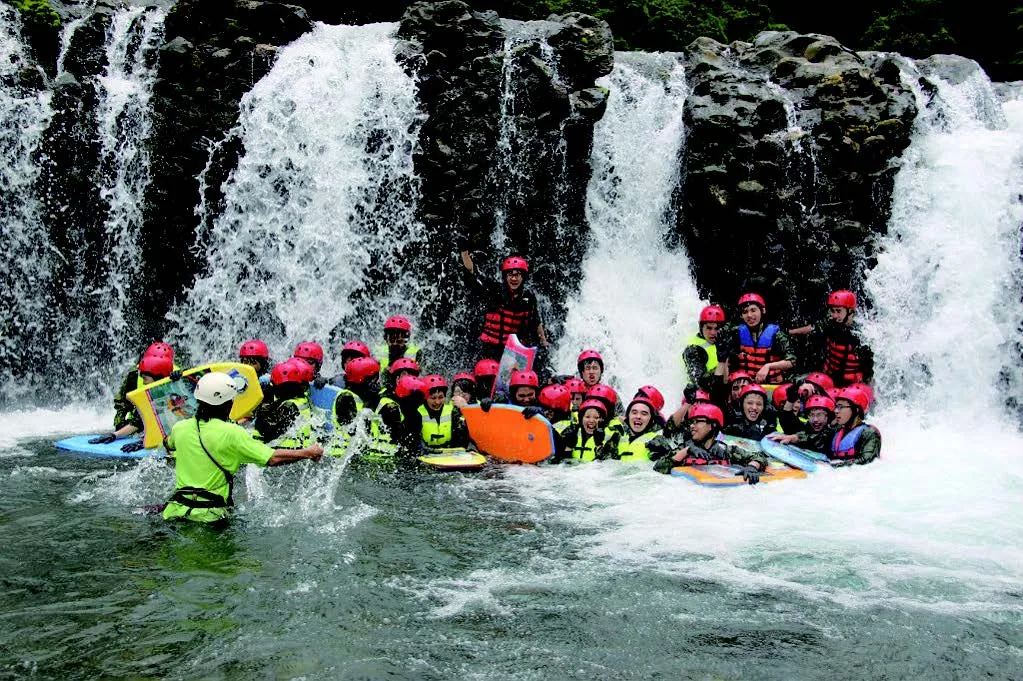
Besides internationalisation, and in view of the limitations of traditional curricular forms in the past, the idea of 'turning activities into curriculum and curriculum into activities' was strongly promoted during Principal Yao Tsung-jung's term. A climbing tower was built in 2005 to promote adventure education; the graduation trip was transformed into life camps and growth camps for the first and second years, using activity-based courses to achieve self-exploration and interpersonal interaction, and these were formally included in the required curriculum. The school's existing activities such as Christmas, the sports meeting and the fair were also designed as team-oriented curricular activities, becoming a living curriculum through which Tamkang Senior High School builds relationships between the individual and the group.
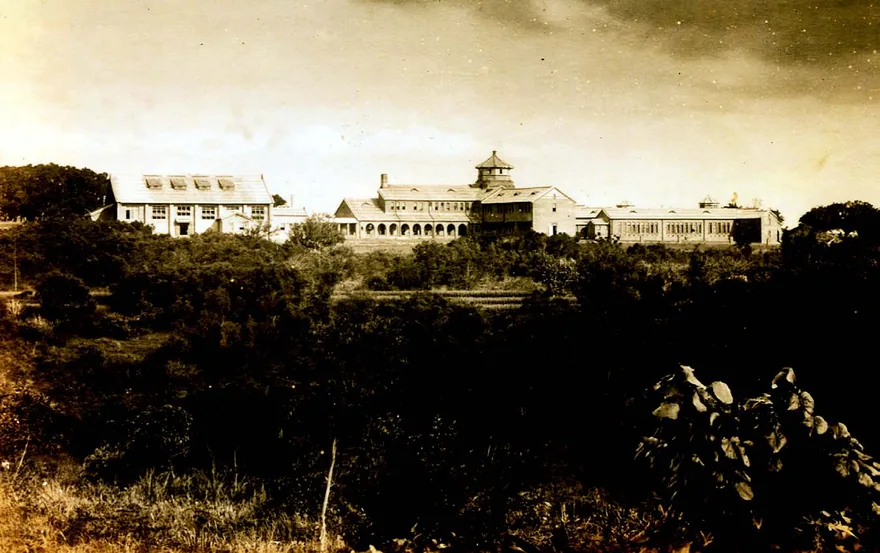
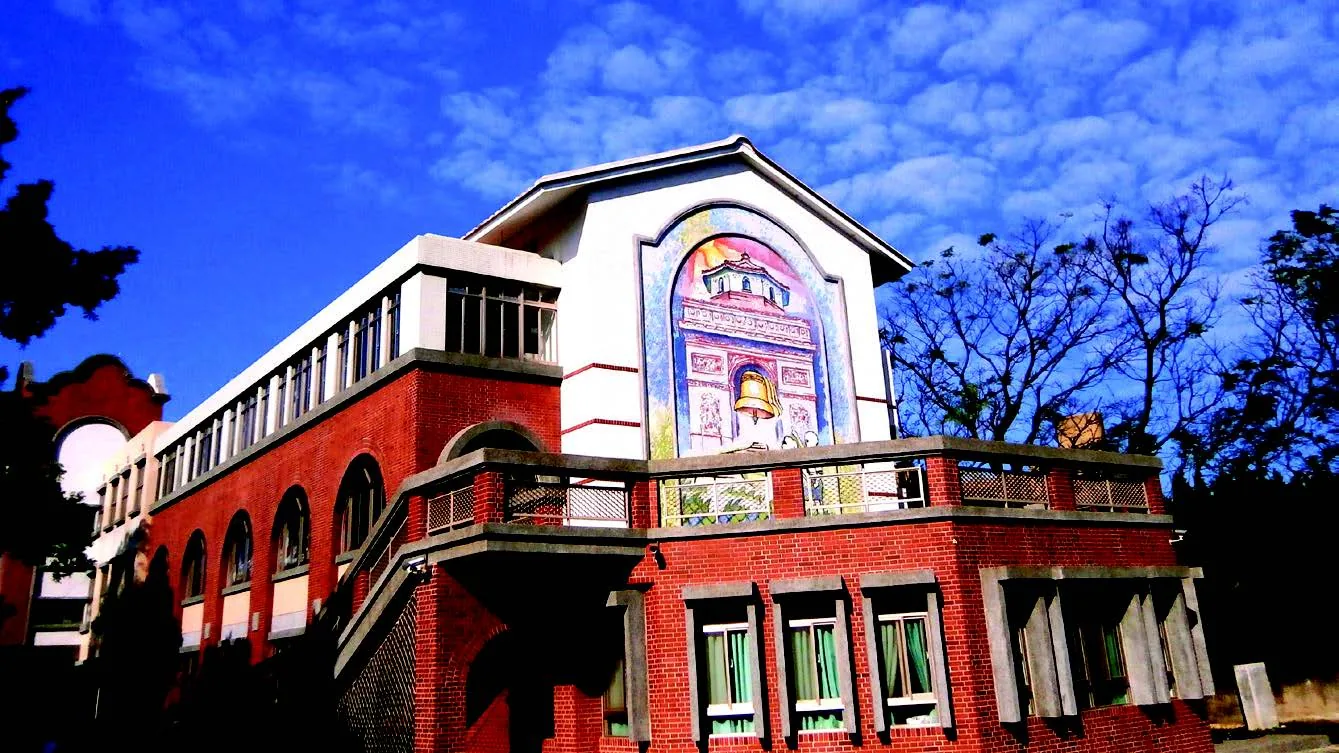
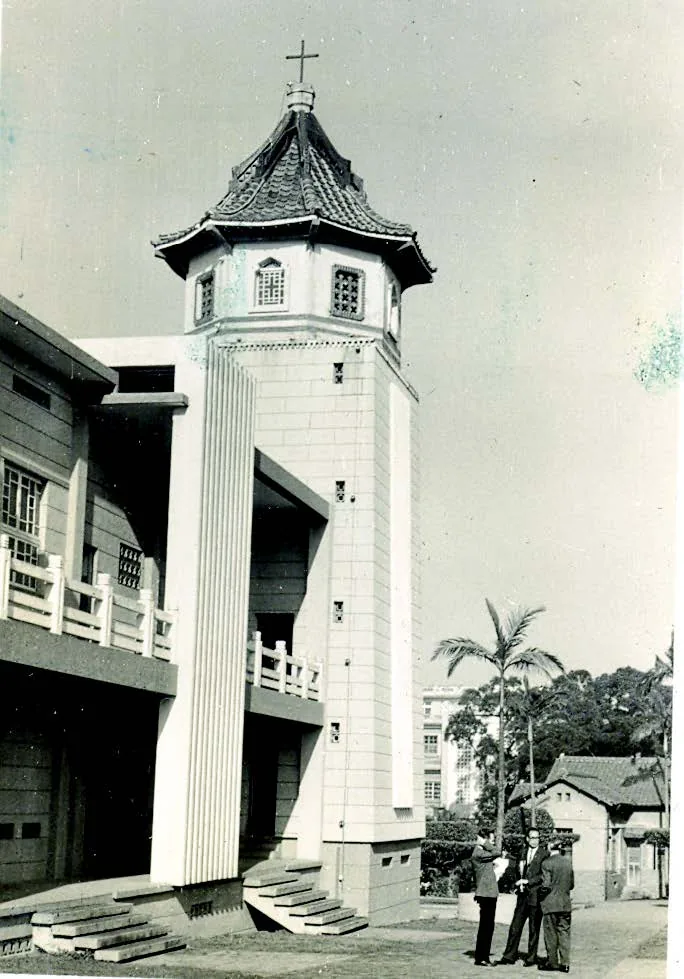
Elegant school buildings and green surroundings give Tamkang its distinctive campus character. Historic buildings such as the Octagonal Tower, the Grand Chapel and the gymnasium everywhere embody the way earlier generations blended Chinese and Western culture, with buildings and surroundings in harmony, something long spoken of with pleasure. Since 1994, with the establishment of music and fine art classes, the development of the comprehensive high school system and the addition of an elementary division, student numbers have grown greatly: in 1990 there were only 1,534 students, and by 2012 the number had reached 2,850, bringing with it a pressing need for more teaching space and facilities. Over the past twenty years a series of new school buildings has been designed and built: the 'Comprehensive Teaching Building' completed and opened in 2000, the 'Arts Building' finished and brought into use in 2008, and the 'Chunte Fort' elementary school building completed in 2011. Besides having new equipment that meets present-day teaching needs, the school has held throughout to the consistent principle that new buildings should be in harmony with the campus landscape, producing one handsome building after another that both satisfies the educational needs of a new age and holds to historical tradition.
The school has also taken great pains over the revitalisation and reuse of its old historic buildings. The girls' gymnasium, built in 1925, fell into disrepair over the years as sports facilities moved elsewhere, and gradually went out of use. In March 2000 a fire destroyed its roof, window frames and interior fittings. The school board, considering that the attached Chunte Kindergarten had in the fifty years since its founding moved from Oxford College to the Zhen Building (真樓), the old Japanese-style building at the school gate and the Chunte Building in turn, and that although its surroundings were quiet and elegant and its work distinguished, it lacked classrooms with more modern facilities for early childhood education, unanimously resolved to preserve the original historic appearance of the girls' gymnasium building and to design and plan it as the permanent home of Chunte Kindergarten.
Work began in April 2000 and, after eight months of building, was completed and opened on December 15, 2001, becoming the kindergarten's premises; the classrooms rebuilt on the south side became classrooms for the school's comprehensive high school early childhood care classes, forming the 'Tamkang Early Childhood Care Teaching Park'. It is not only the first historic building at Tamkang Senior High School to have risen from the flames, but also a model of the reuse of historic buildings in Taiwan. From 2003 calls for 'twelve-year basic education' rose on all sides in Taiwanese society, and Tamkang Senior High School's own epoch-making educational undertaking arose at just this moment. To build up Tamkang's strength and open new opportunities, from 2004 the school actively planned and prepared for an elementary school: in 2005 the amendment of the board's articles was completed, and approval and recognition were obtained on July 7 of the following year; on November 14 the Ministry of Education's Central Taiwan Office gave permission to proceed with the preparations, and the 'Chunte Building', built in 1916, was immediately renovated as the elementary school premises; in May 2007 the elementary education section of the Taipei County Government approved its registration and the admission of students, and in the summer of that year the first 70 pupils of Chunte Elementary School enrolled. Thus was born, on the hilltop of Paotaipu, this complete 'Tamkang Academy' running from kindergarten to senior high school.
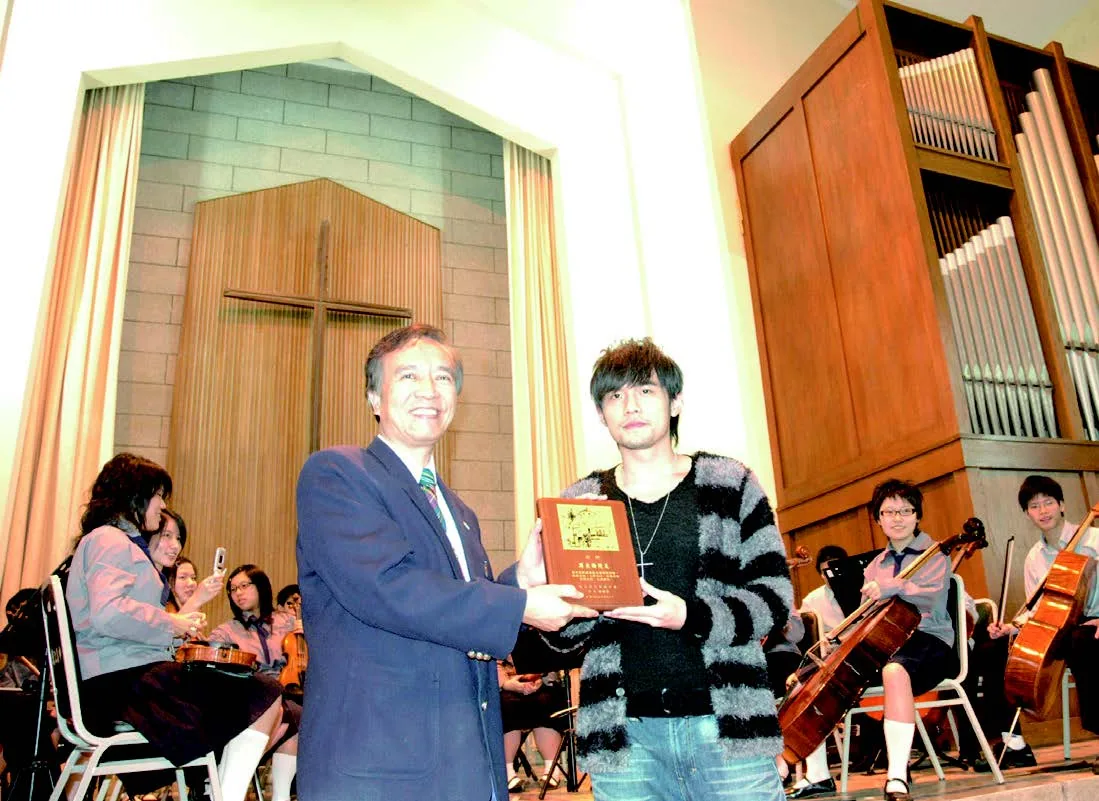
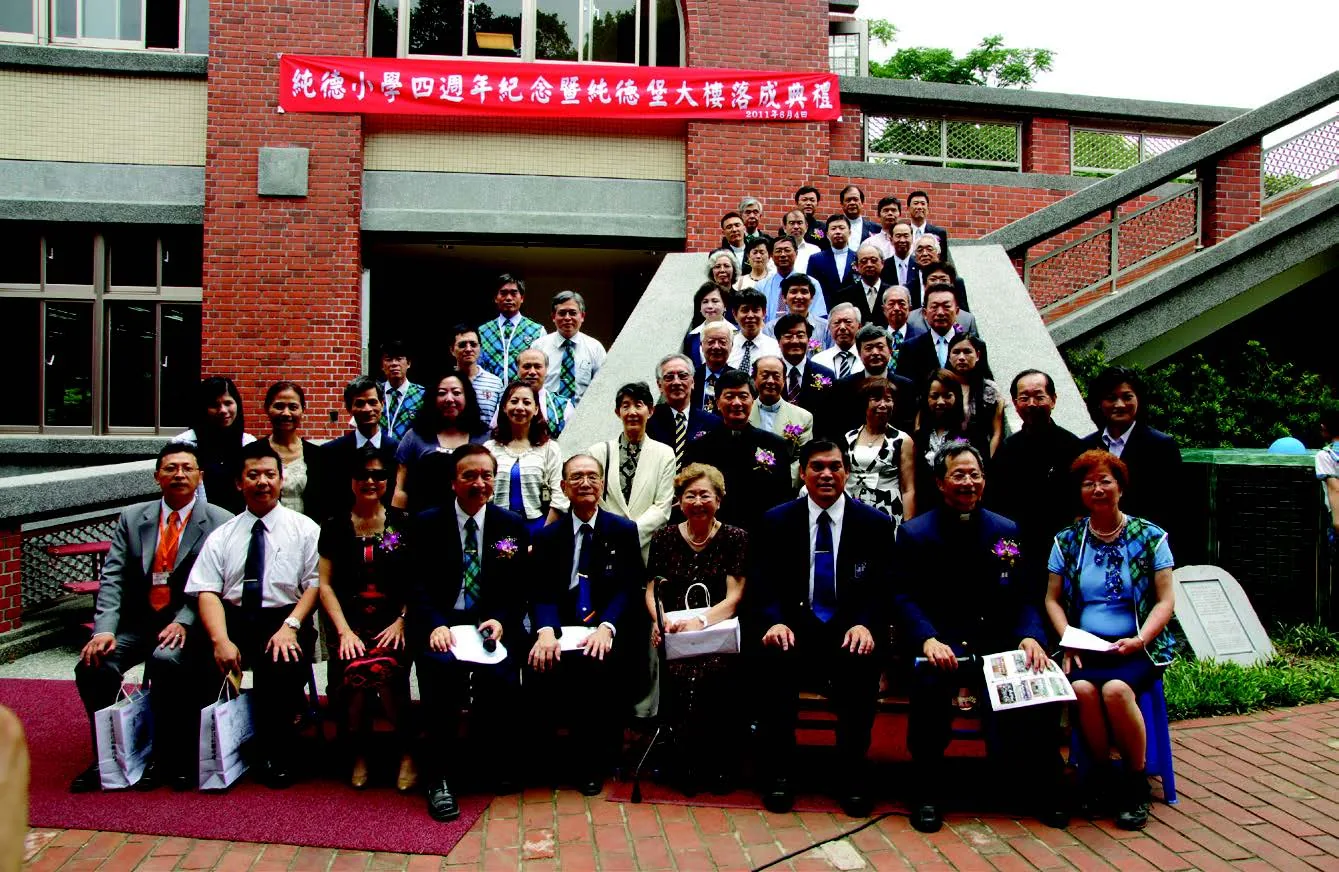
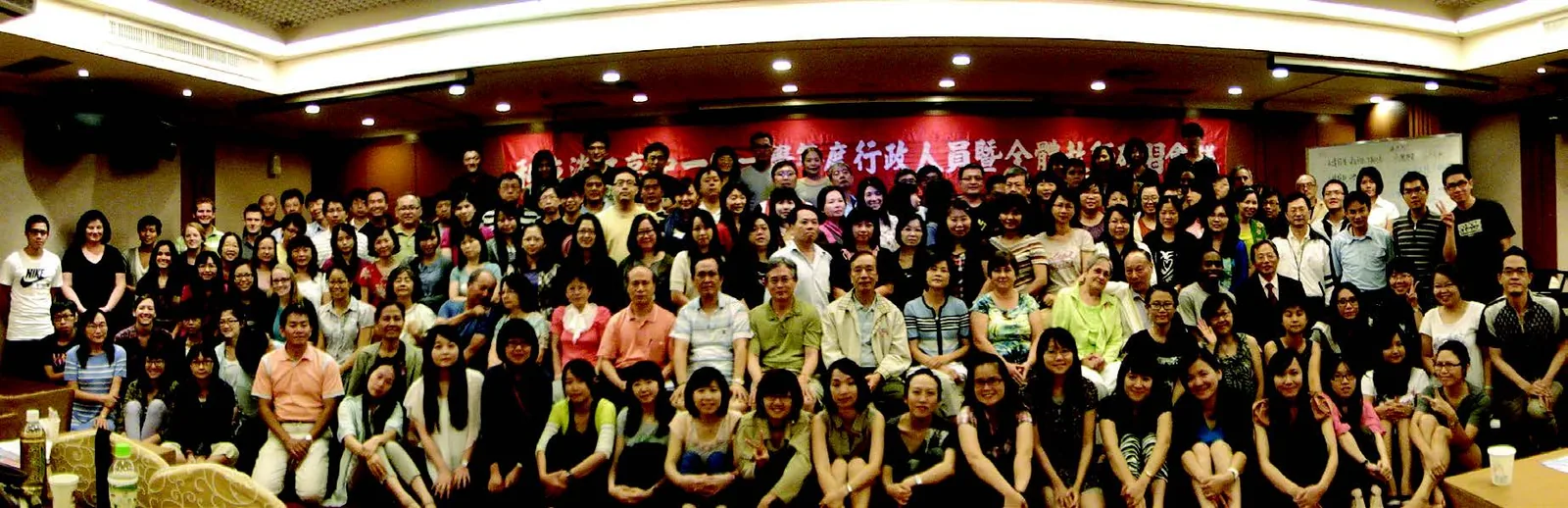
In 2013 Principal Yao Tsung-jung, who had directed school affairs for 18 years, completed his term and stepped down, and on March 23 an induction service for the new principal, Liu Chien-cheng, was held in the Grand Chapel of Tamkang Senior High School. On March 9 of the following year, the hundredth anniversary of Principal George William Mackay's founding of Tamsui Middle School in 1914, Principal Liu Chien-cheng led the teachers and students of the school in a series of celebrations.
Just as the centenary of the school's founding was being celebrated, the educational environment in Taiwan underwent major change. 'Twelve-year basic education' was put into effect in 2014, the 108 Curriculum Guidelines were also to come formally into force in 2019, and wave upon wave of falling birth rates swept in. At a time when public and private schools throughout the country were anxious, an induction and thanksgiving service was held in the school's Grand Chapel on January 19, 2017 for Dean Ko Szu-hsien (柯賜賢) as principal.
Looking back moves us to sighs and to pride; looking back also makes us careful and confident. Having entered the twenty-first century, Tamkang Senior High School will, on the foundation of a hundred years of educational work, meet afresh the challenges of a new age in Taiwanese education. We believe that so long as the ardour to seek truth remains, so long as the faith to serve Christ remains, and so long as the sentiment that seeks the true, the good and the beautiful remains, the spirit of Mackay's founding of schools will be handed down, and Tamkang Senior High School will surely write a new page in its history.
06A classic building blending Chinese and Western
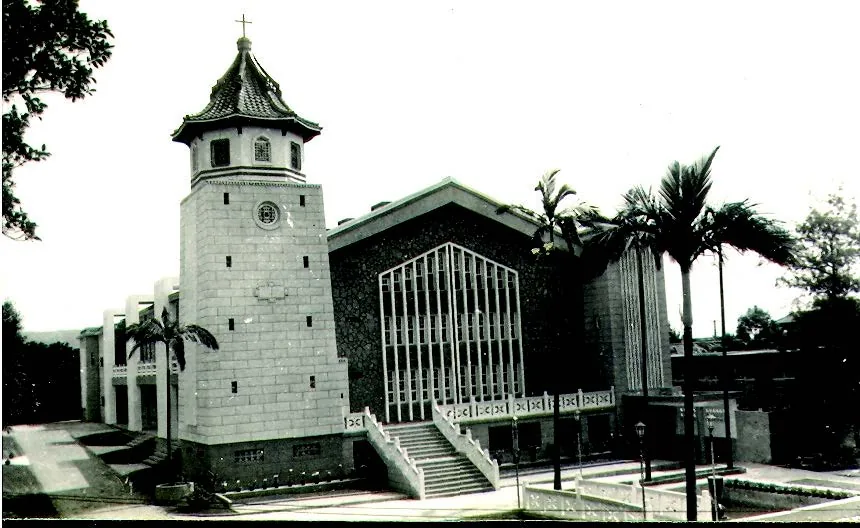
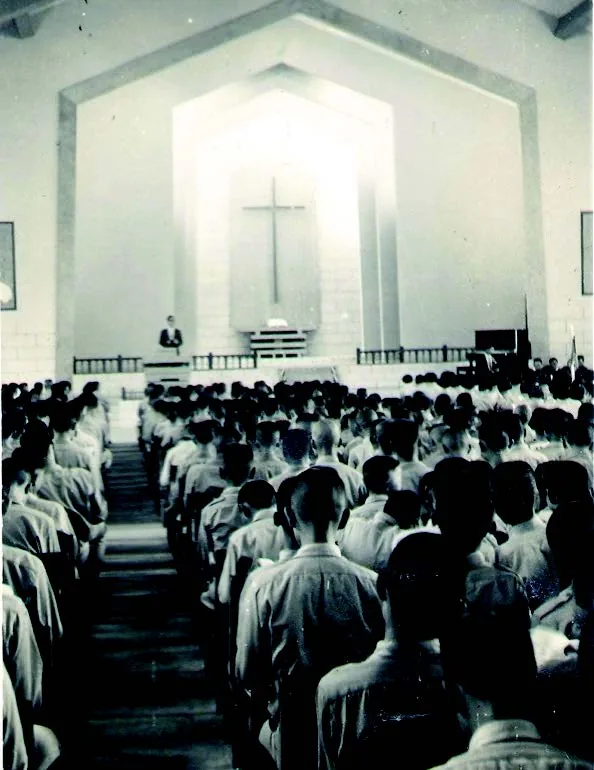
The Tamkang Grand Chapel was completed and opened in 1966. This building is a marker of Tamkang Senior High School's localisation: the decisions about its architecture were not led by Western missionaries, and the building funds came mainly from local Taiwanese funds and fundraising (construction cost 2,610,375 yuan, with 200,000 in assistance from Canada).
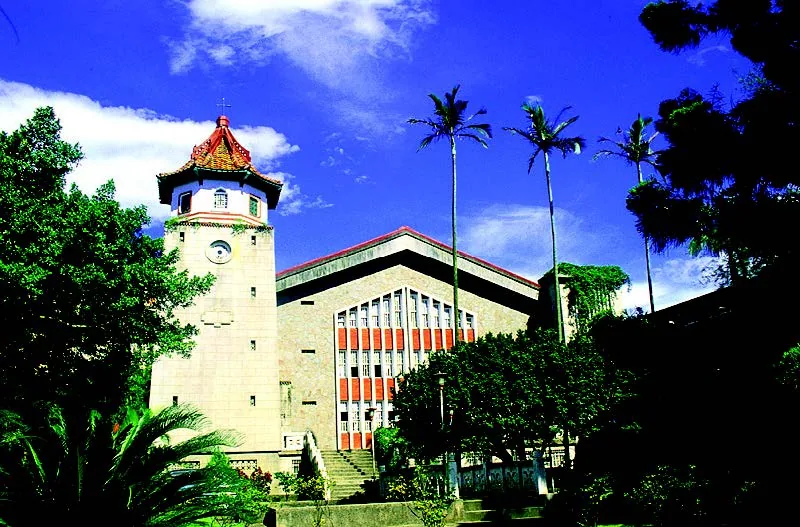
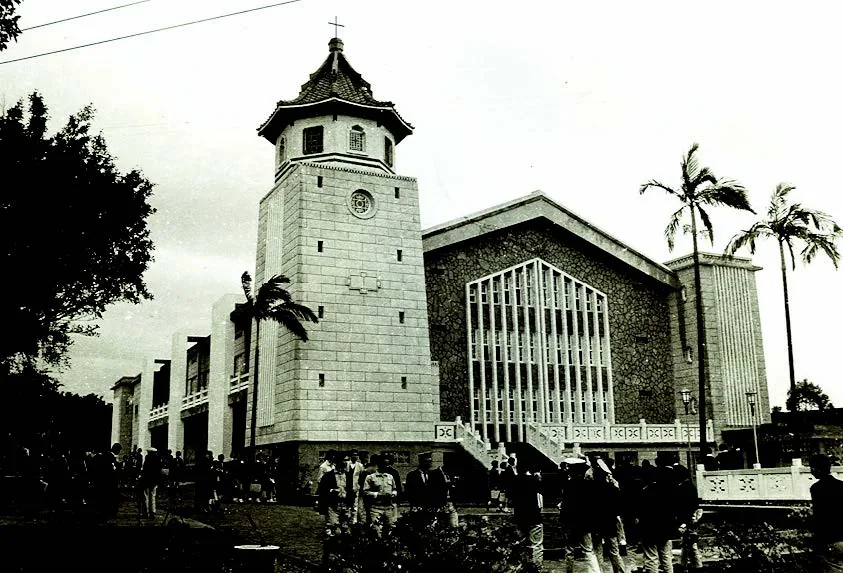
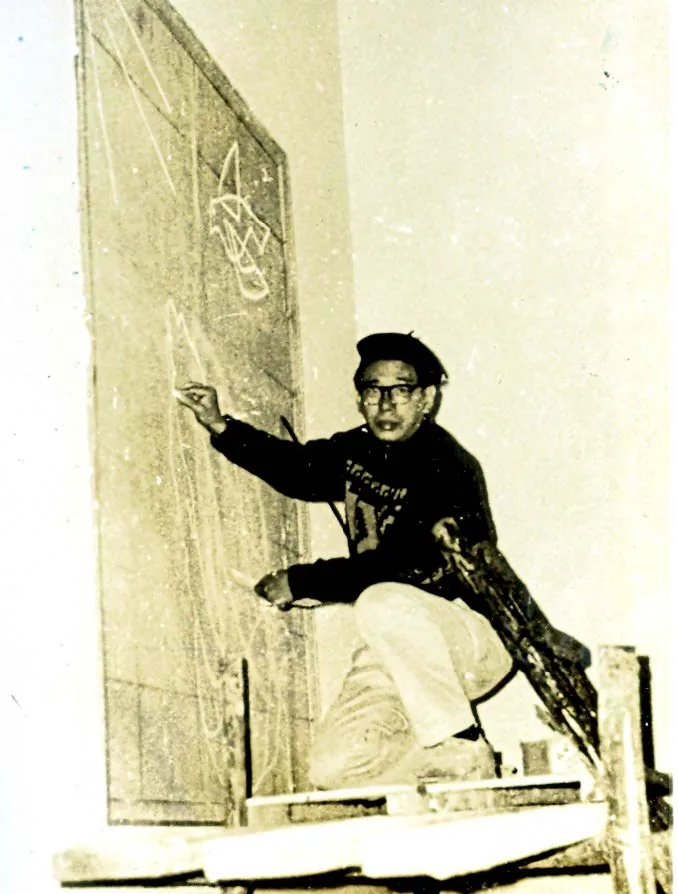
The architectural form and spatial arrangement of this chapel were determined by the then principal Chen Su-ti, with Elder Chen Ying-chi (陳穎奇) of Tamsui Church as architect. In addition, the art teacher whom Tamkang people remember most fondly, the noted painter Chen Ching-hui, designed the exterior and the architectural decoration of this, the most representative building of Tamkang Senior High School in the second half of the twentieth century, giving the chapel very high artistic value.
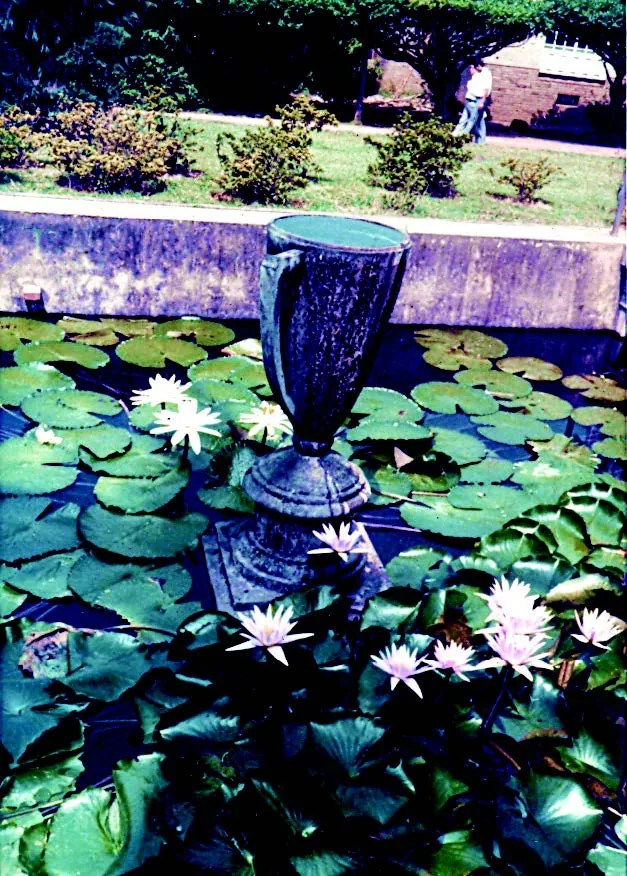
The front of the chapel, with its large panels of washed stone and stone slabs, conveys something of the charm of a medieval stone church; the slightly altered octagonal bell tower on the left harmonises closely with the original Tamkang Octagonal Tower, successfully binding the whole campus into one and realising the ideal of a rising encounter between Chinese and Western culture that the original Octagonal Tower had pursued. The chapel's bell tower is named the 'Principal George William Mackay Memorial Tower' in memory of the founding principal, and the cross and Bible motif on the tower's outer wall is the Tamkang school emblem. The pool and little bridge in front of the chapel are also in the shape of the school emblem.
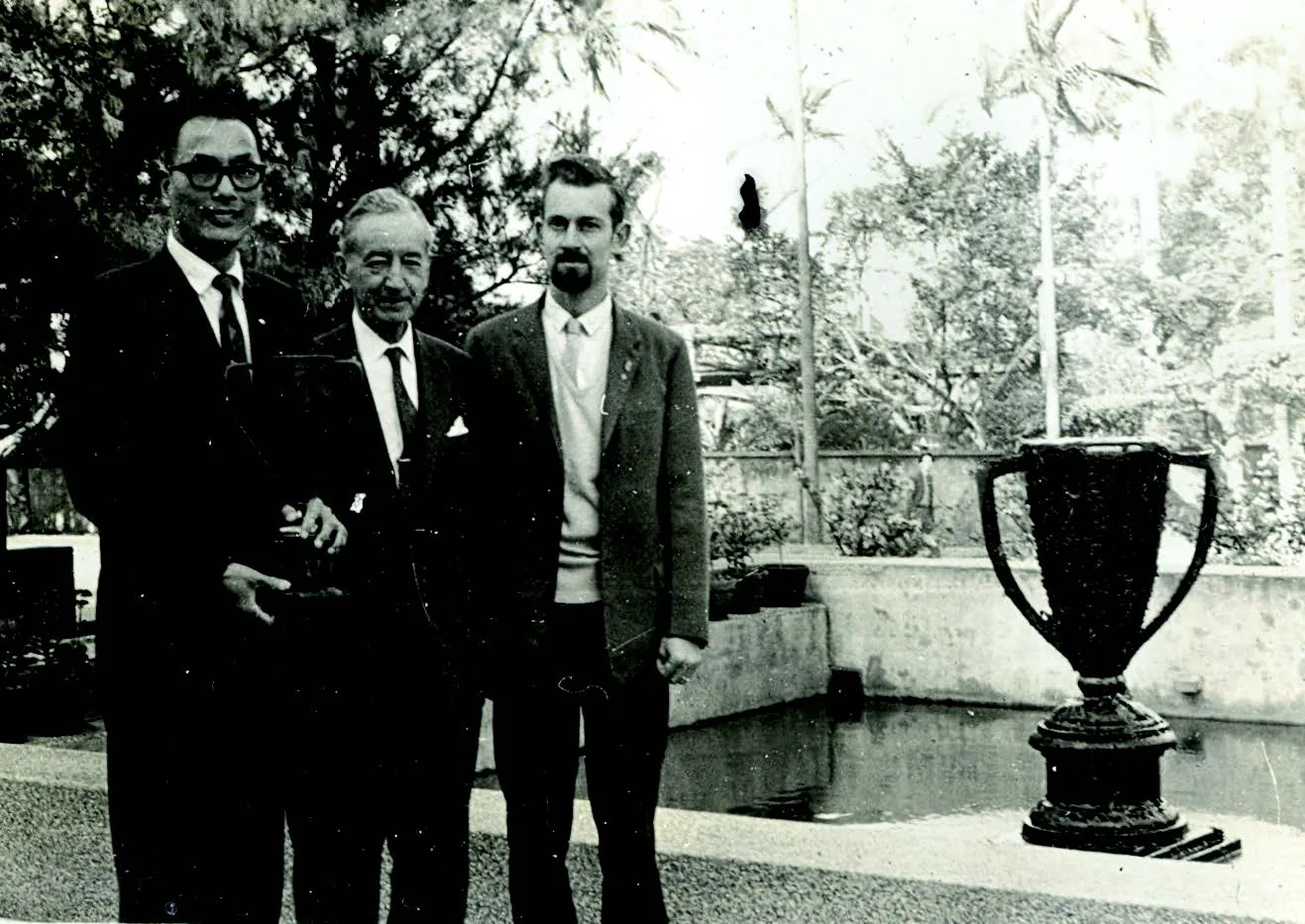
The meaning of the chapel's design is drawn from Psalm 23 of the Bible. The 'silver cup' fountain in the pool in front takes its sense from the biblical phrase 'my cup runneth over'; the form of the cup of blessing comes from the congratulatory cup presented by St. Andrew's College in Canada (Principal George William Mackay's alma mater) when the gymnasium was completed in 1923. Since it came into use, the chapel and the pool, little bridge, lamps, welling cup, carp and doves around it have shaped a culture and tradition peculiar to the campus, and hold the memories of Tamkang's alumni. the ideal of a rising encounter between Chinese and Western culture that was pursued. The chapel's bell tower is named the 'Principal George William Mackay Memorial Tower' in memory of the founding principal, and the cross and Bible motif on the tower's outer wall is the Tamkang school emblem. The pool and little bridge in front of the chapel are also in the shape of the school emblem.
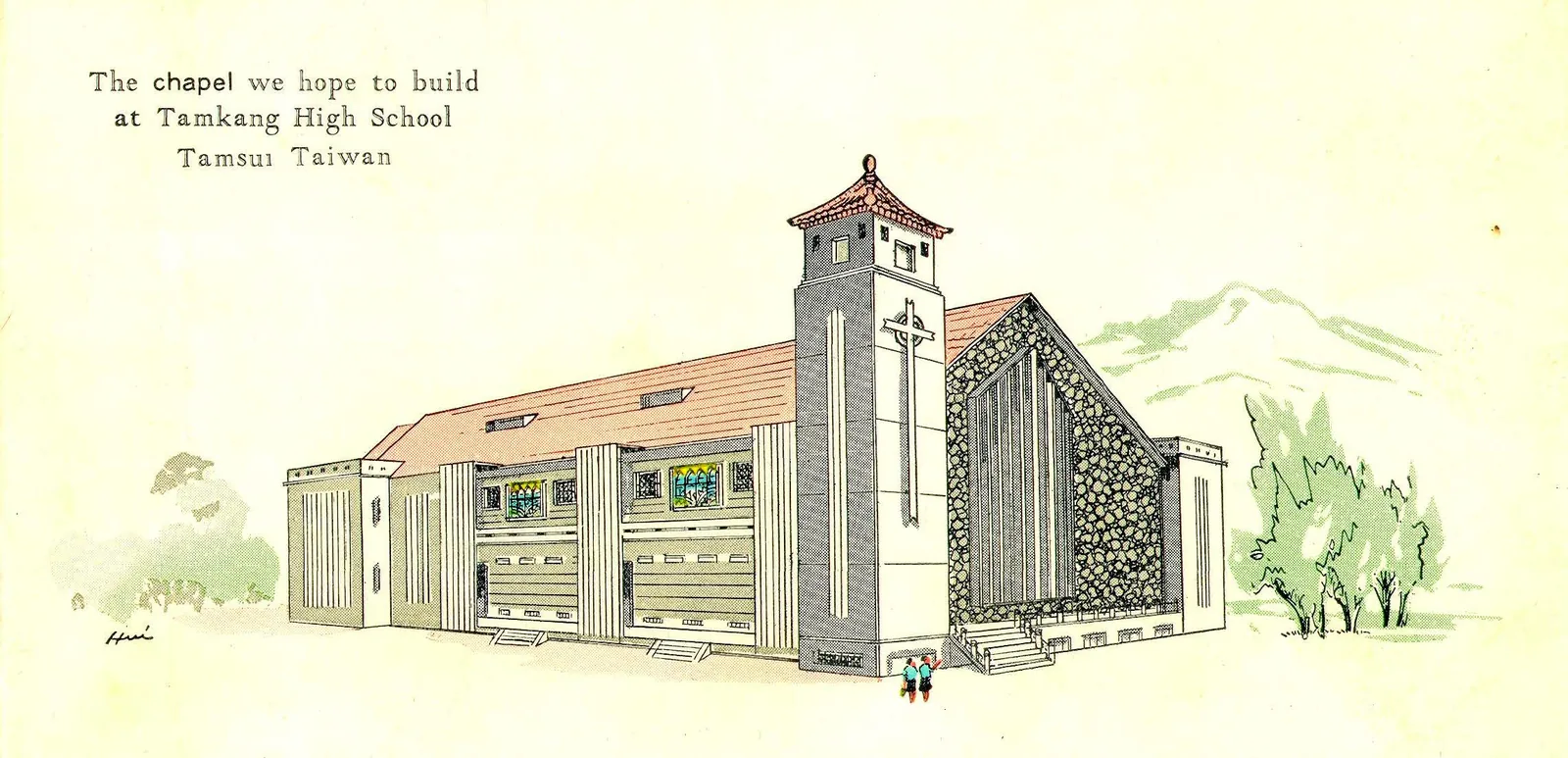
The fittings and spatial arrangement of the chapel show Principal Chen Su-ti's thinking everywhere. The seats fixed to the floor, to cope with restless secondary school pupils; the altar at the front of the chapel in the shape of the character 羔 and the pulpit in the shape of the character 言, both his ingenious expression of Christian doctrine; the stage designed for actors to come and go easily, and the small windows in the wall for projecting stage lights, tailor-made for the 'living tableaux' of which he was so proud; and, most puzzling to outsiders, a Grand Chapel holding a thousand people whose main door is wide enough only for two people to pass each other. In fact Tamkang people all know that this is because students entering and leaving the chapel on ordinary days use the four side doors on the north. The chapel covers 825 ping and could then seat 1,500; although the building is not a designated historic monument, it is imposing in bearing, at once plain and grand, and stands in harmony within the old campus, complementing the Octagonal Tower.
07The Tamkang school uniform, a witness to the history of education in Taiwan
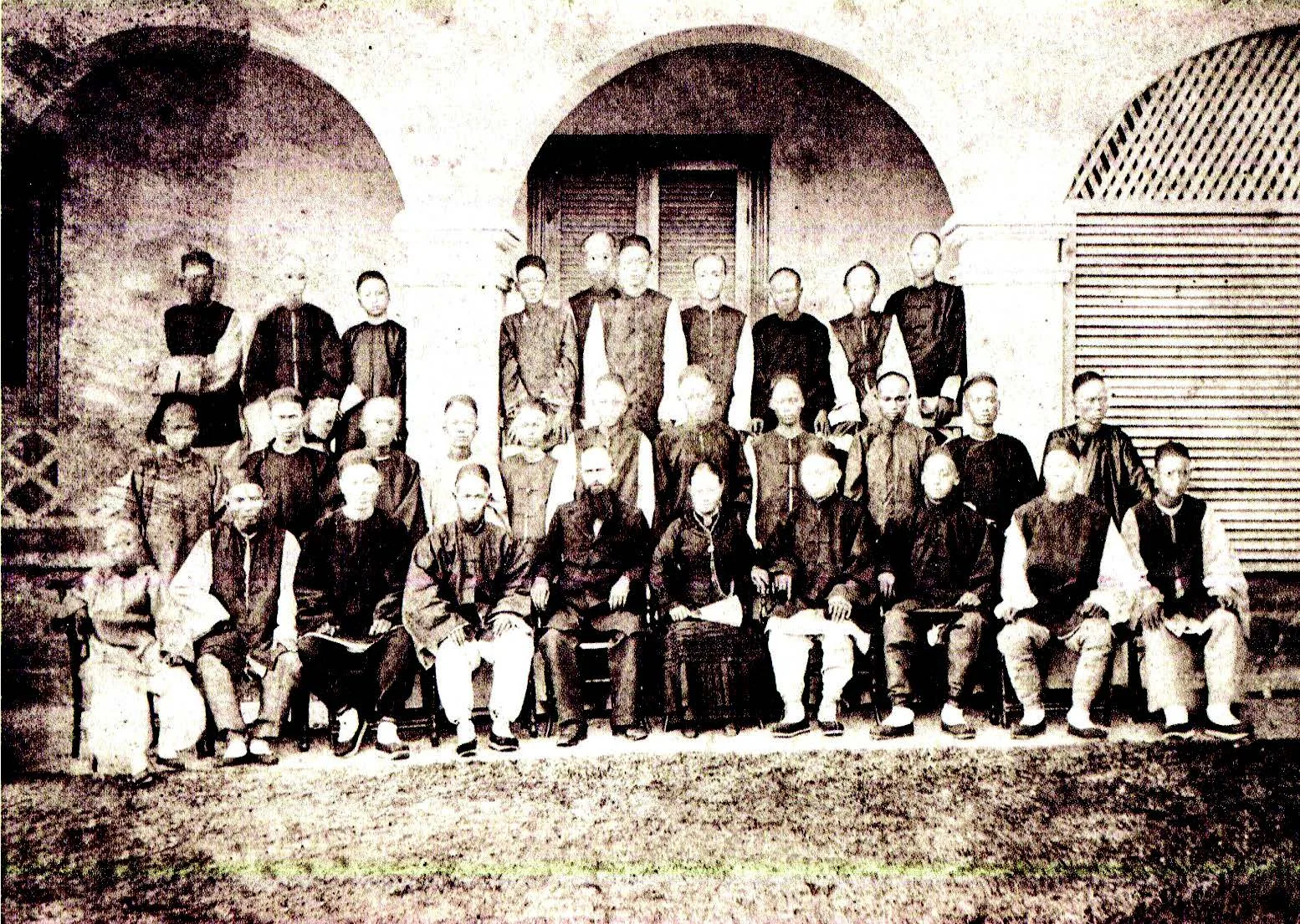
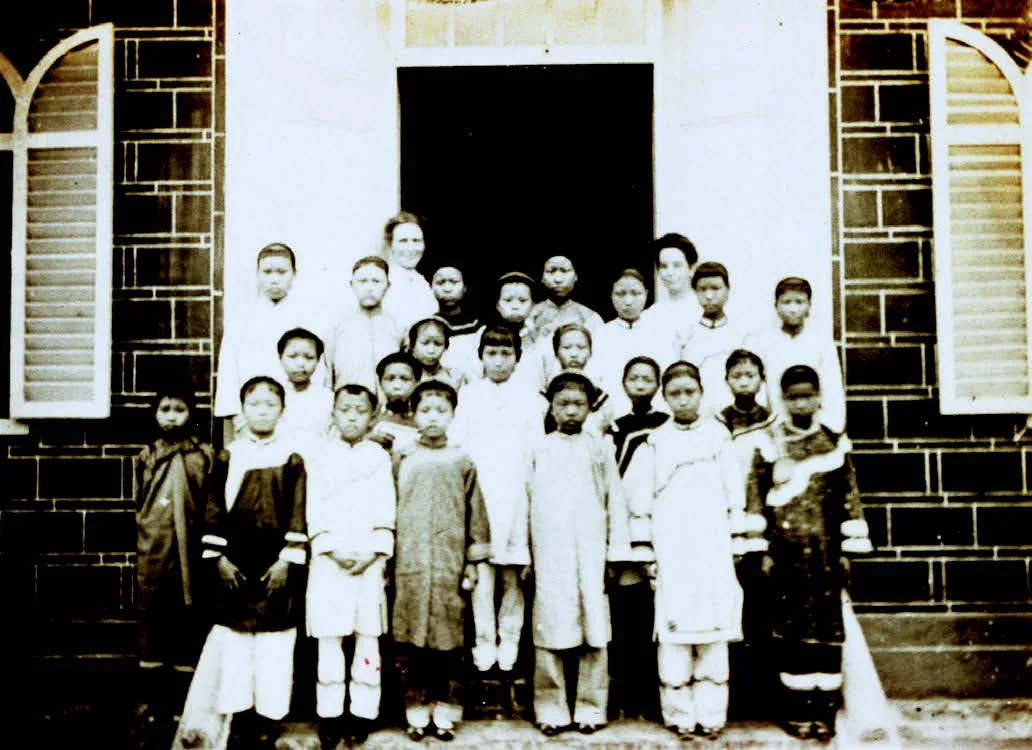
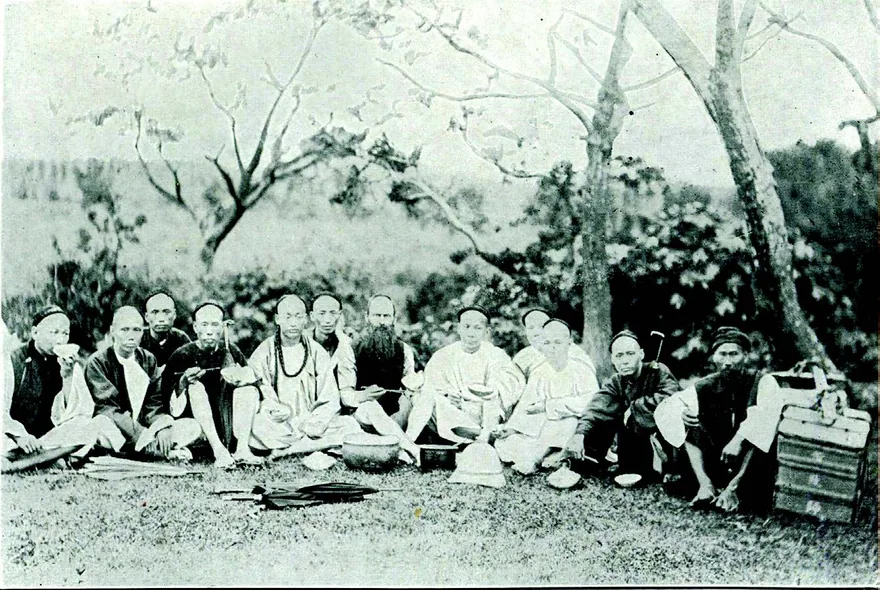
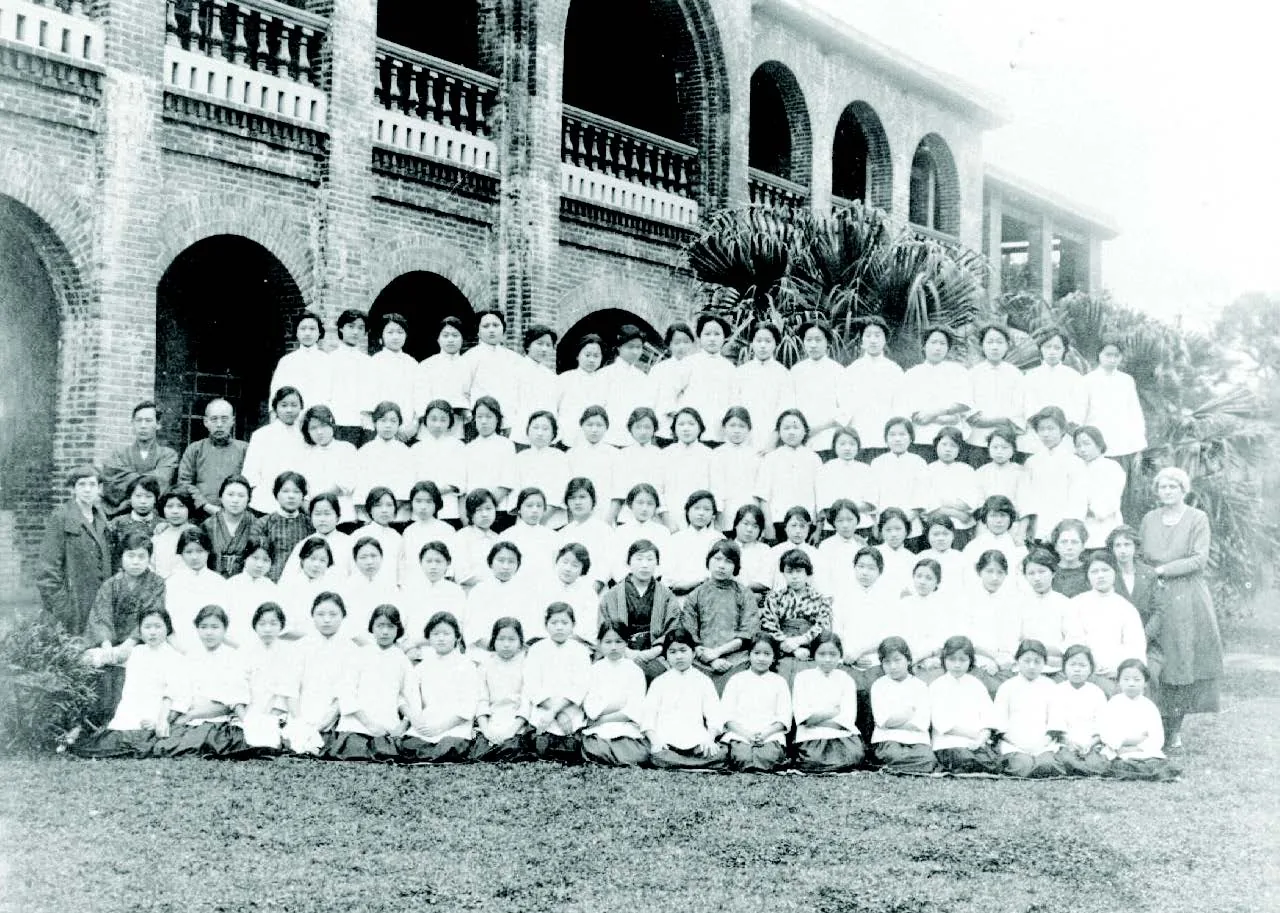
As early as the Qing period, when Dr. Mackay founded Oxford College and the Girls' School, standard dress was provided both to help the students financially and to make them easier to manage. According to the recollections of students of the time, Dr. Mackay was very strict about their dress and appearance. From the photographs that survive, the boys' standard dress was the formal dress of Qing society: in winter a long gown and riding jacket, and in summer a front-buttoned short jacket and loose trousers; the girls wore the traditional tatoshan tunic (also written 大刀衫). Even when the Girls' School was reorganised as Tamsui Girls' School in 1907, the girl pupils still wore the tatoshan tunic and a divided skirt and had to dress their hair, unlike the kimono-style uniforms of Japanese girls' schools of the time.
08The uniform in the Tamsui Middle School era
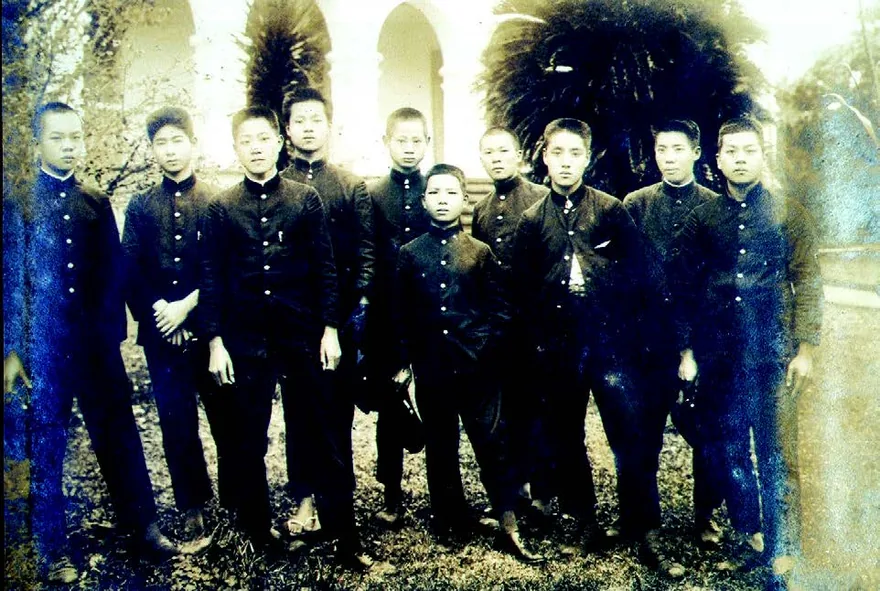
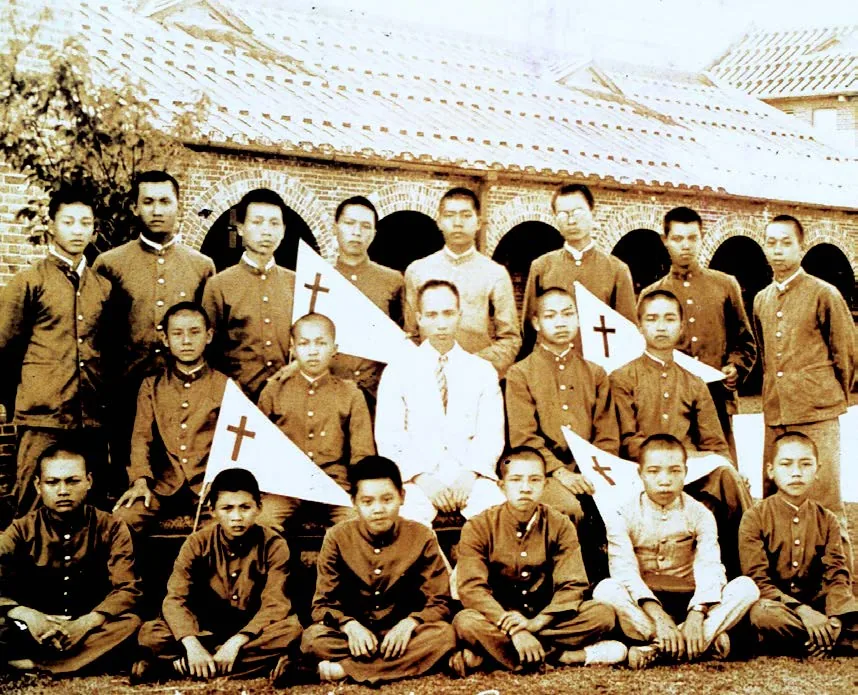
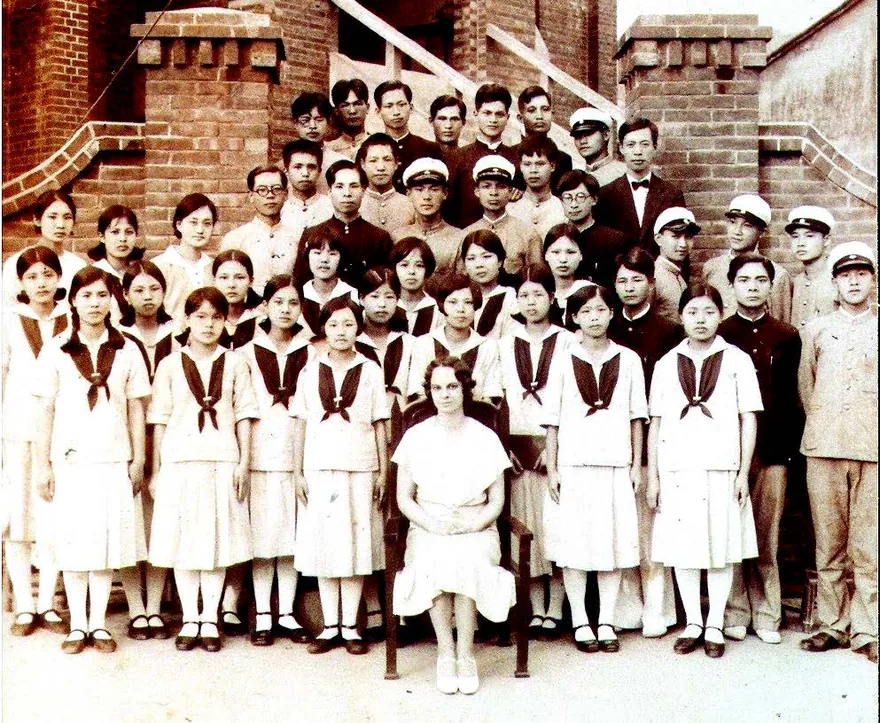
After Tamsui Middle School was founded in 1914, the uniform was of the same style as that of ordinary Japanese middle schools: the stand-collar uniform of the Meiji period, modelled on Prussian military dress. The jacket had a single row of five buttons and three pockets, with a collar badge bearing the year and class; a round cap was worn, with the Tamkang school emblem on it. Unlike ordinary Japanese middle schools, however, Tamsui Middle School did not use navy blue or black but reddish brown, which was its distinctive mark. Because the shade was close to that of an ordinary ox (in Taiwanese, 'red ox'), Tamsui Middle School students were often teasingly called 'little red oxen' by the girls. Not until the Showa years was the black stand-collar uniform, the same as that of Japanese middle schools, adopted.
09The uniform in the Tamsui Girls' Academy era
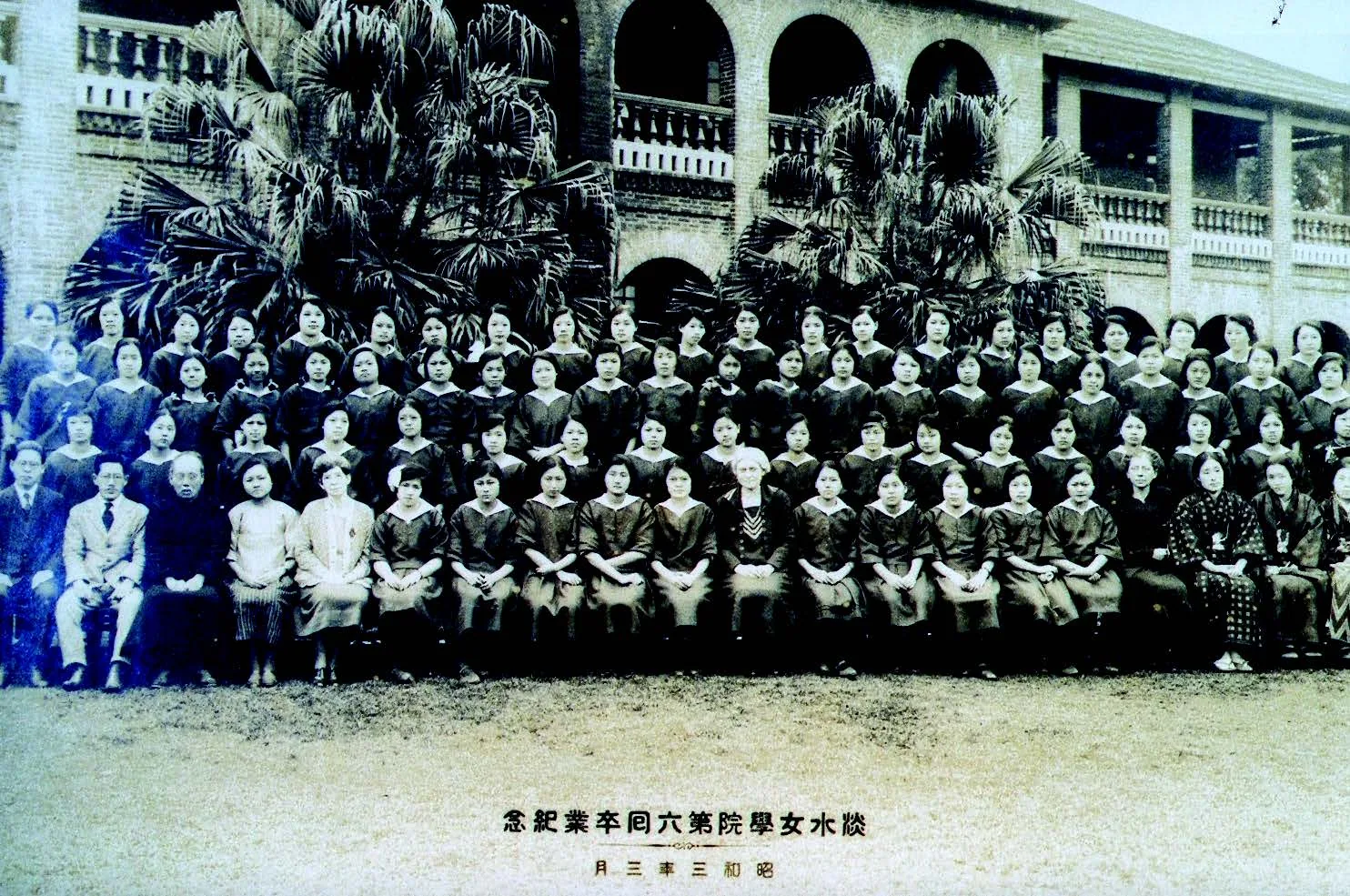
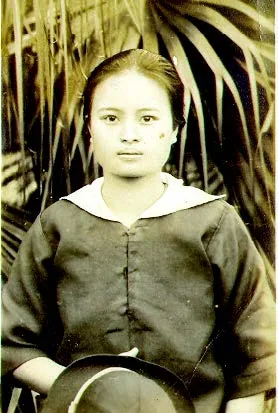
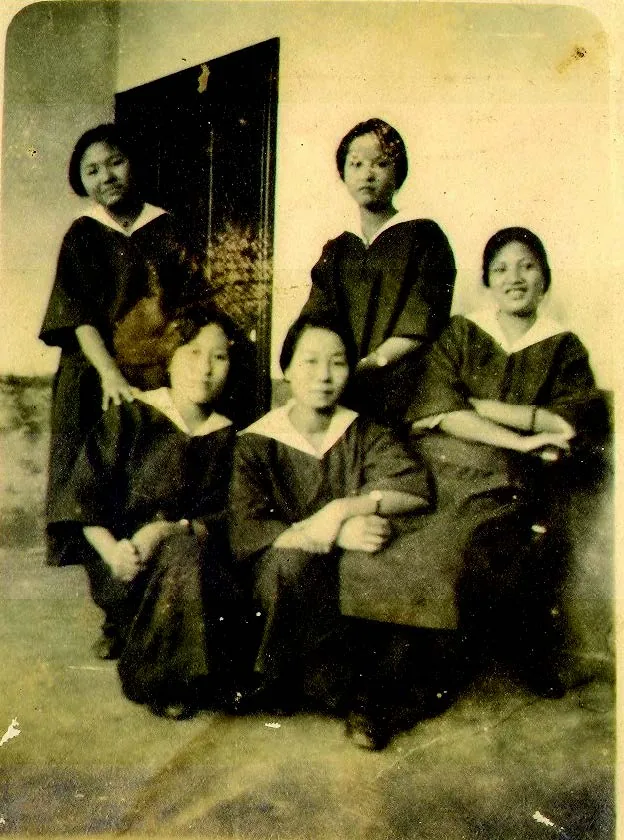
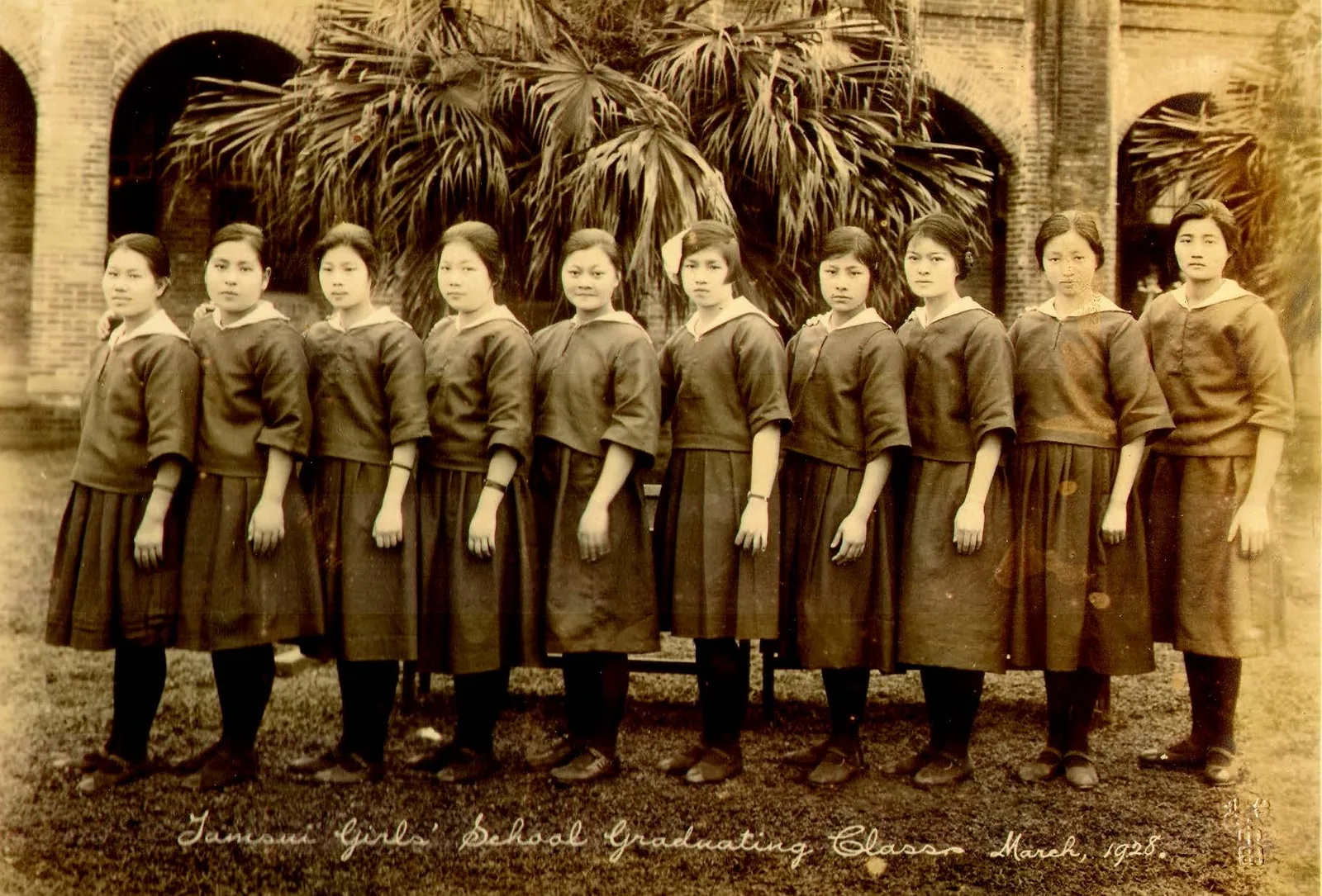
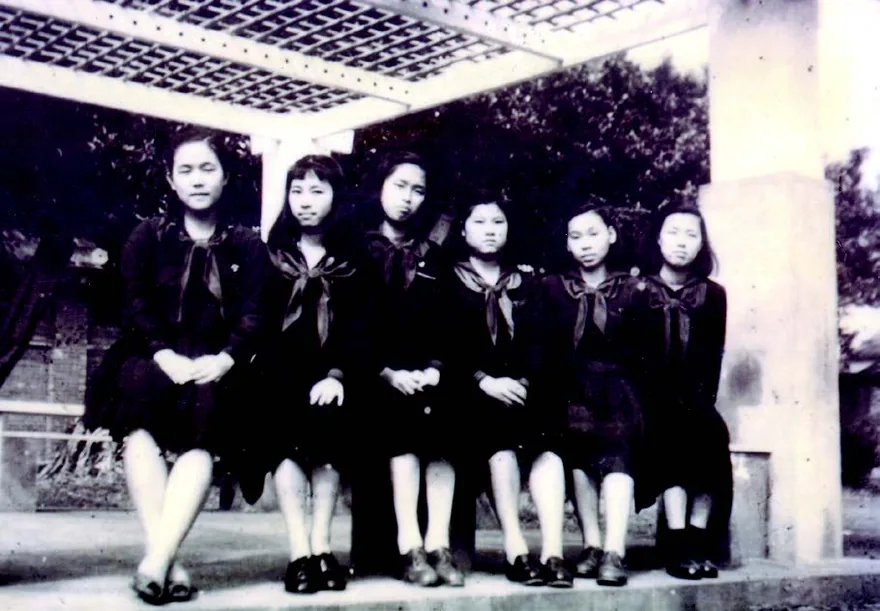
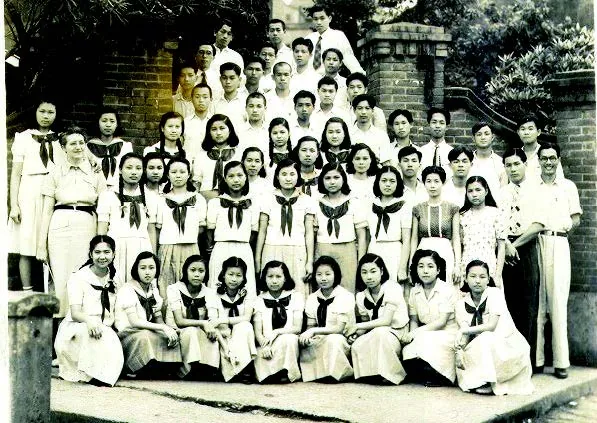
When Tamsui Girls' High School reopened in 1916, the uniform modelled on the British navy's sailor suit was gradually becoming the school dress of Japanese schoolgirls during the Taisho years. From the time of the Tamsui Girls' Academy, the original white blouse and long black skirt likewise gave way to a Western-style uniform with a sailor collar. The winter version of this uniform was dark blue and was worn with a round hat; in summer a lighter white high-collared dress was worn, together with the style of leather shoes still in use today (commonly called 'doll shoes'). It had a strongly Taiwanese flavour and differed from the Japanese schools of the time.
10The uniform in the Tamsui Middle School era
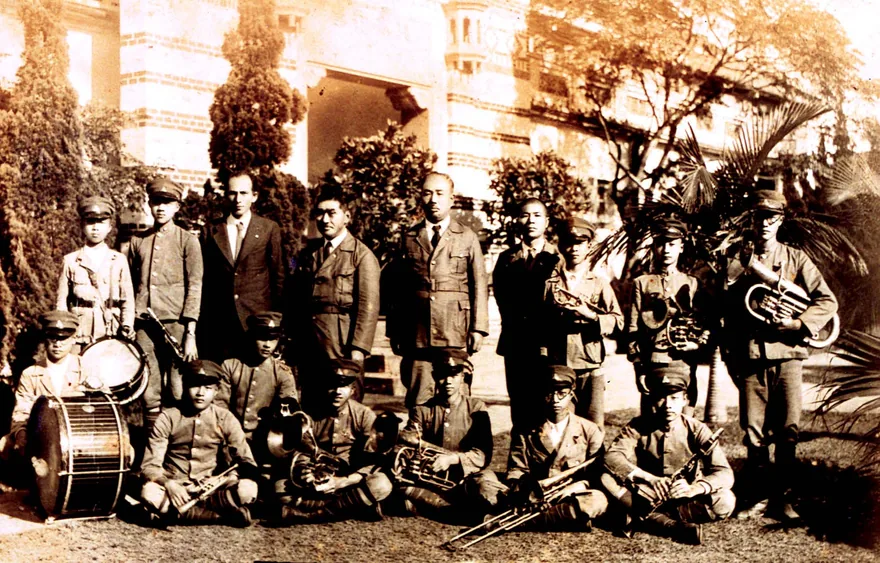
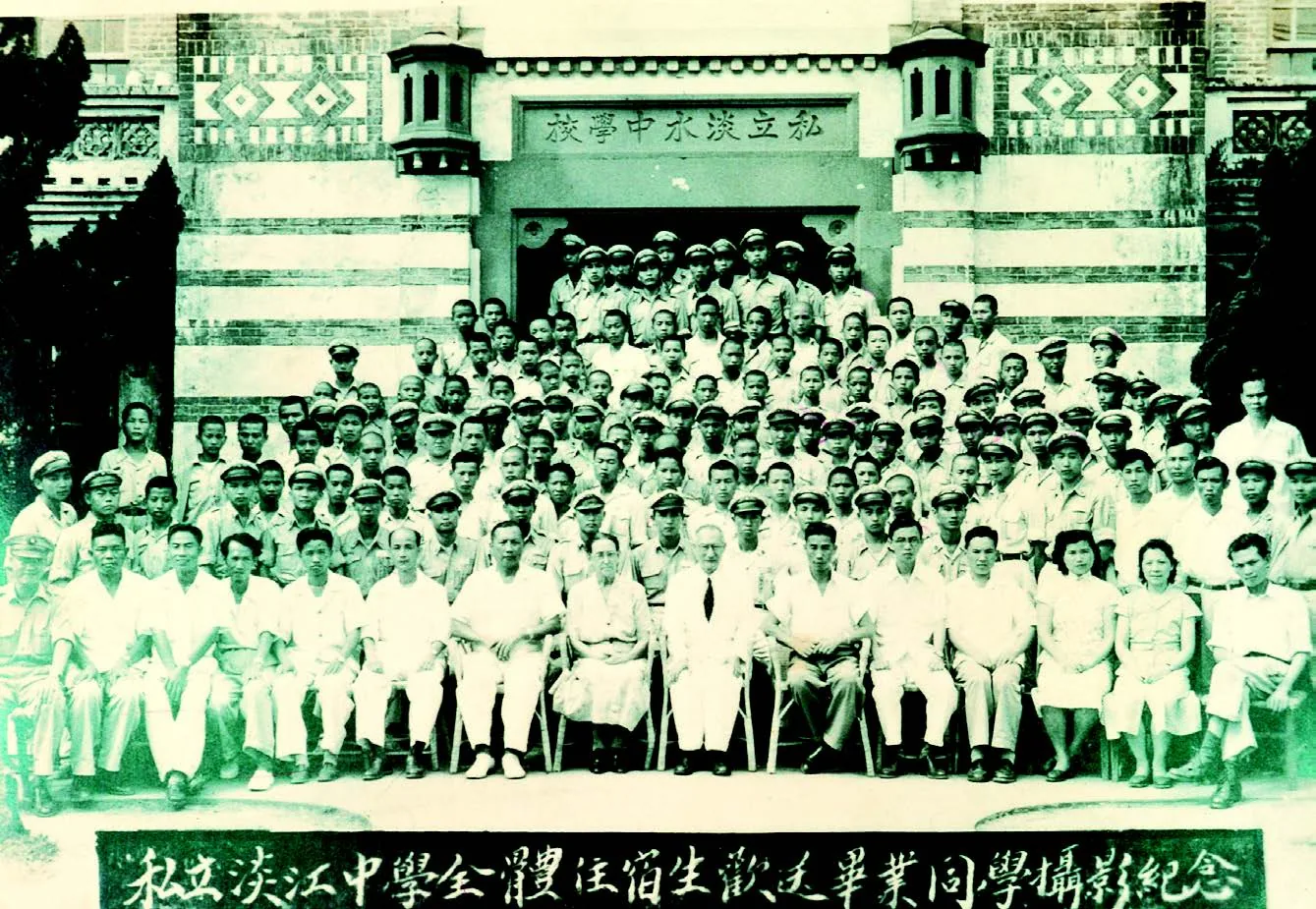
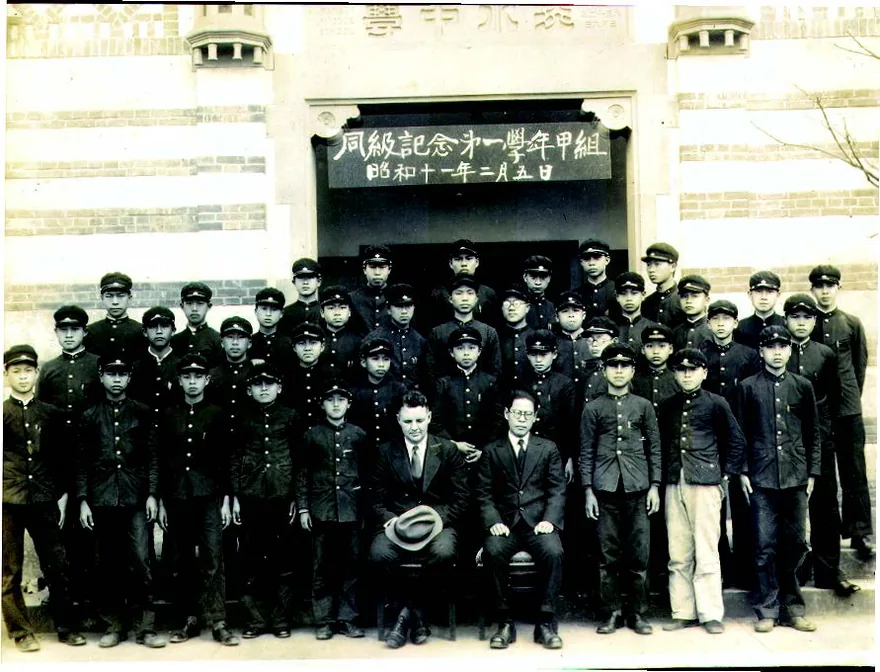
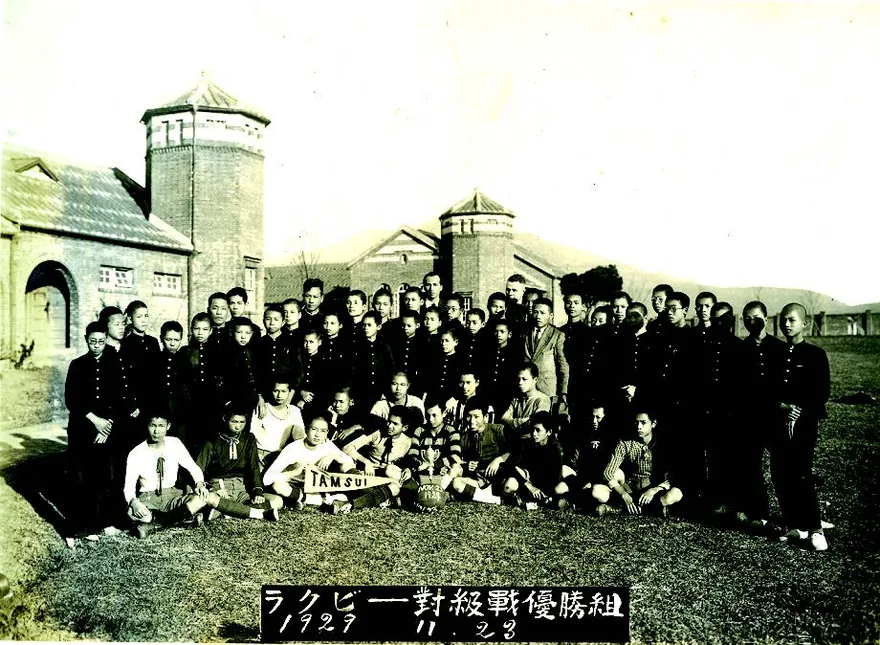
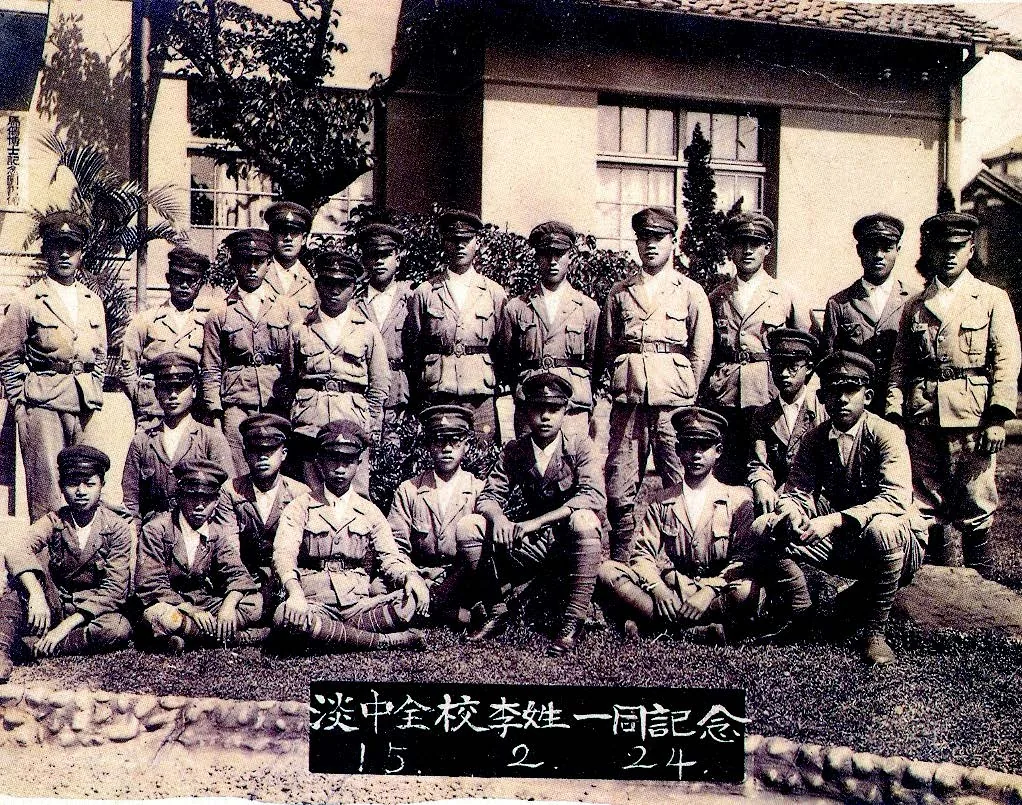
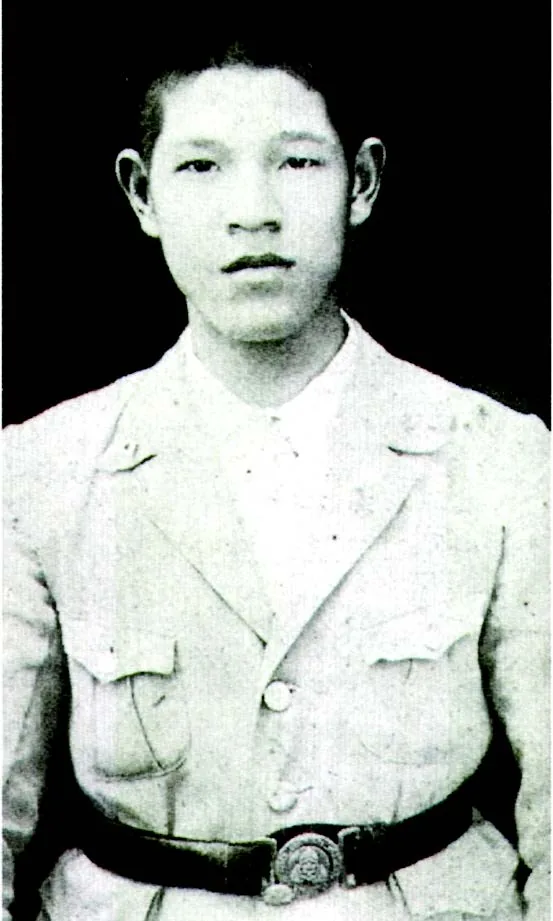
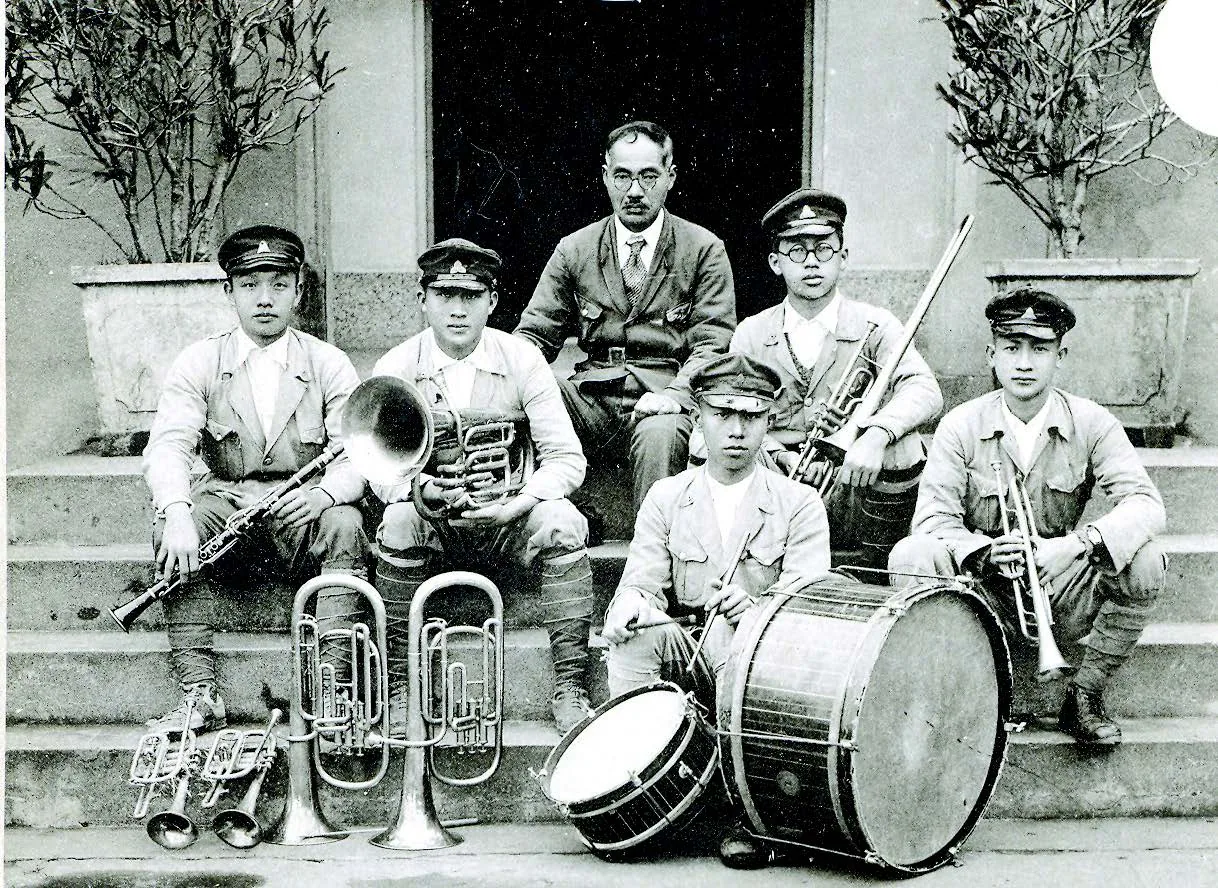
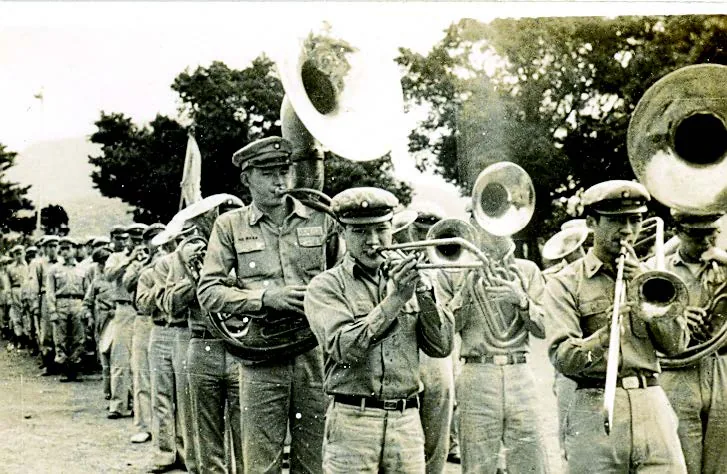
After Tamsui Middle School was formally accredited in 1938, at the height of Japanese militarism, military training was introduced throughout secondary schools, and so the uniform was changed to Japanese army dress. The jacket was open-fronted, puttees were worn, a large peaked cap was worn on the head and a broad leather belt at the waist, with the Tamsui Middle School emblem on both the belt buckle and the cap. After 1941, because of wartime shortages of materials, the Ministry of Education began to impose a standard uniform throughout the country, and Tamsui Middle School too changed to the national civilian uniform and the combat cap.
11The uniform in the Tamsui Girls' High School era
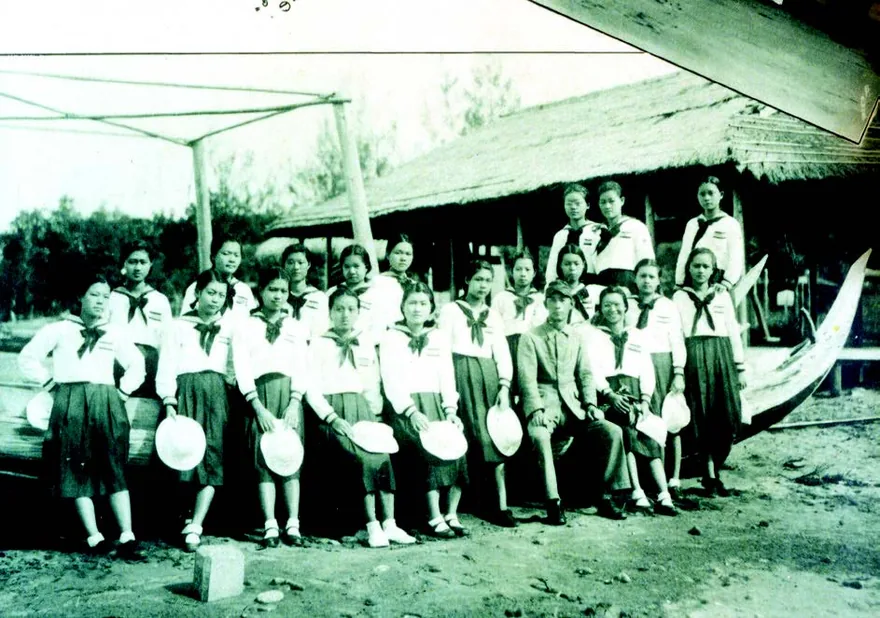
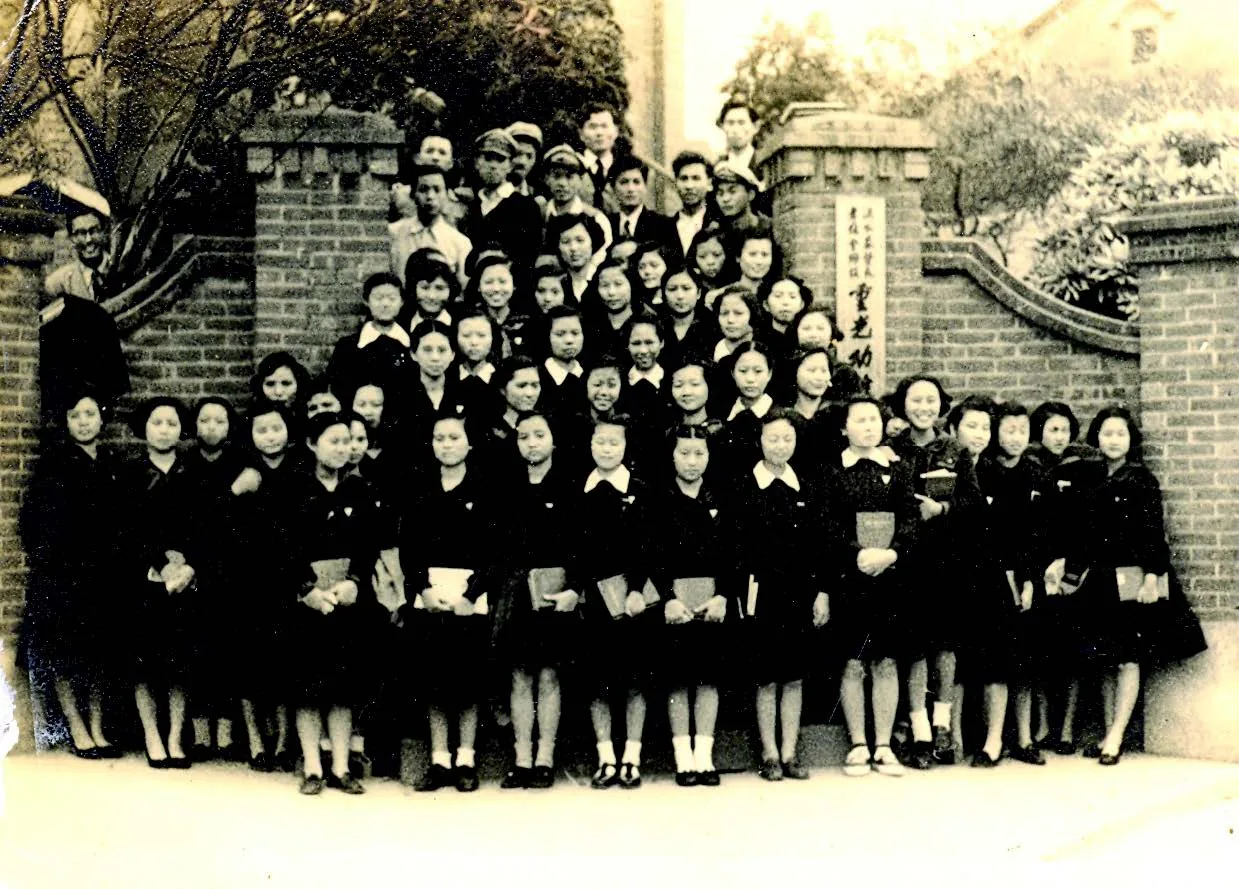
The Tamsui Girls' High School uniform was of the same style as that of ordinary Japanese girls' high schools: a sailor suit with a collar flap at the back. In summer it was a navy-blue long skirt with a white blouse, a small blue neckerchief and a white round hat; in winter a navy-blue jacket edged with white and a long skirt (with a divided skirt substituted according to occasion and temperature), together with a red scarf and a red round hat. The girls' school continued to use this uniform into the early post-war period.
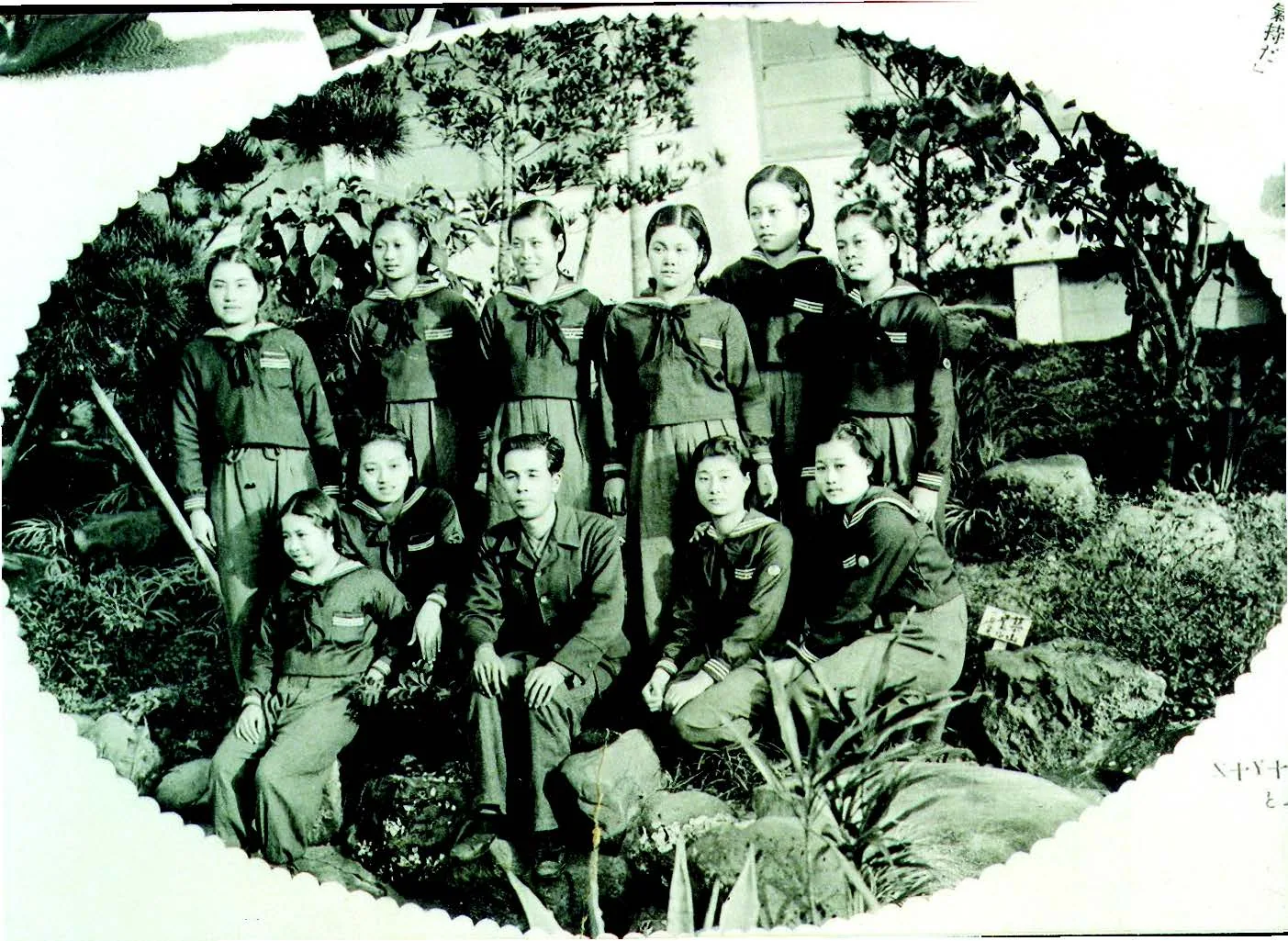
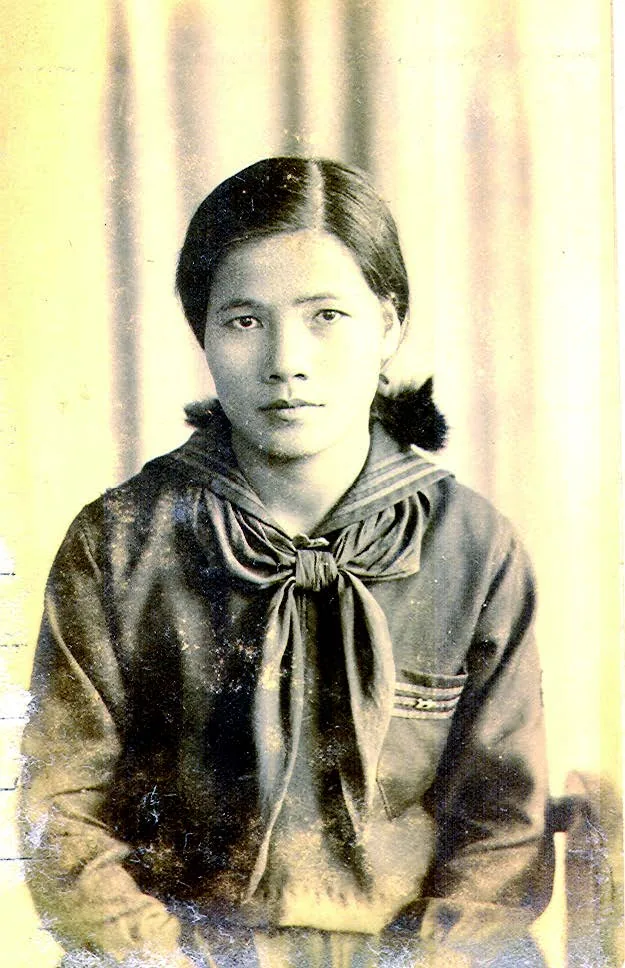
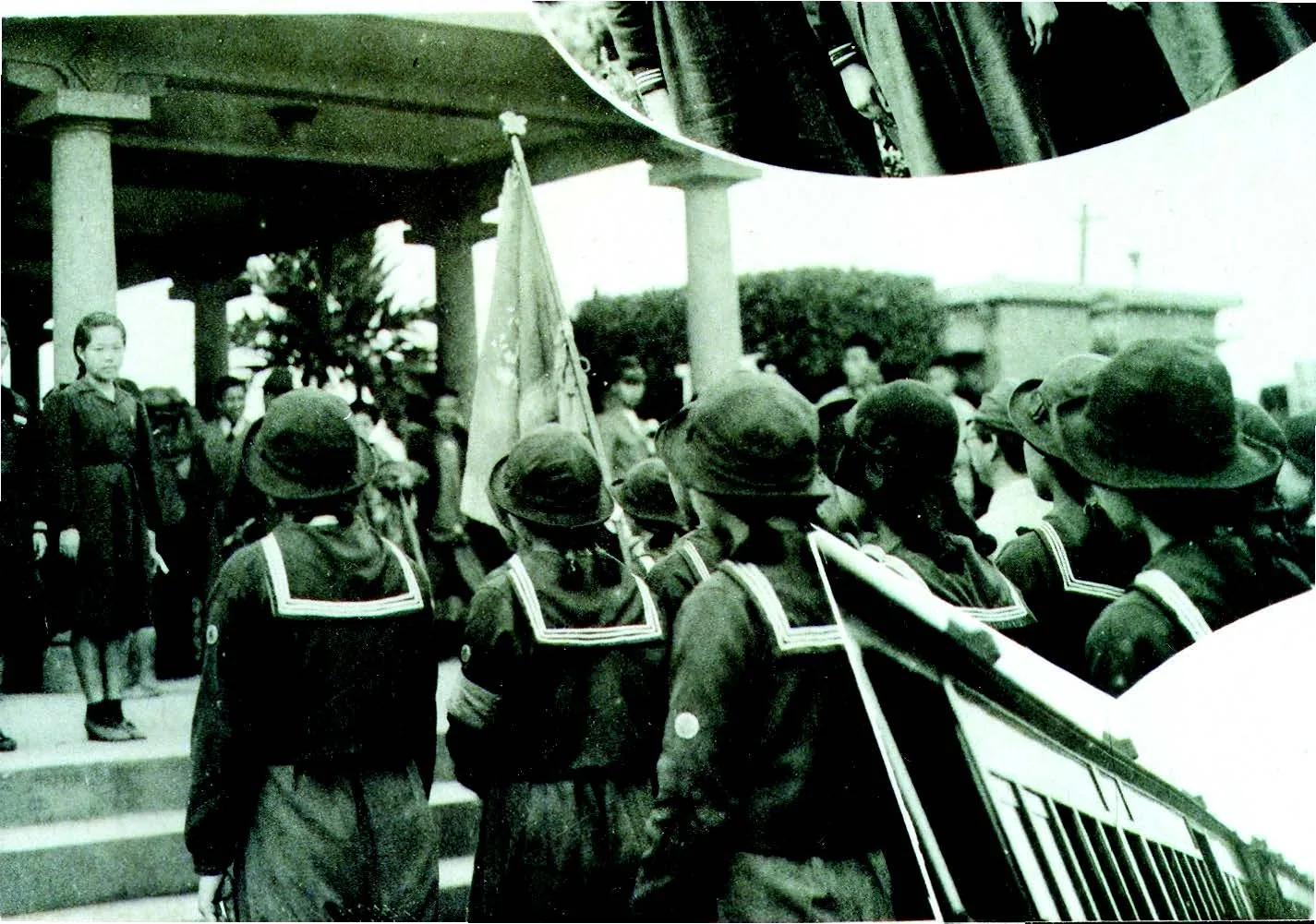
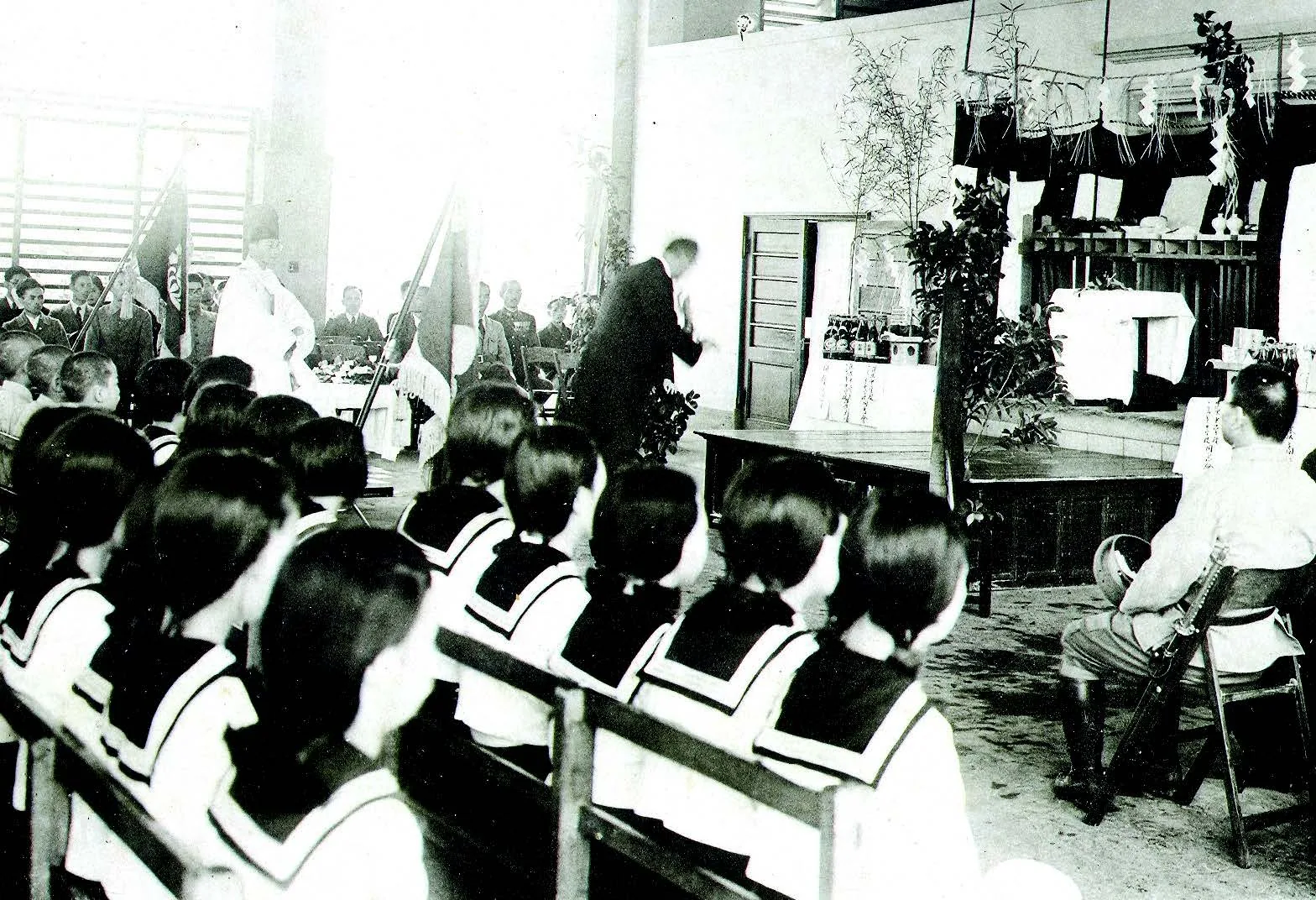
12The uniform in the early post-war period
After the war, Taiwanese society was pervaded by a political atmosphere of thrift, building up the armed forces and recovering the mainland, which naturally was reflected in the uniforms of secondary school students (junior and senior high) at the time. The uniform for junior high was therefore a Boy Scout outfit, and for senior high a military-training uniform. Senior high boys wore an earth-yellow khaki military-training uniform in what was commonly called the 'national defence colour', with a short-sleeved white shirt in summer and a large peaked cap; junior high boys wore shorts and a garrison cap in summer. Students at Chunte Girls' High School in the early years kept the sailor suit of the Japanese colonial period, with the neckerchief changed to one edged in red; in addition, a beautiful badge bearing the Chunte school emblem was pinned to the jacket. In the later years this was changed, in accordance with the regulations of the Provincial Department of Education, to a white blouse and black skirt, with a long-sleeved khaki jacket in winter.
The five chapters
In order of time.